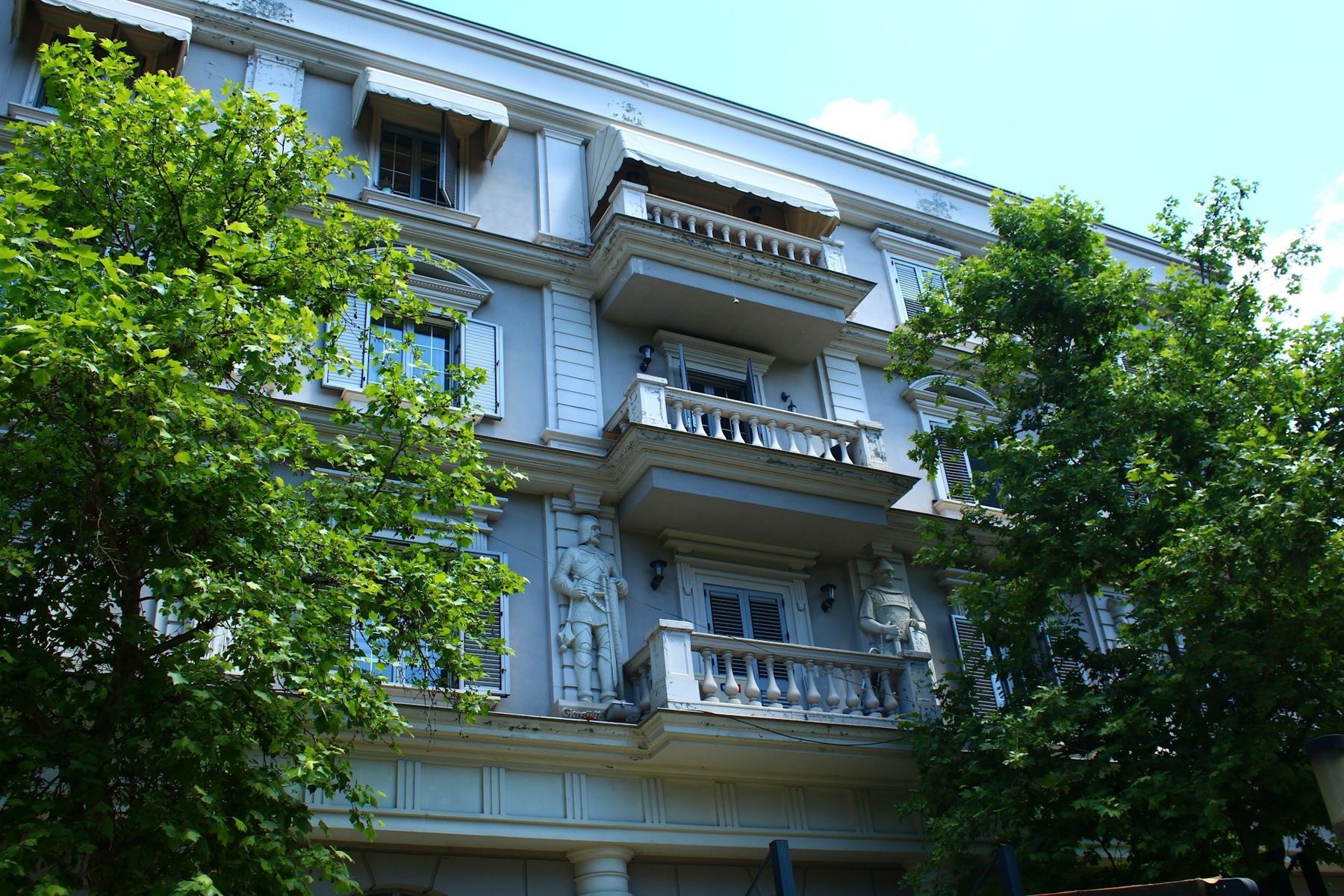
From the street it looks like a pleasant old villa, two storeys of pale plaster, its walls overgrown with a climbing plant whose leaves give the house its name. There is a garden, a gate, a few trees. Nothing about it suggests what it was for. That, it turns out, is the theme of everything inside.
The House of Leaves, Shtëpia me Gjethe, is the Museum of Secret Surveillance. For most of the communist period it was used by the Sigurimi, the state security service, as a centre for the technical side of its work: bugging homes and offices, recording telephone calls, opening letters, photographing people in the street and keeping track of what it learned. It opened as a museum in 2017, and it has become one of the most affecting places to visit in Tirana.
A clinic, then something else
The building went up in the early 1930s as a doctor's clinic, part of the growth of the new capital between the wars. It was a modern, comfortable place for its time, built to serve the families of a small and changing city. During the Second World War it was taken over for the purposes of the occupation, and after the communist government took power in 1944 it passed to the security apparatus of the new state.
From then until 1991 the house was closed to the public and known to very few. Inside, technicians developed and maintained the tools of eavesdropping, trained operatives, processed recordings and transcripts, and fed what they gathered into the files kept on a large share of the population. Most people in Tirana walked past it every day with no idea what went on behind the leaves.
The machinery of watching
The museum's rooms follow the work in roughly the order it was done. Early rooms set the scene, with the structure of the security service and the laws under which people could be watched, arrested and sentenced for what they said or wrote. Then come the tools themselves, displayed in glass cases like specimens.
There are microphones small enough to fit inside a wall socket, a light fitting or the leg of a chair. There are reel-to-reel tape recorders, headphones and switchboards for listening to telephone lines. There are cameras hidden in briefcases, coats and parcels, and long lenses for photographing people from upper windows. Some of the equipment was made abroad and brought in; some was adapted or built locally, in workshops of the kind the house contained.
The displays are clear and restrained. There is no music, no dramatic lighting, very little that tries to provoke a reaction. The objects are allowed to speak, and they do. It is one thing to know that a state listened to its citizens; it is another to stand in front of the very devices, scratched and dusty, and see how ordinary they look.
It is one thing to know that a state listened to its citizens; it is another to stand in front of the very devices, scratched and dusty, and see how ordinary they look.
Rooms with a past
Part of the power of the museum is that it is in the house itself, not in a purpose-built gallery. The rooms are small and domestic in scale, with ordinary doors and windows onto the garden. Corridors turn corners. You move through the building much as the people who worked here must have done, from one modest room to the next, and the exhibits sit in spaces that were once offices and workshops.
The museum explains the processes that went on in them, step by step. Letters were intercepted, opened, read, copied when they seemed important, and resealed so that the recipient would not notice. Film from street photography was developed and printed. Recordings were transcribed by hand, page after page, and the transcripts were sorted and passed on. It was slow, careful, bureaucratic work, done by people who went home in the evening to families of their own.
That ordinariness is perhaps the most disturbing thing about the place. The house did not look like a prison, and the people inside were not, for the most part, the ones who carried out arrests. They were technicians and clerks. The museum lets that fact sit quietly, and leaves it to visitors to think about what it means that so much harm could be built from so much routine.
 Read nextBlloku, the quarter that was closed
After 1991
When the one-party state collapsed in 1990 and 1991, the Sigurimi was dissolved and replaced by a new intelligence service. What would happen to its files became one of the long arguments of the transition. Only in the 2010s did Albania set up a public authority to manage the records and allow people to apply to see what had been kept on them, and the work of opening the archive has continued slowly since.
Files and the people in them
The most difficult rooms are those about the people on the other side of the microphones. The museum shows how files were built: reports from informers, transcripts of overheard conversations, photographs taken in the street, notes on who visited whom. It explains how a casual remark at a family dinner, a joke about the leadership or a wish to see relatives abroad could turn into evidence.
The consequences are shown plainly. Under the communist system, people judged to be enemies of the state could be imprisoned, sent to labour camps or internal exile, or executed, and their families often suffered for decades after. Whole families were moved to remote villages and kept under watch. The museum tells some of these stories through documents and photographs, and it lets visitors draw their own conclusions.
Perhaps the most unsettling aspect is the scale of the network. Surveillance was not carried out only by trained officers with machines. It relied heavily on informers: neighbours, colleagues and sometimes friends or relatives, recruited, persuaded or pressured into reporting on the people around them. The museum is careful in how it presents this, and the effect is all the stronger for that. Trust, it suggests, was one of the things the system set out to break.
Reading the city differently
Visitors often say that the House of Leaves changes the way they see the rest of Tirana. Walk out into the bright, noisy streets afterwards, past the cafés and the new towers and the families on the evening stroll, and it is hard not to wonder about the older buildings, the upstairs windows, the flats where people once lowered their voices.
That reaction is part of the purpose. The communist period ended in 1991, which means that a large part of the population remembers it directly. The museum is not only a record for visitors from abroad; it is also a place where Albanians bring their children, and where people who lived through those years come to see the machinery that once listened to them. Questions about the files, who can see them and what they reveal, have been debated in Albania for many years since the end of the regime.
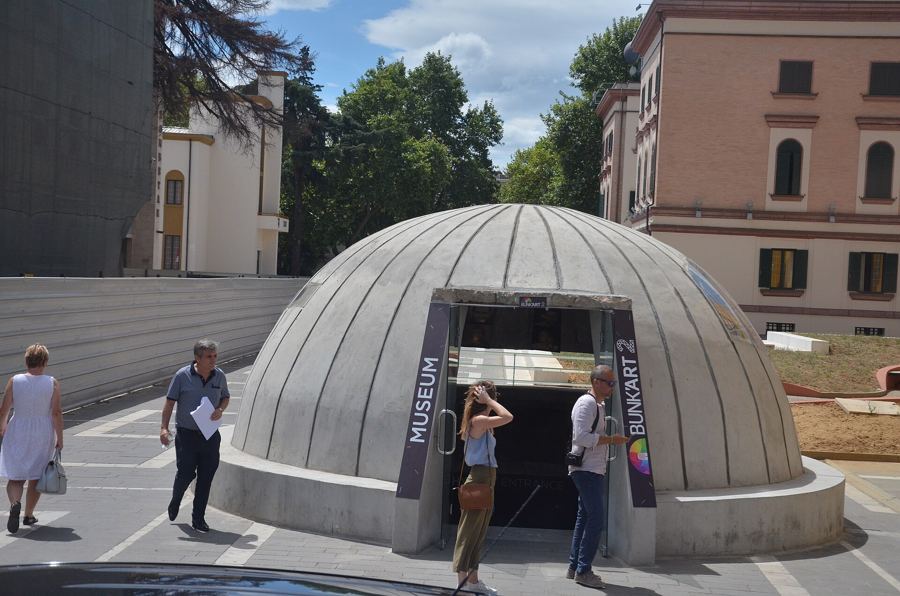
The museum fits into a group of places in the centre that deal with the same period. The downtown Bunk'Art 2, built for the interior ministry, covers the police and the security service from the inside of their own bunker; the Blloku quarter shows where the leadership lived. Together they make a coherent, if heavy, half day.
Visiting
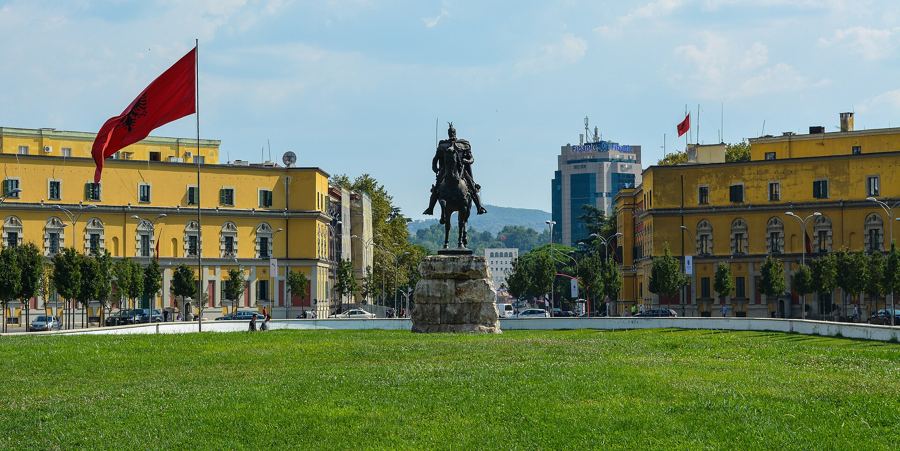
The House of Leaves is in the centre of Tirana, a short walk from Skanderbeg Square. Opening hours and ticket prices change, and the museum has closed on certain days of the week in the past, so check before you go. Allow one to two hours; some people need longer, and most need a few minutes outside afterwards.
The labels are in Albanian and English. Some rooms are small and can feel crowded when a group comes through, so it is worth going early in the day if you can. Photography rules may vary from room to room. The museum is suitable for older children and teenagers, and it is a useful way of explaining to them what life under the system meant, but the subject is heavy, and parents will want to judge for themselves.
Before leaving, step back into the garden and look at the house again. The leaves on the walls, the shuttered windows, the quiet gate. It looks exactly as innocent as it did when the microphones were running, and that is the lesson worth carrying away: what mattered here was never visible from the street.
Filed under Tirana