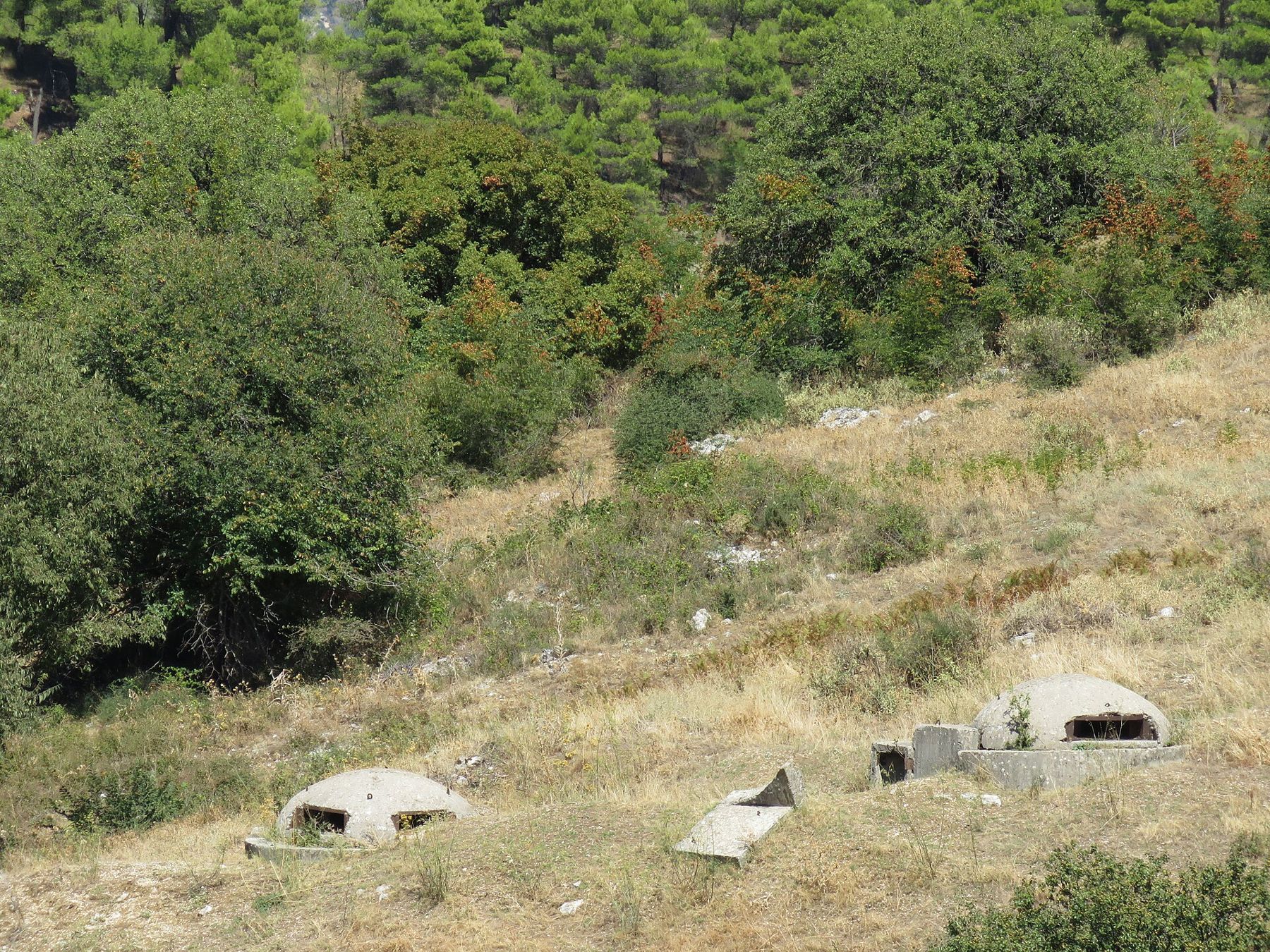
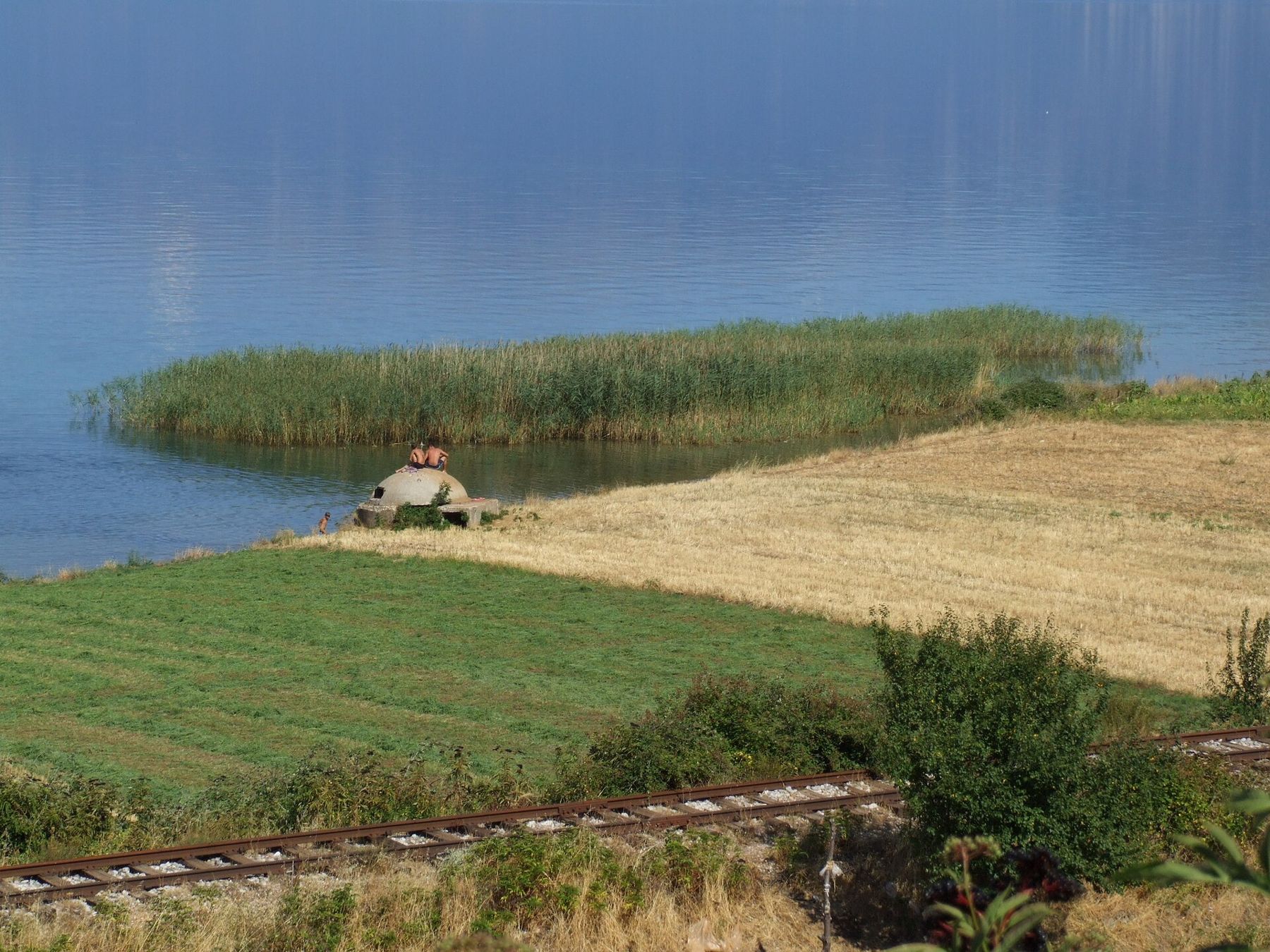
Drive out of Albania in almost any direction and you start to see them: small concrete domes in fields, on beaches, along riverbanks and on the shoulders of hills, each with a dark slit facing the horizon. Some are half-buried in brambles, some have been painted, a few have been turned into sheds or cafés. They are the most visible relic of a state that spent decades preparing for an invasion from every side, and they are only the surface of it.
Beneath the surface, the same state built larger shelters for the people who ran it. Two of them have been opened in Tirana as museums under the name Bunk'Art. The first is a huge bunker dug into a hill on the eastern edge of the city, below Mount Dajti. The second is a smaller one beside Skanderbeg Square, built for the interior ministry. Between them they tell the story of Albania in the twentieth century, and they do it in the spaces that the period itself produced.
A country braced for attack
To understand the bunkers, start with the isolation. After the Second World War, communist Albania under Enver Hoxha allied first with Yugoslavia, then with the Soviet Union, then with China, and broke with each of them in turn. It left the Warsaw Pact in 1968 after the invasion of Czechoslovakia, and by the end of the 1970s it had no major ally at all. The leadership's answer to that isolation was self-reliance, and part of self-reliance was the expectation of attack.
From the late 1960s through the 1980s the country was covered with defensive works. Estimates of the number of bunkers vary widely, and most put it well over a hundred thousand. They were built for a whole population expected to fight, and they cost an enormous share of the resources of a poor country. None of them was ever used against the invasion they were built for.
Bunk'Art 1, under the hill
The larger bunker was built in the 1970s for the political and military leadership, in a hillside on the road from Tirana towards Mount Dajti. You walk in along a long, straight tunnel, and the temperature drops at once. Ahead the corridors divide and keep dividing: there are several levels, and more than a hundred rooms, linked by narrow passages, heavy doors and stairs.
It was designed to keep the government working through a nuclear attack, with offices, communications rooms, sleeping quarters, and a suite for Hoxha himself. At its heart is a large hall meant for sessions of the assembly, now used at times for concerts and events. The bunker was never needed, and it stood secret and largely unused for decades. It opened as a museum in 2014.
The exhibition runs room by room through Albania's history from the Italian invasion of 1939, through the Second World War and the partisan war, to the communist period: its economy, its army, its propaganda, its prisons and labour camps, and its daily life. Much of it is told with photographs, documents and objects, and some rooms have been left as they were, with their original telephones, beds and filtration machinery. It is a lot to take in, and the dim light and the repetition of corridors make it more tiring than it looks. Allow at least two hours, and take breaks.
The setting is the point. You are not reading about the leadership's fear of attack in a gallery; you are inside the place it built for itself, under tonnes of rock, while the people above were given small domes in the fields.
You are not reading about the leadership's fear of attack in a gallery; you are inside the place it built for itself, under tonnes of rock, while the people above were given small domes in the fields.
Bunk'Art 2, beside the square
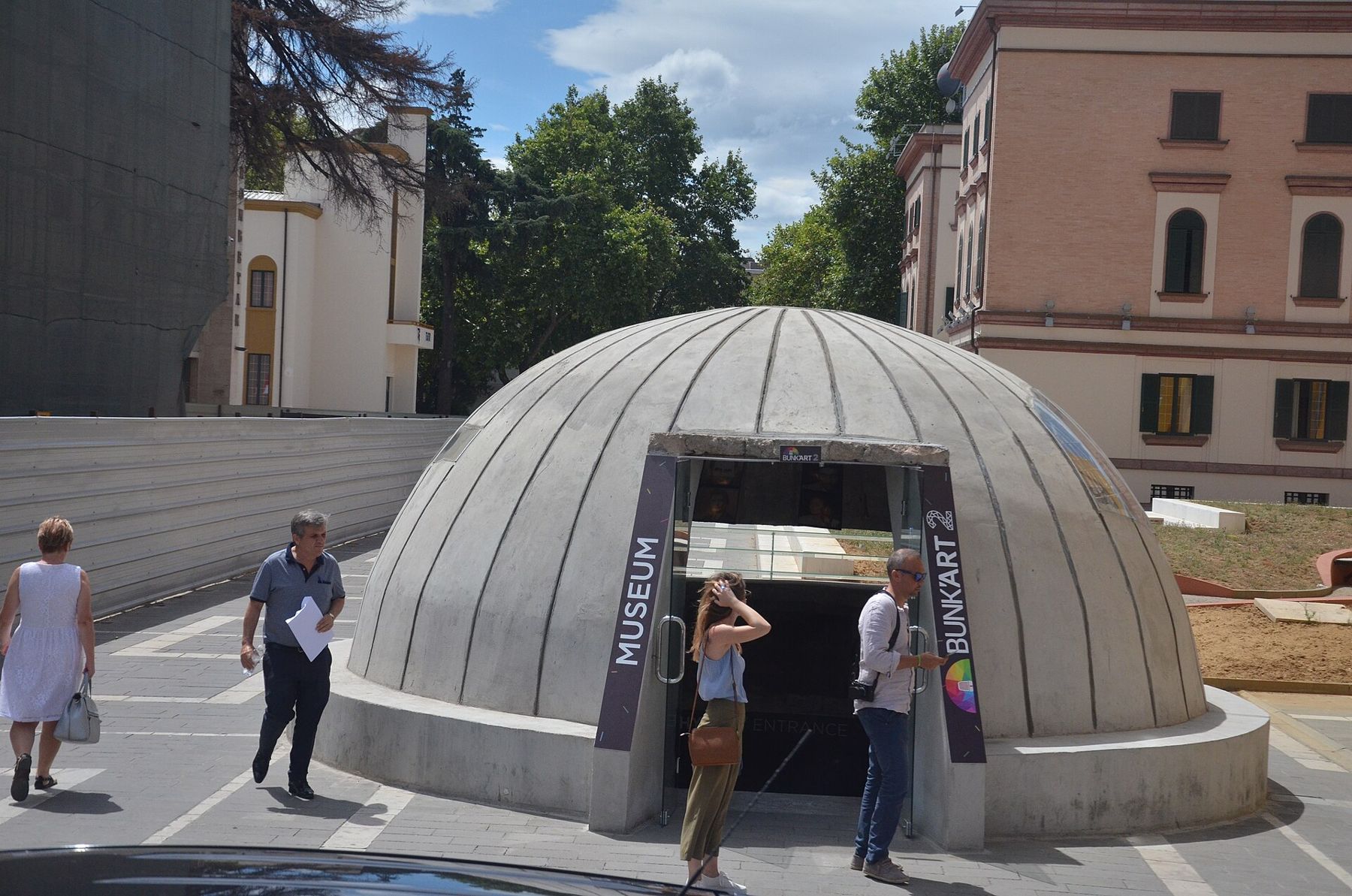
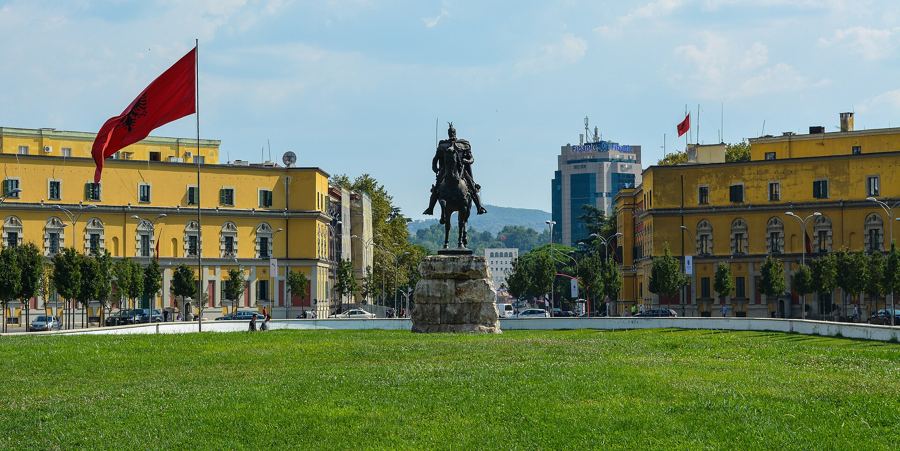
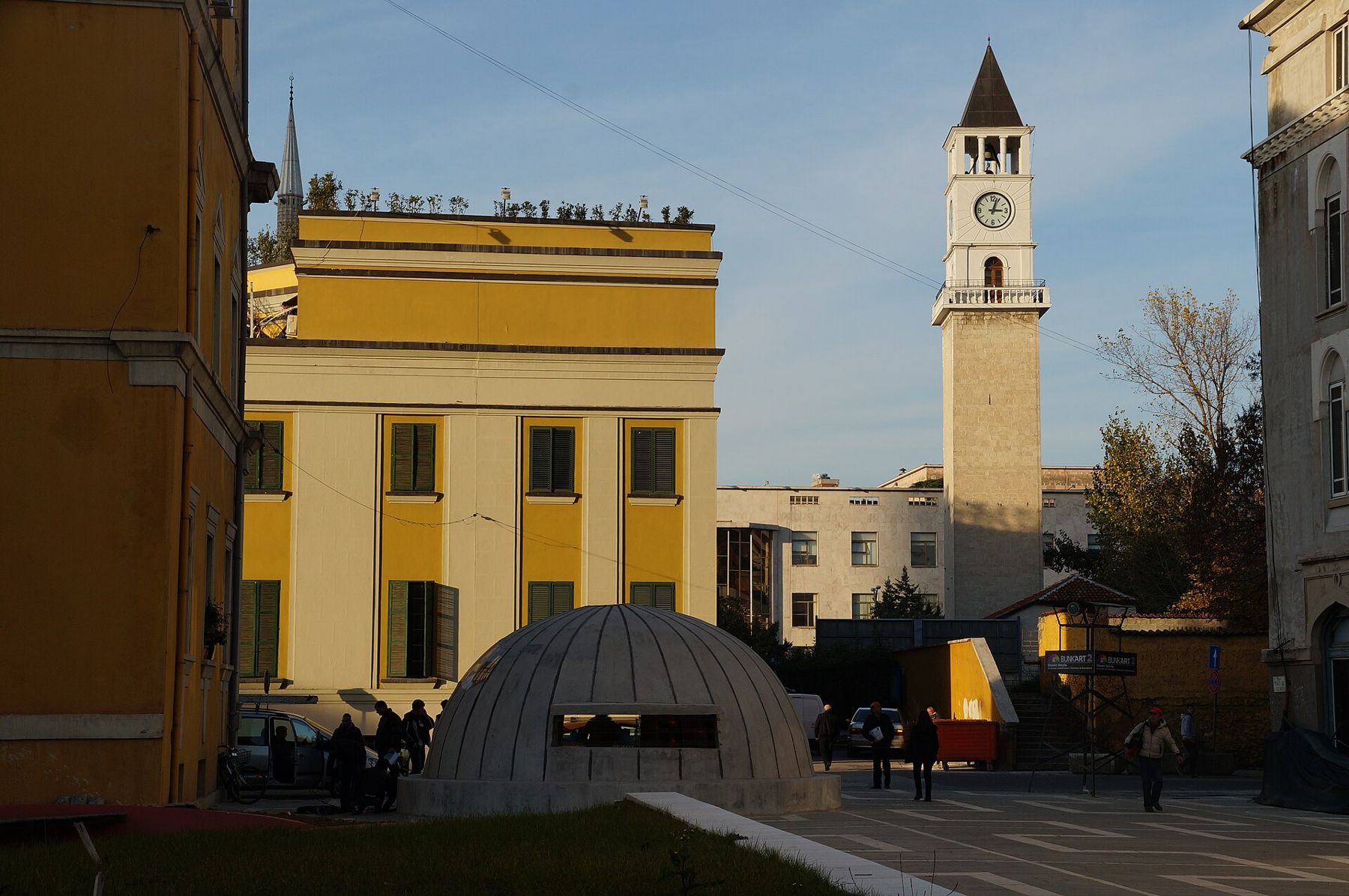
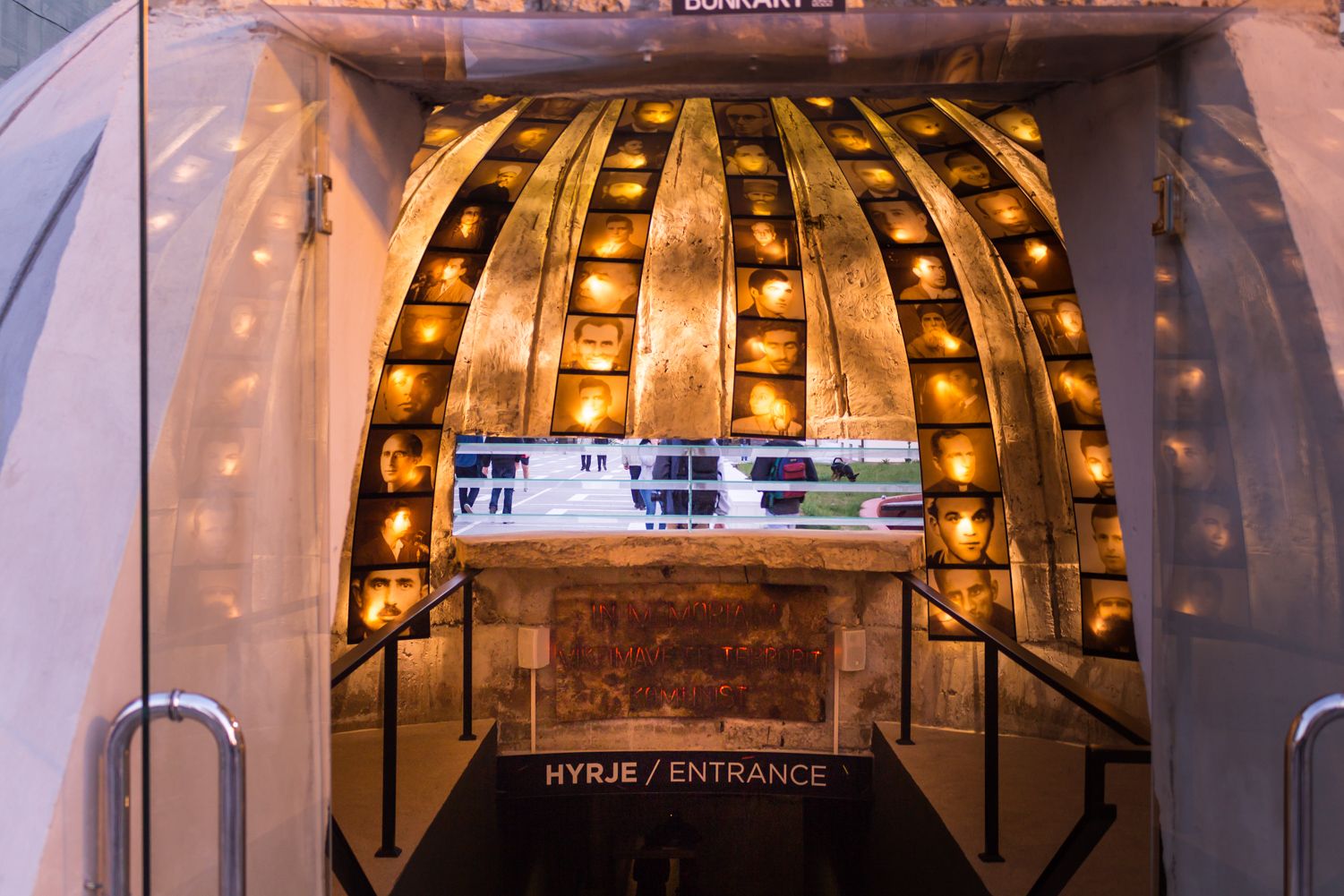
The second museum is in the centre of the city, on the corner beside the old interior ministry, a short walk from Skanderbeg Square and in sight of the Clock Tower. From the street you see only a concrete dome, like an oversized version of the field bunkers, with an entrance cut into it. The bunker below was built in the 1980s for the ministry, and it opened as a museum in 2016.
 Read nextSkanderbeg Square, the city's open room
Its subject is narrower and harder: the history of the interior ministry and the police, and above all the Sigurimi, the state security service. The corridors are lower and tighter than at Bunk'Art 1, and the exhibits deal with surveillance, arrests, interrogation, show trials, internal exile and the camps. There are reconstructions of interrogation rooms and cells, and long lists and walls of photographs of people who were imprisoned or executed.
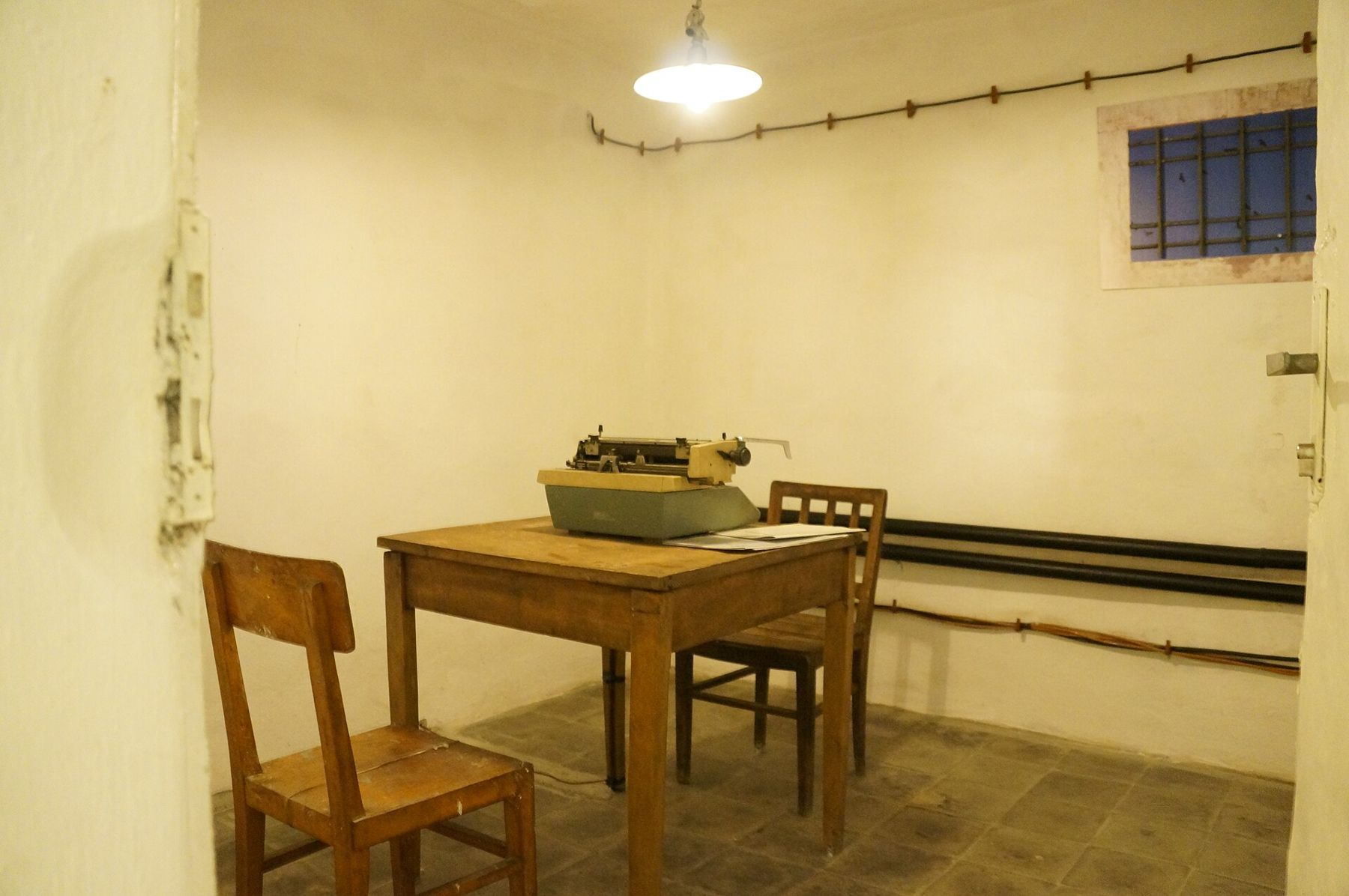
The tone is quiet. There is no attempt to dramatise, and none is needed. Many visitors leave more shaken by this smaller museum than by the larger one, because it moves from the fear of an outside enemy to the treatment of the state's own citizens. For the same story told through the machinery of watching, the House of Leaves museum is a short walk away, and the two make a hard but coherent afternoon.
The domes in the fields
Back on the surface, the small bunkers are still everywhere, though fewer every year. They were built to last, from thick reinforced concrete, and removing them is slow and costly, so many have simply been left where they stand: in olive groves, at the edge of car parks, on beaches where children climb on them and sunbathers lean against them.
Since the 1990s Albanians have found uses for some of them. They have served as storage, animal shelters, makeshift bars and, now and then, a canvas for paint. A few have been decorated with faces or flags, and one or two have become small attractions in their own right. Many more have been broken up for their steel, or buried, or swallowed by new building.
Attitudes to them are mixed. For older people they recall years of drills, shortages and fear; for younger ones they are part of the furniture of the landscape, odd and slightly comic. Visitors tend to find them fascinating, and the photographs of a dome in a field, slit facing the sea, have become one of the standard images of the country. The museums put those images in context. After a visit, the domes along the road out of Tirana look less quaint and more like what they were: a whole nation's labour, over two decades and more, spent preparing for a war that never came.
Which one, and in what order
If you only have time for one, the choice depends on what you want. Bunk'Art 1 is the bigger experience: the scale of the place, the long tunnel, the assembly hall and the sense of the whole century. Bunk'Art 2 is shorter, central and easy to fit into a day in town, and it is the more focused of the two on repression.
Seeing both is worthwhile, and it makes sense to do them on different days or with a break between. Bunk'Art 1 combines well with a ride on the Dajti cable car, whose lower station is further along the same road; see up Mount Dajti by cable car. Bunk'Art 2 fits into a morning around the square with the buildings of Skanderbeg Square and the museums nearby.
Practical notes
Bunk'Art 1 lies on the eastern edge of the city. City buses run out that way along the road towards Dajti, and taxis are straightforward; routes and fares change, so ask before setting off. Bunk'Art 2 is in the centre and easy to reach on foot.
Both bunkers are cool year-round and can feel damp, so a light layer helps even in summer. The floors are uneven in places, and some passages are narrow and low, which may not suit everyone. Opening hours and ticket prices change with the season and over time, so check before you go rather than relying on a figure you read somewhere.
Most of the information panels are in Albanian and English. Read selectively: the museums are dense, and the rooms that stay with people tend to be the simple ones, a narrow bed, a telephone on a desk, a door with a peephole. Come back up into the daylight afterwards, find a café, and give yourself a few minutes before doing anything else.
Filed under Tirana