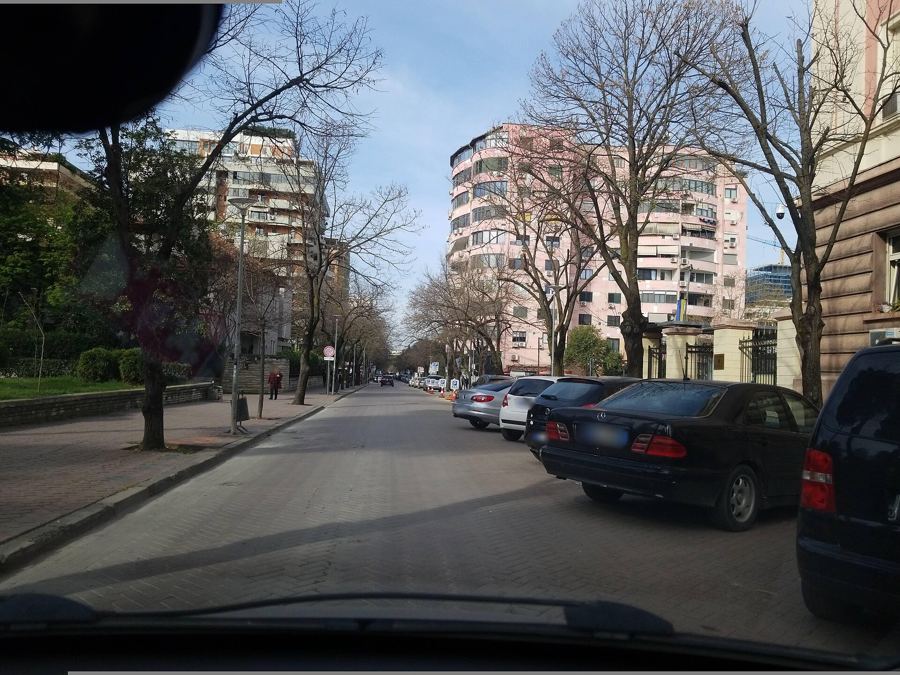
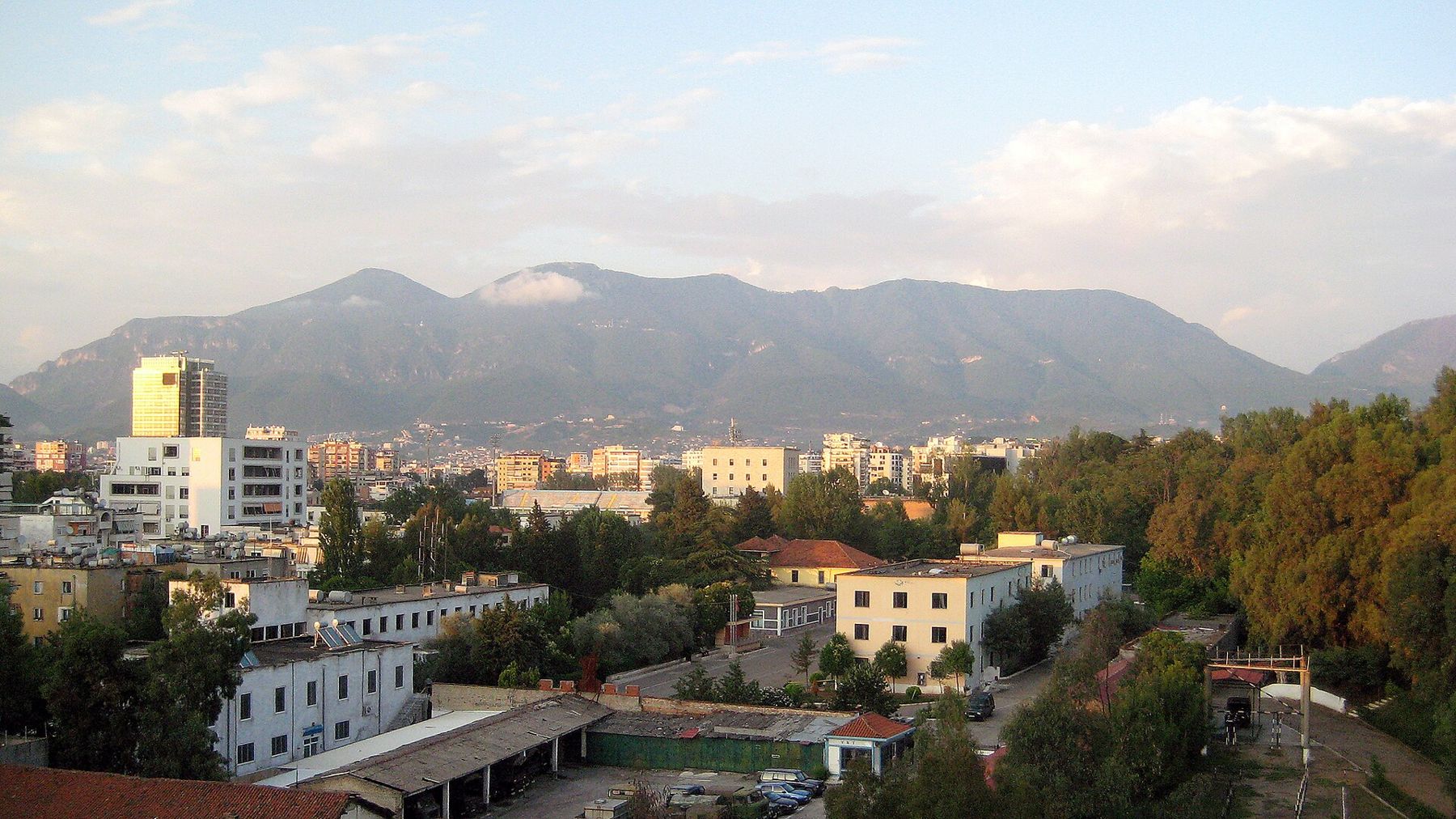
From almost anywhere in Tirana you can see it. Look east along a street, past the balconies and the satellite dishes, and the view ends in a long green ridge with a rocky crest and a cluster of masts on its summit. In winter it is often white. In summer, on hazy afternoons, it fades to a blue outline, and on clear evenings it turns pink and then grey as the sun sets behind the city. Mount Dajti is Tirana's backdrop, and for most of the city's history it was simply there, a wall to the east.
Since 2005 it has also been a short ride away. The Dajti Ekspres cable car runs from the eastern edge of the city, out towards Linza, up the face of the mountain to a plateau inside the national park. The ride takes about a quarter of an hour, and it is one of the simplest pleasures Tirana has to offer.
The ride up
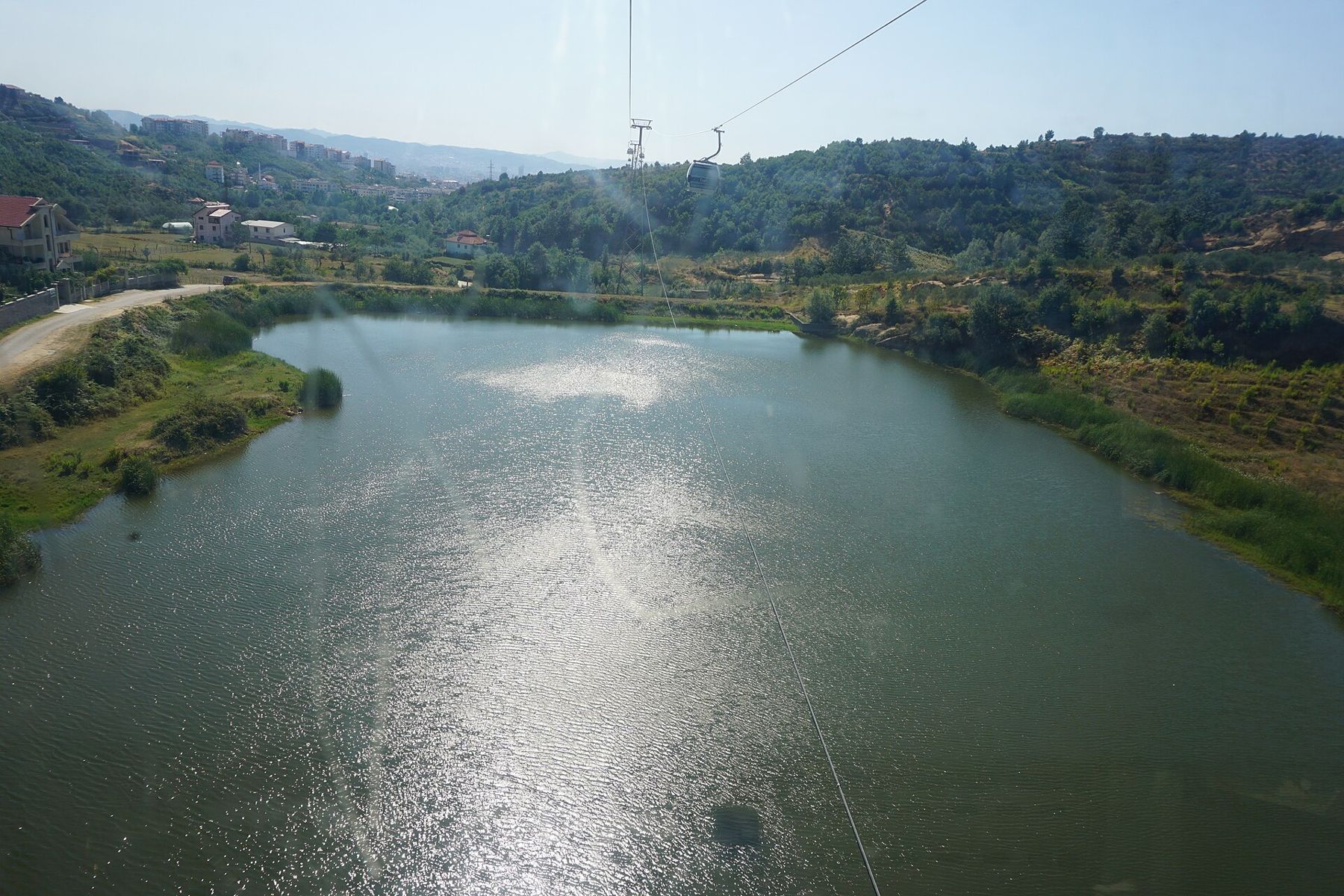
The lower station stands where the last houses of the city meet the foothills. You buy a ticket, step into a small gondola cabin, and within a minute the streets are falling away beneath your feet. The line is a little over four kilometres long, built by an Austrian firm and opened in 2005, and it climbs steadily over farmland, scrub and pine woods.
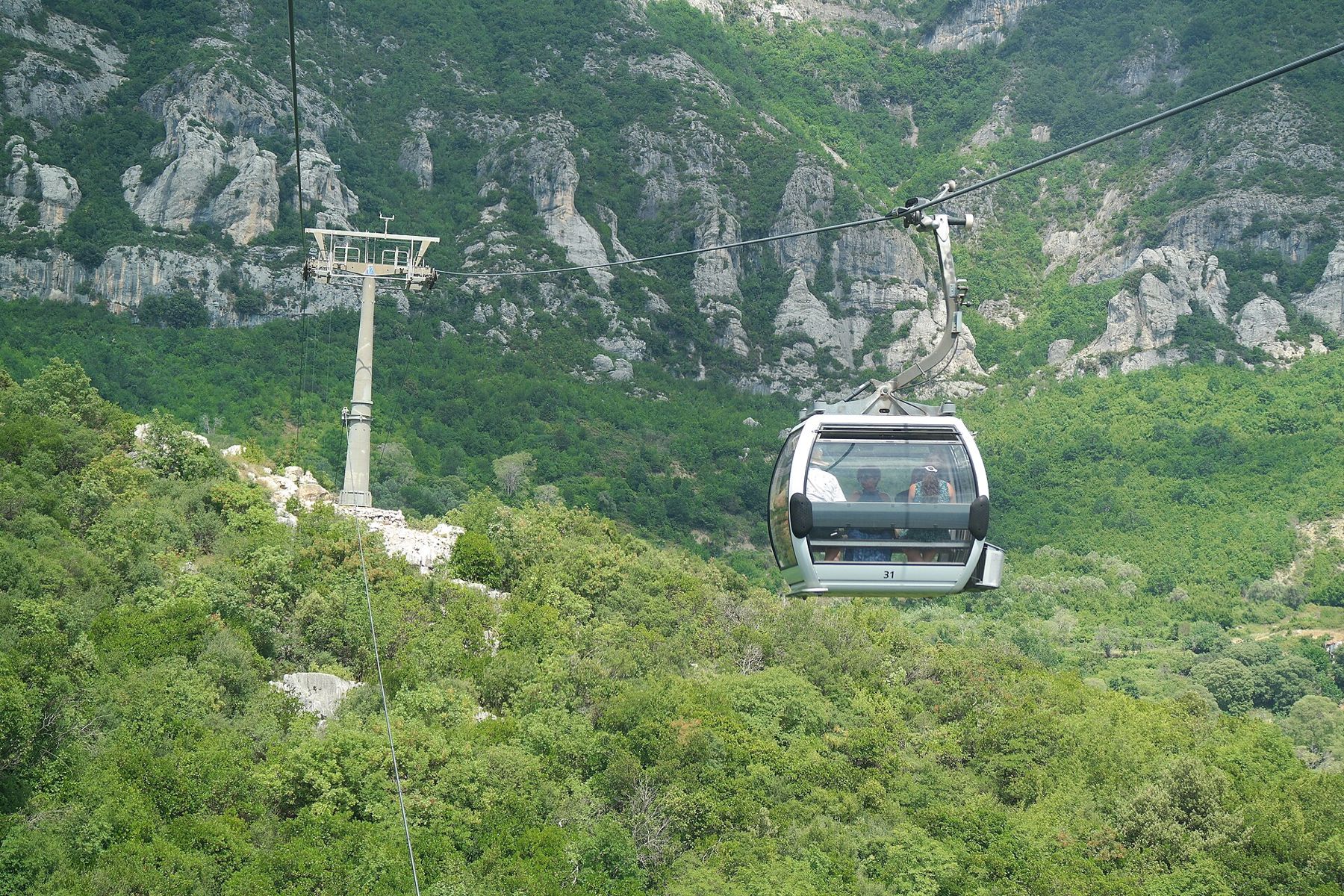
Halfway up, the cabin passes over open slopes where you can see goats, small farms and the line of a dirt road zigzagging upwards. Then the ground drops away into a deep valley and the cabin seems to hang in the air, before the forest closes in again and the top station appears among the trees. The air is noticeably cooler when you step out, and it smells of resin.
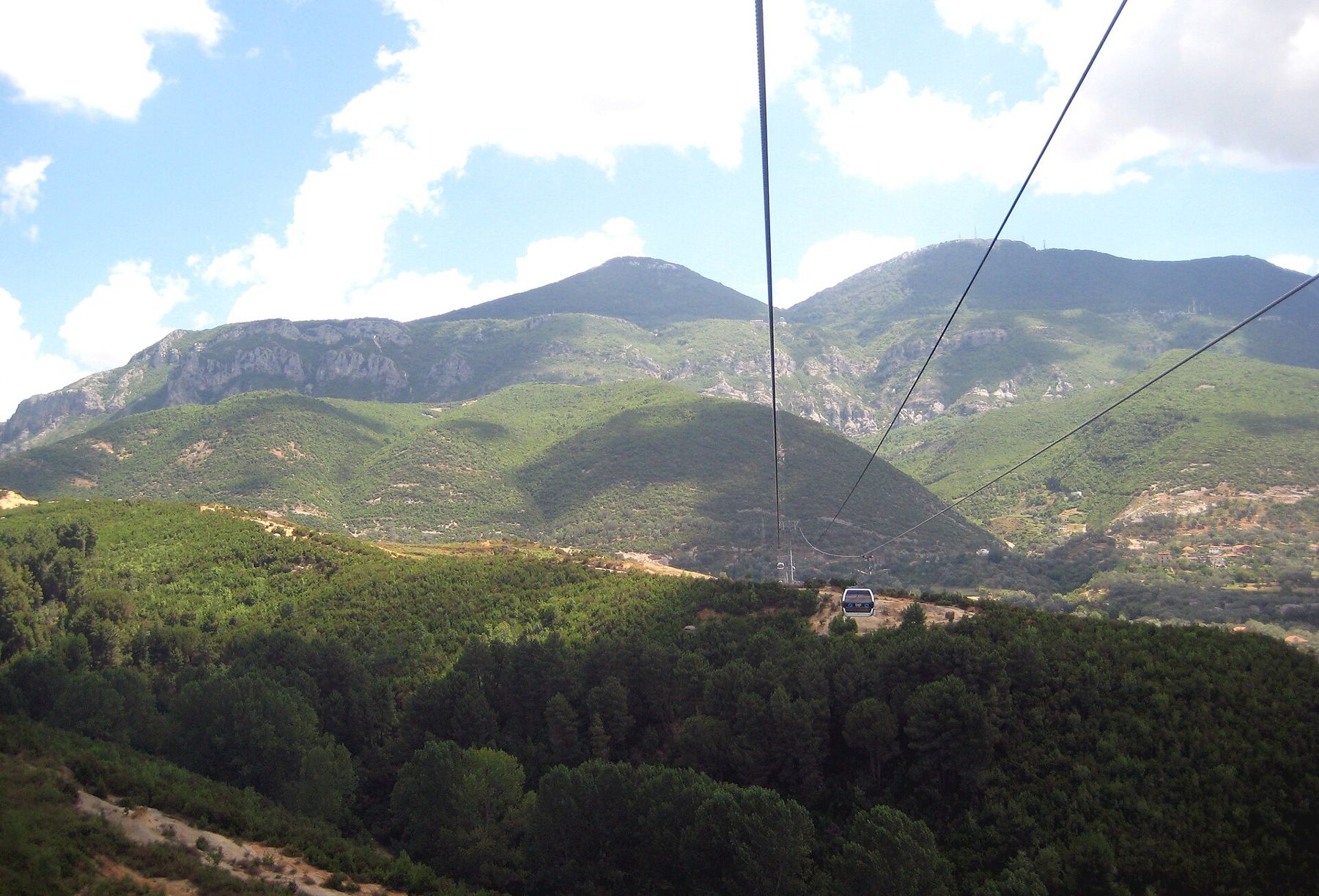
Look back on the way up, not only ahead. The city spreads out behind the cabin as you climb, first as rooftops, then as a whole pale grid on the plain, with the towers of the centre clustered in the middle. On a clear day you can see past it to the coastal hills and, beyond them, a thin line of the Adriatic.
The plain from above
The top station sits on the edge of a plateau at roughly a thousand metres, and there is a broad terrace where everyone stops for the view. It is a view of the whole of central Albania: Tirana in its bowl of hills, the airport plain to the north-west, the roads running out towards Durrës and Elbasan, and the coast on the horizon. In the morning the city often lies under a haze, and the best light comes in the late afternoon and early evening.
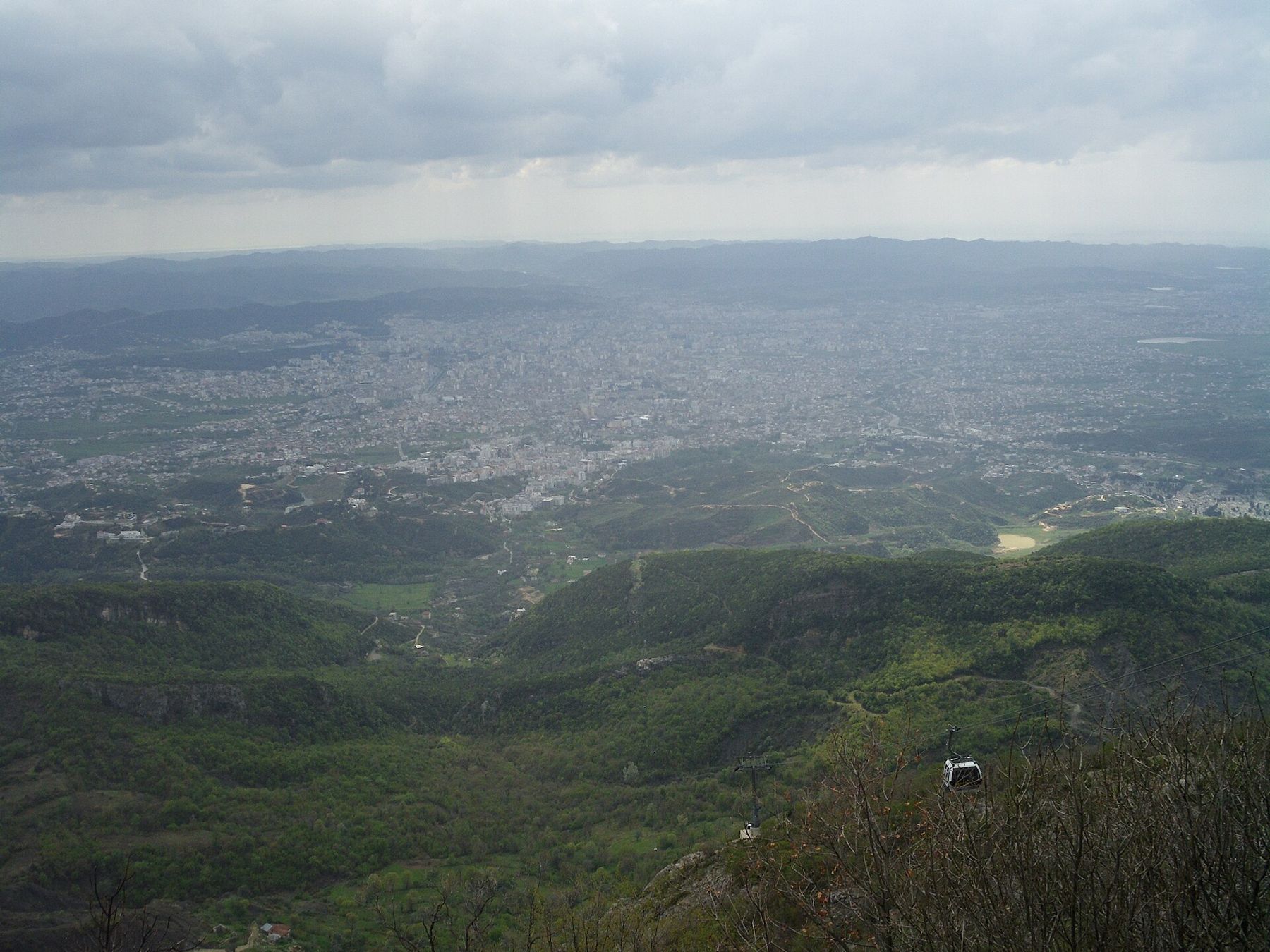
From up here it becomes clear how fast the city has grown. The compact centre of the communist era is now surrounded by suburbs, new estates and towers in every direction, and they run up into the foothills on every side. Sitting with a coffee on one of the terraces near the station, watching that great sprawl change colour as the sun goes down, is the main reason most people come.
Sitting with a coffee on one of the terraces near the station, watching that great sprawl change colour as the sun goes down, is the main reason most people come.
At the top
The plateau around the top station is part of Dajti National Park, a protected area of forest and mountain that has covered the massif since the 1960s and has been enlarged since. Near the station there is a small cluster of things to do: restaurants and cafés with terraces, a tower hotel with a restaurant at the top, and in the warmer months simple attractions such as an adventure course among the trees, mini golf and horse rides. What is on offer changes from year to year.
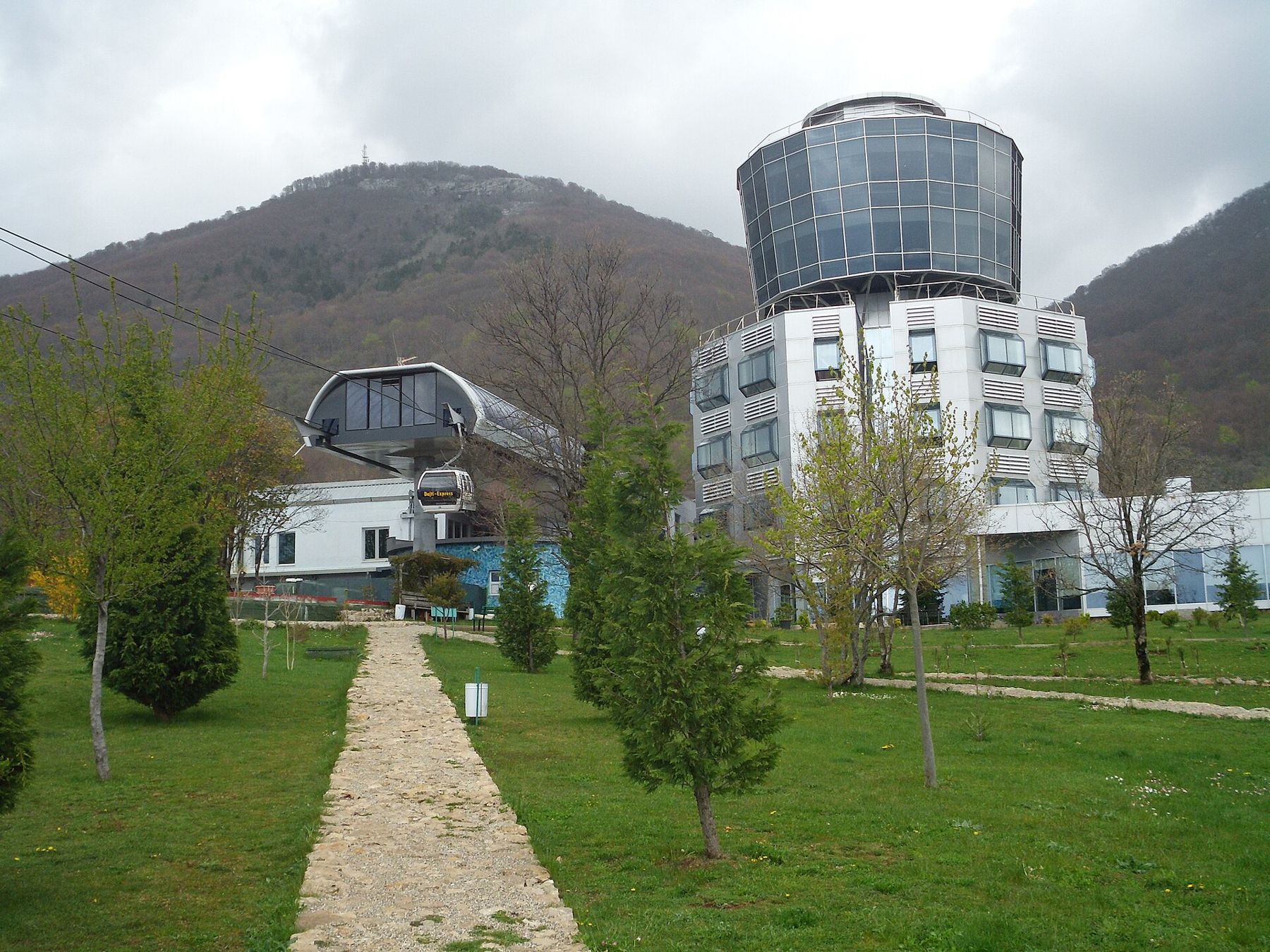
The food leans towards grilled meat, with lamb a favourite, and the menus at the restaurants near the top are similar to those in town. Several have long terraces facing the view, which is the real attraction. On weekends, especially in summer, the plateau is busy with families from Tirana escaping the heat; on weekdays it can be very quiet.
 Read nextWhere to stay in Tirana: the areas compared
Walks in the woods
Most visitors stay near the station, but the mountain is large, and a short walk is enough to leave the crowds. Paths and forest tracks lead away from the plateau through pine and beech woods, with meadows and limestone outcrops along the way. The walking ranges from easy level strolls to steep climbs.
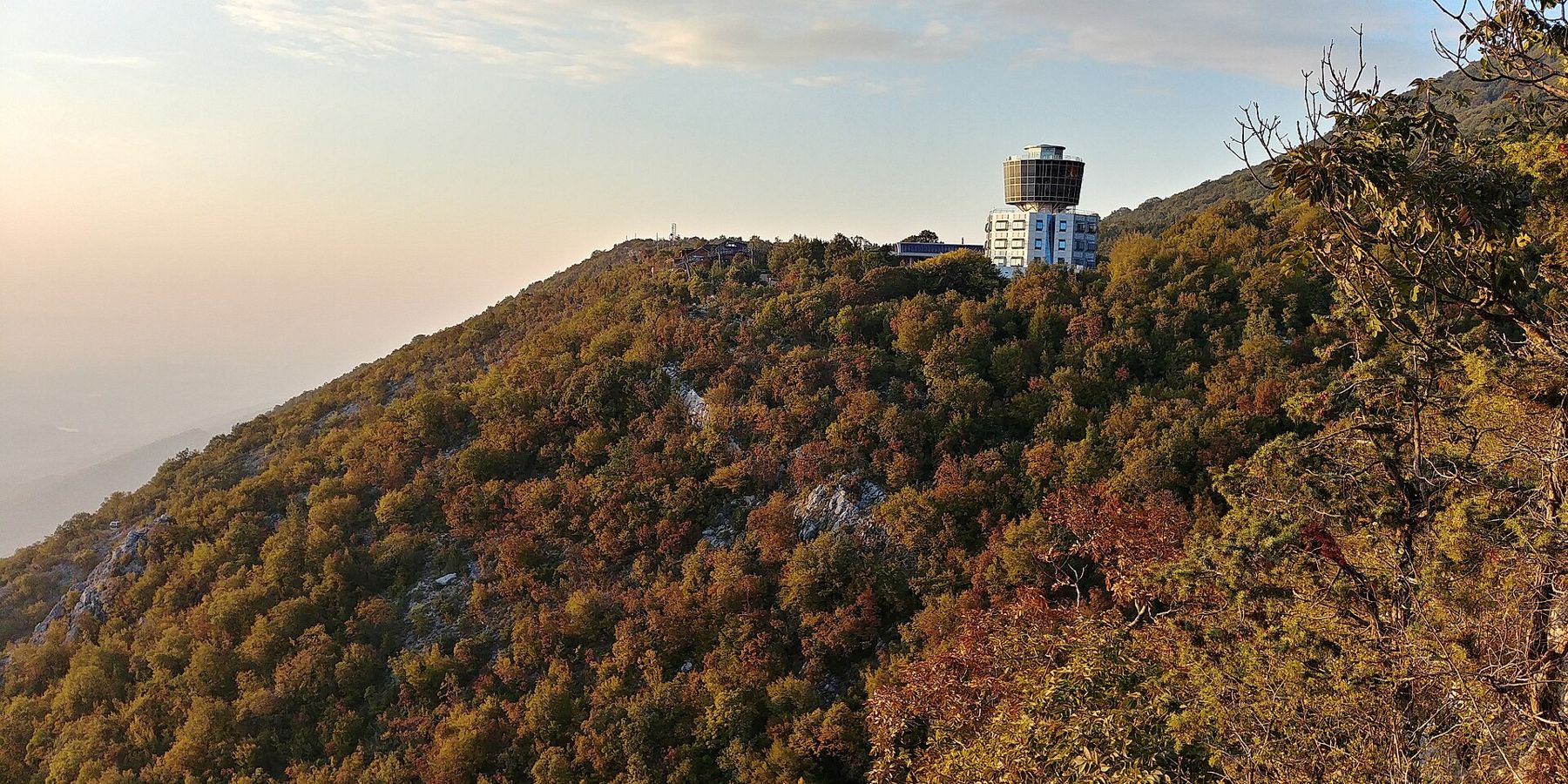
The summit ridge rises well above the plateau, to over 1,600 metres, and its highest points carry antennas and masts. Parts of the higher ground have long been restricted, and signage is limited. If you want to go far, go with a local guide or a reliable map, wear proper shoes, take water, and allow for the weather: mist can come down quickly, and in winter there may be snow and ice at the top even when Tirana is mild.
For a short outing, a loop of an hour or so through the woods near the station is plenty. The quiet comes quickly. Within ten minutes of the terraces there is little to hear but wind in the pines and, now and then, a bell from the goats on the slopes below.
The mountain through the year
Dajti changes with the seasons more sharply than the city below it. In spring the meadows near the plateau fill with wild flowers, the beech woods come into pale new leaf, and the snow lingers in the gullies of the upper ridge long after Tirana has gone into short sleeves. It is the best time for walking, with long days and soft light.
Summer is the busy season. When the city bakes in the high thirties, the plateau is the nearest cool air, and families come up for lunch and stay into the evening. The views are often hazy in the middle of the day, so the late afternoon is the time to be on the terraces.
Autumn brings the clearest air of the year. After the first rains the haze lifts, the beeches turn copper and gold, and on a good day the line of the sea is sharp on the western horizon. Winter is quieter and more changeable. Snow falls on the upper slopes most years, and sometimes on the plateau too, and a cold, bright day after a snowfall gives the finest view of all: a white mountain above a city in sunshine.
Getting there and when to go
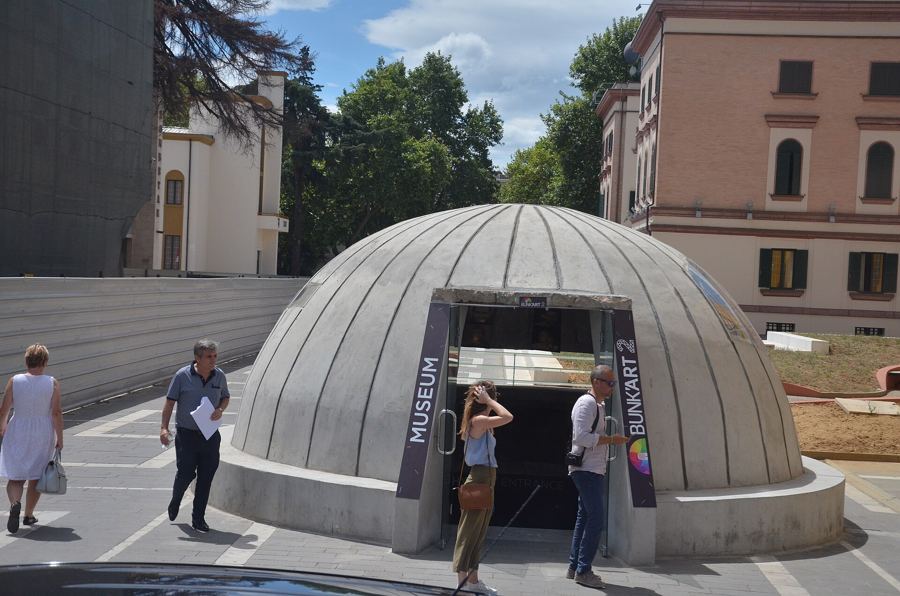
The lower station is on the road that leads east out of Tirana towards the mountain, and it is easy to reach by taxi from the centre. City buses also run out that way; routes and timetables change, so ask locally. The road passes the entrance to Bunk'Art 1, the great Cold War bunker museum, and many people combine the two in a single half day. There is also a winding road to the top for those with a car.
The cable car closes in strong wind and for maintenance, and its hours change with the seasons, as do the fares. It is worth checking before you set out, especially in winter. The line is popular at weekends and on summer evenings, and there may be a queue at the bottom; on a weekday morning there is usually none.
Take a layer even in summer, because the top can be several degrees cooler than the city. In spring and autumn, when Tirana is pleasant, the top can be chilly by evening. The best plan, if you are spending a full day in the city, is to come up in the late afternoon and stay for the sunset, as suggested in Tirana in a day.
The mountain at the end of the street
Coming back down in the dusk, the city lights come on below the cabin a few at a time, then all at once. The ride ends where it began, at the lower station, with the noise of traffic and the smell of the grills in the roadside restaurants. From then on, it is hard to look at Mount Dajti the same way. It is no longer just the wall at the end of the street, but somewhere you have been, cool and green and quiet, a quarter of an hour above the city.
Filed under Tirana