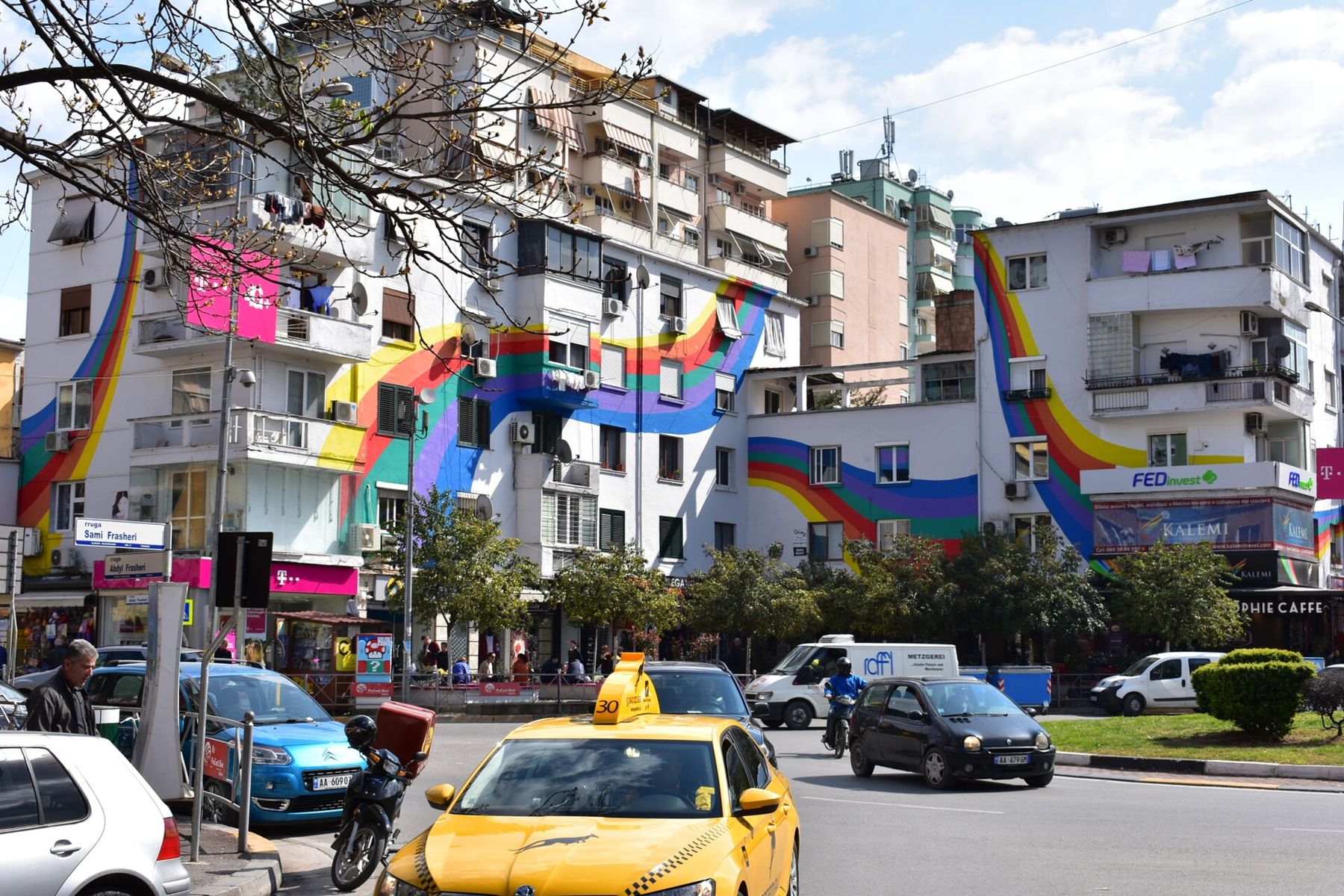
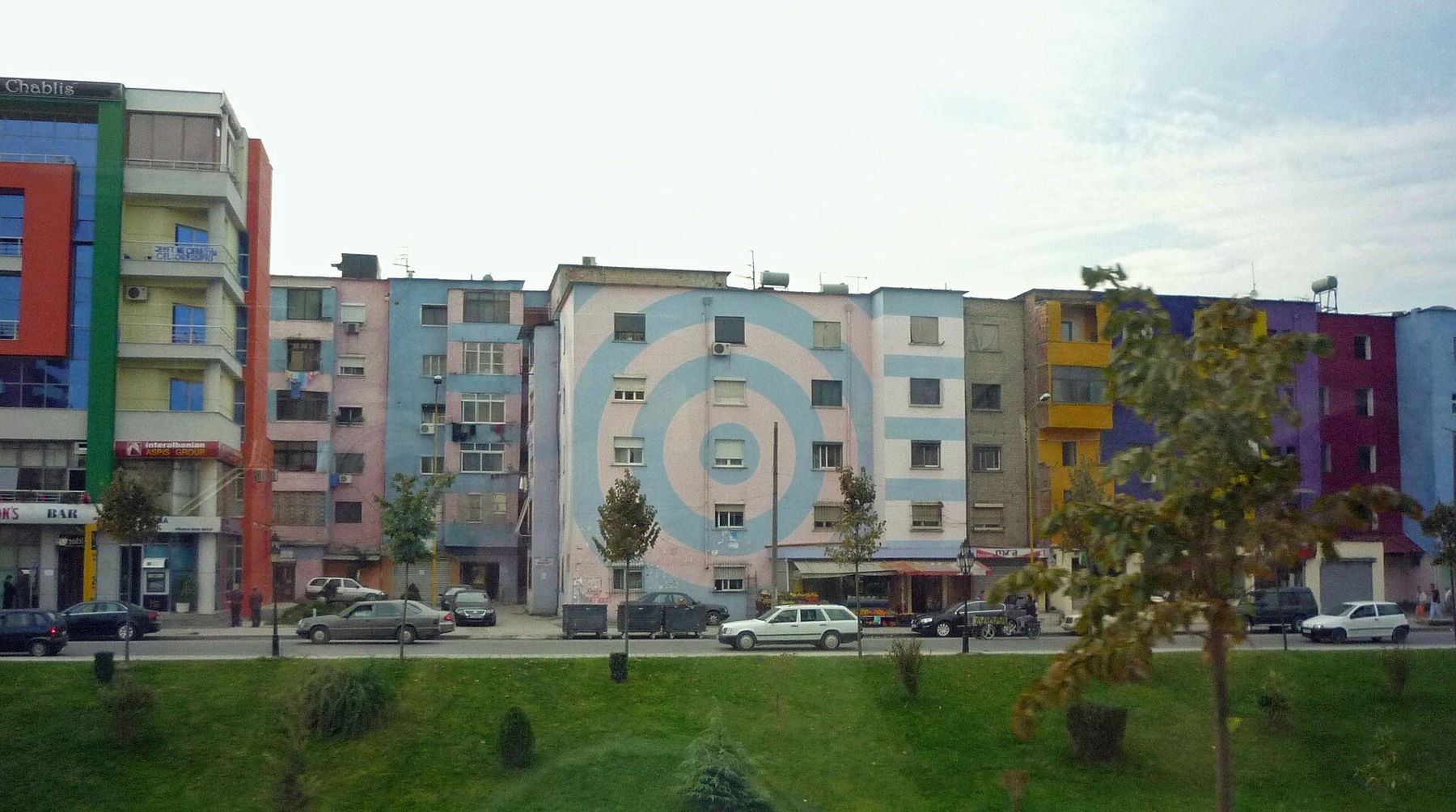
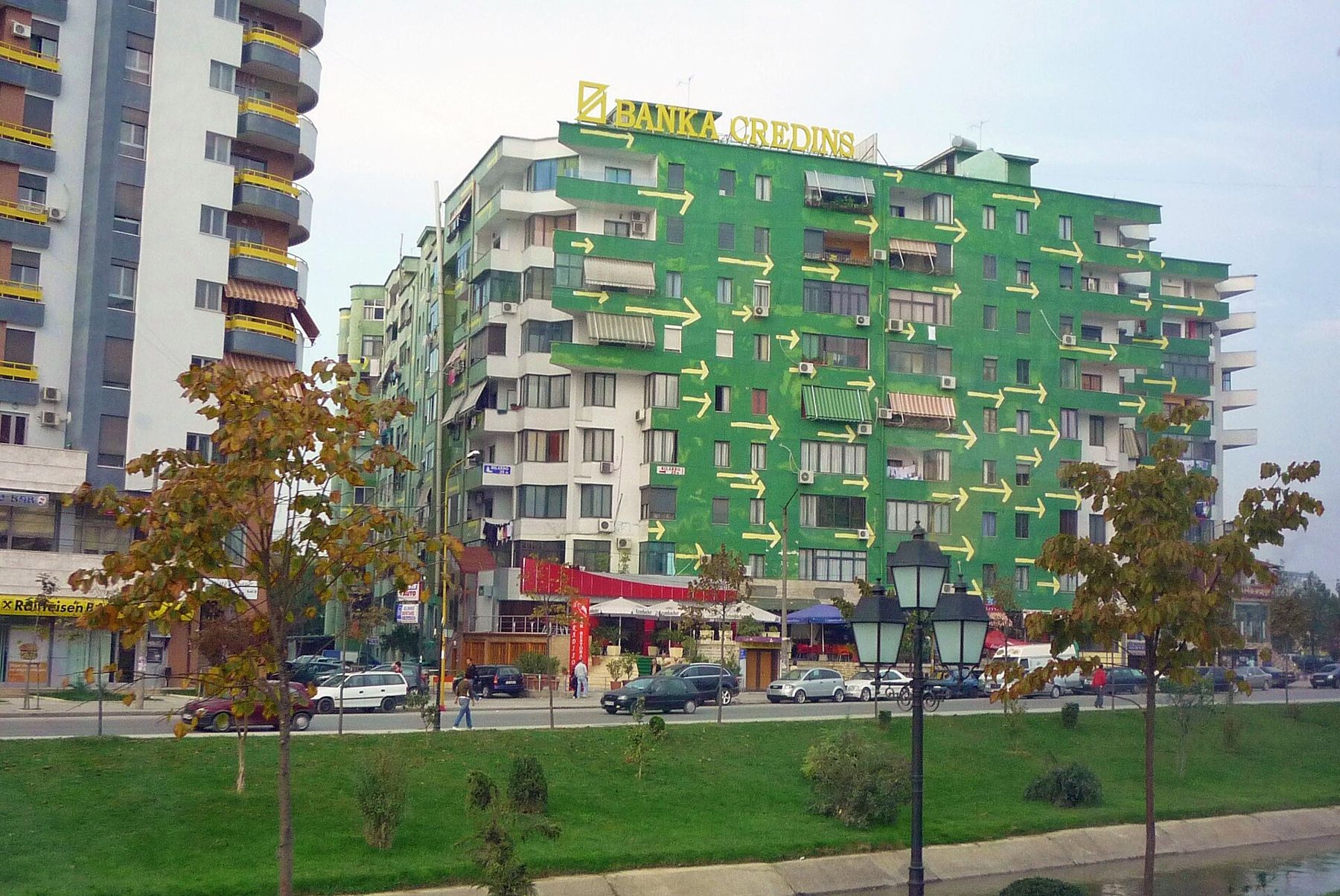
The first thing many visitors notice about Tirana, before the mosque or the mosaic or the mountain, is a block of flats painted in rainbow stripes. Or a wall of green with yellow arrows running across it. Or a grey five-storey building with a blue target painted over the middle, the windows sitting in the rings. These are not the work of a single eccentric landlord. They are what remains of one of the stranger and more discussed pieces of urban policy in post-communist Europe: the decision to repaint a capital city.
A grey city
Tirana became Albania's capital in 1920. Under King Zog and then during the Italian occupation, it gained boulevards and ministries; under the communist government that took power in 1944, it gained housing. The apartment blocks of those decades were built quickly and cheaply in concrete and brick, four or five storeys high, plastered and usually painted in muted tones if they were painted at all. They housed a city that grew steadily as people moved in from the countryside, under a regime that controlled where people could live.
When the one-party state ended in 1991, the city changed fast and roughly. People who had been held in place for decades moved to the capital in large numbers. Kiosks, cafés and extensions appeared on any open ground, including the banks of the Lana river and the edges of parks. The 1990s brought freedom and also great hardship, including the collapse of the pyramid investment schemes and the unrest of 1997. By the end of the decade the old blocks were weathered, stained and patched, and much of the centre felt neglected.
A mayor with a brush
In 2000 Tirana elected Edi Rama as mayor. He had trained as a painter at the academy of arts in Tirana and had worked as an artist and lecturer before entering politics. Among the first and most visible things his administration did was to clear many of the illegal structures from the river banks and public spaces, and to start painting the facades of the city's apartment blocks.
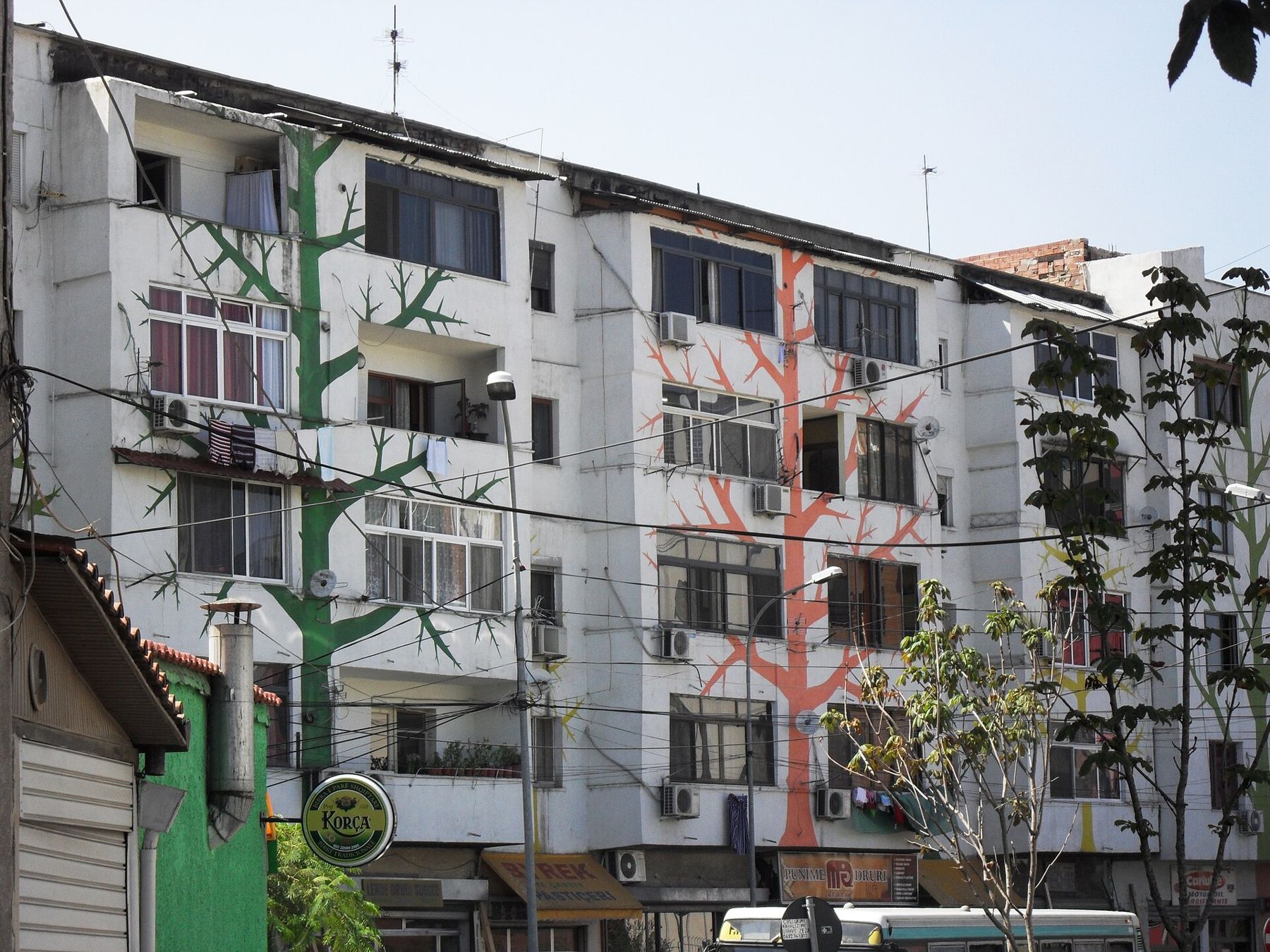
The colours were not subtle. Whole buildings were painted in saturated orange, purple, lime, turquoise and red, sometimes in a single shade and sometimes in stripes, checks, zigzags, circles or broad abstract shapes. Some designs came from artists; many were applied simply and quickly, block after block, along the main streets. The work was cheap compared to rebuilding, and it was immediate: a street could change character in a few weeks.
The project caught attention far beyond Albania. In 2003 the artist Anri Sala made Dammi i colori, a short film in which Rama, at night, talks about the painted buildings as the camera moves past them. In 2004 Rama was named World Mayor, an international award, largely for the transformation of the capital. In 2011 his time as mayor ended, and in 2013 he became prime minister; those later years are a separate story and not one this piece tries to tell.
What the colours meant
It is easy to treat the painted blocks as decoration, and some critics did, arguing that colour on a facade did nothing for a leaking roof, a broken lift or a missing pavement. That argument was made loudly at the time and it has never entirely gone away.
Supporters saw something else. For a city that had spent decades under a system which decided almost everything for its residents, and then a decade in which public space seemed to belong to nobody, the paint was a visible sign that someone was taking responsibility for the streets again. People talked about the colours. They argued over them at home and in cafés. A city that had stopped looking at itself began to do so. It became possible to imagine that the public realm could be cared for.
 Read nextThe Pyramid, from museum to climbing frame
A city that had stopped looking at itself began to do so.
There was also a more practical effect that residents still mention. The bright facades made streets feel safer and more lived in at a time when many were dark and run-down, and they helped turn the riverside and the park edges back into places people walked. Whether that came from the paint itself, or from the cleaning, lighting and tree planting that went with it, is hard to separate. They arrived together.
Fading and repainting
Paint does not last on Tirana's walls. Summer sun and winter rain bleach the colour within a few years, and the original schemes of the early 2000s are now patchy, softened and in many places gone. Some blocks have been repainted in the old spirit; others have been resurfaced with insulation and plain new render; many have been demolished to make way for the towers that now dominate the centre.
Those towers have brought colour of their own: glass in greens and blues, cladding in panels of contrasting shades, facades that seem to change as you walk past. It is hard not to see in them a lesson from the painted years, that a building in this city is expected to be seen, argued over and remembered, rather than simply to stand there.
At the same time a newer wave of colour has arrived: large murals by Albanian and visiting artists, painted on gable ends and courtyard walls, often figurative rather than abstract. They are a different thing from the early facade programme, more like street art than urban policy, but they continue the habit the city picked up in those years of treating its walls as somewhere to say something.
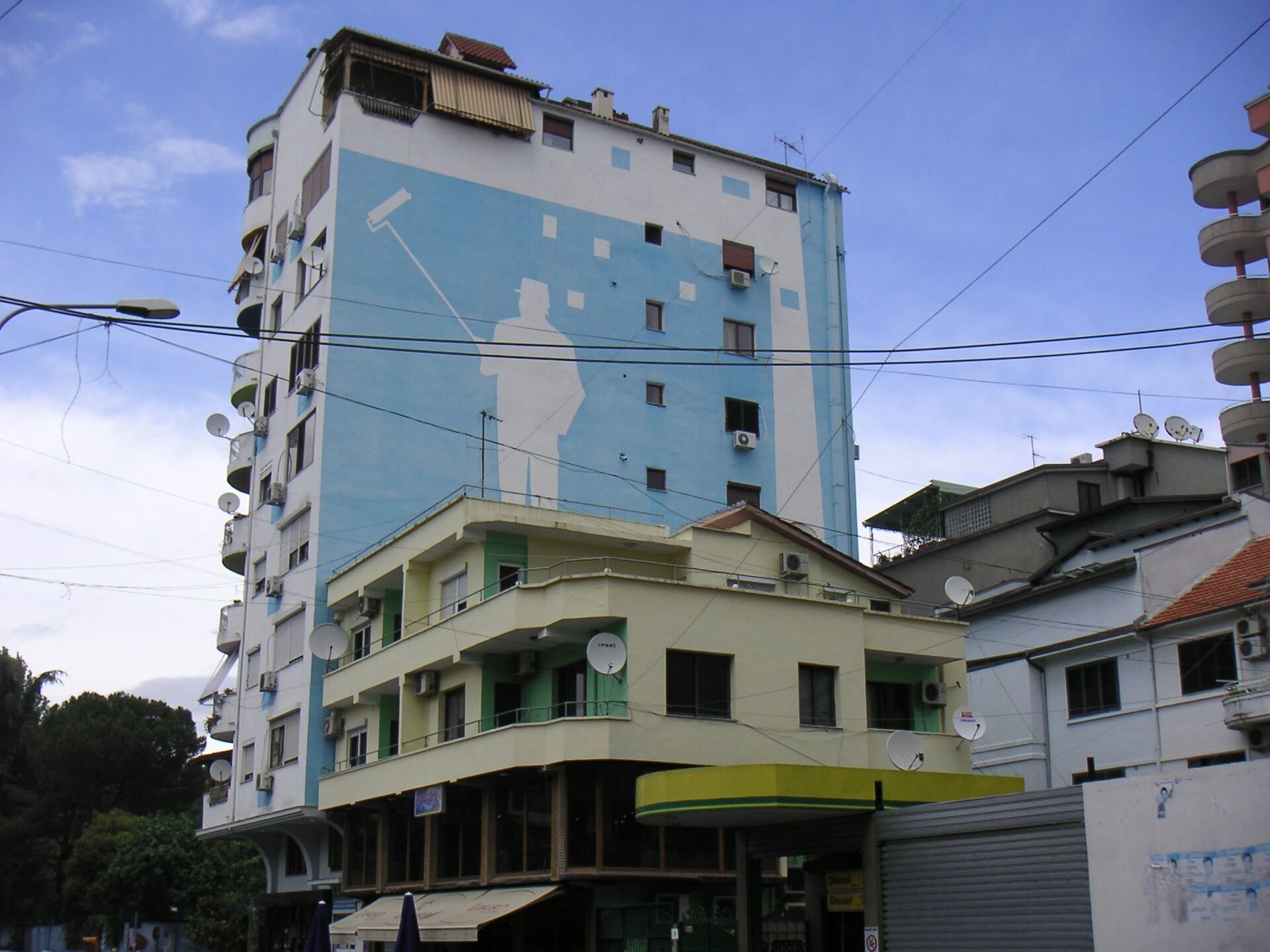
Perhaps the most telling of these is the image of a man with a long paint roller, standing on a pale blue wall as if halfway through the job. It is hard to stand in front of it and not think of the early 2000s.
Where to see it today
The painted city is not a single site, and there is no trail or ticket. It is spread across the centre and the inner districts, and the best way to find it is on foot or from the window of a bus or taxi.
The banks of the Lana, the river that runs east to west through the centre in a concrete channel, are the most rewarding stretch. The blocks along the embankment roads were among the first to be painted, and several still show strong stripes and patterns. Walk along the river from the main boulevard and you will pass a good number within half an hour; the walk links naturally with Blloku on the south bank.
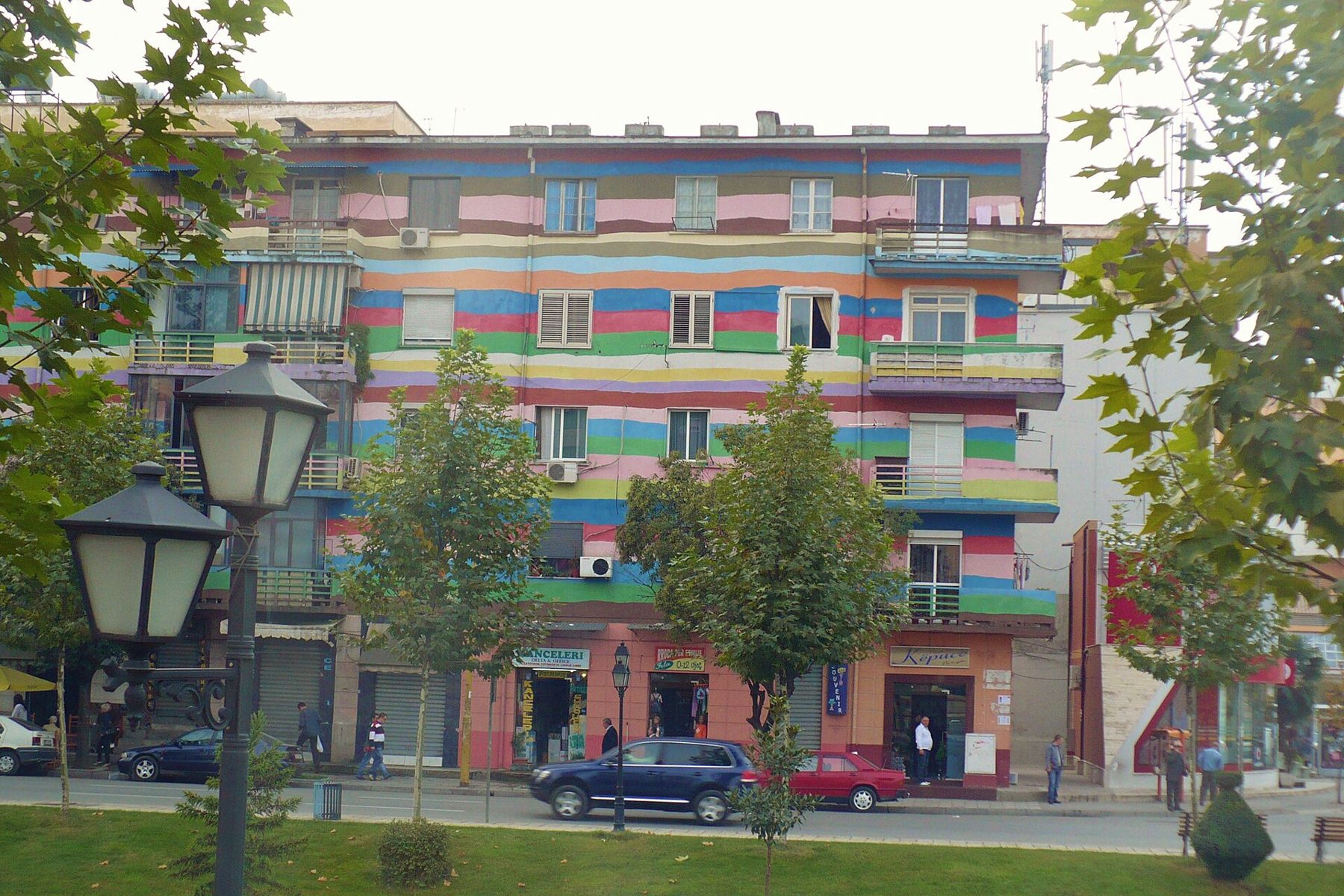
The main roads leading out of the centre, towards the Zogu i Zi roundabout, towards the west, and up towards the university area, also carry painted blocks among the newer buildings. On Rruga Sami Frashëri, a run of blocks wears broad rainbow bands that sweep across several buildings at once, and they turn up in a great many photographs of the city.
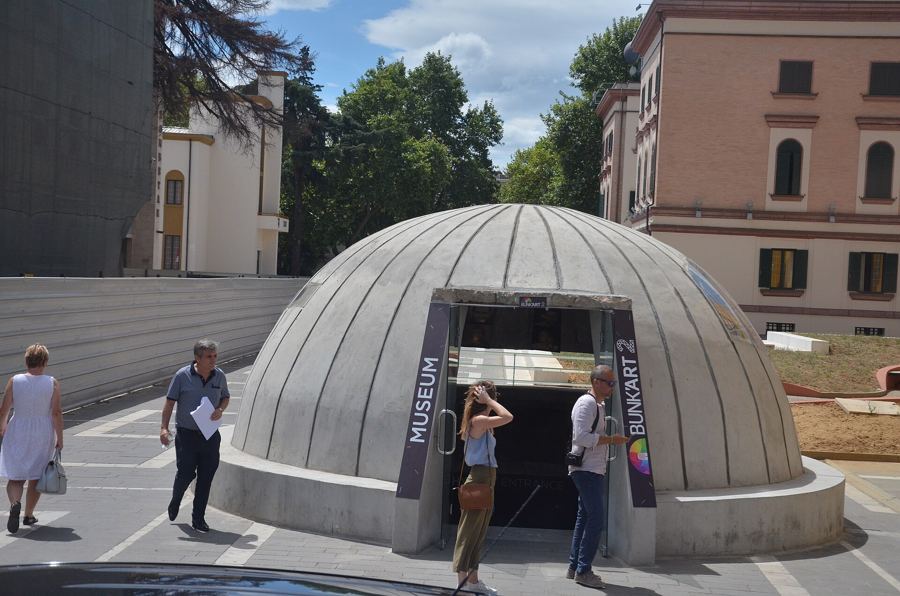
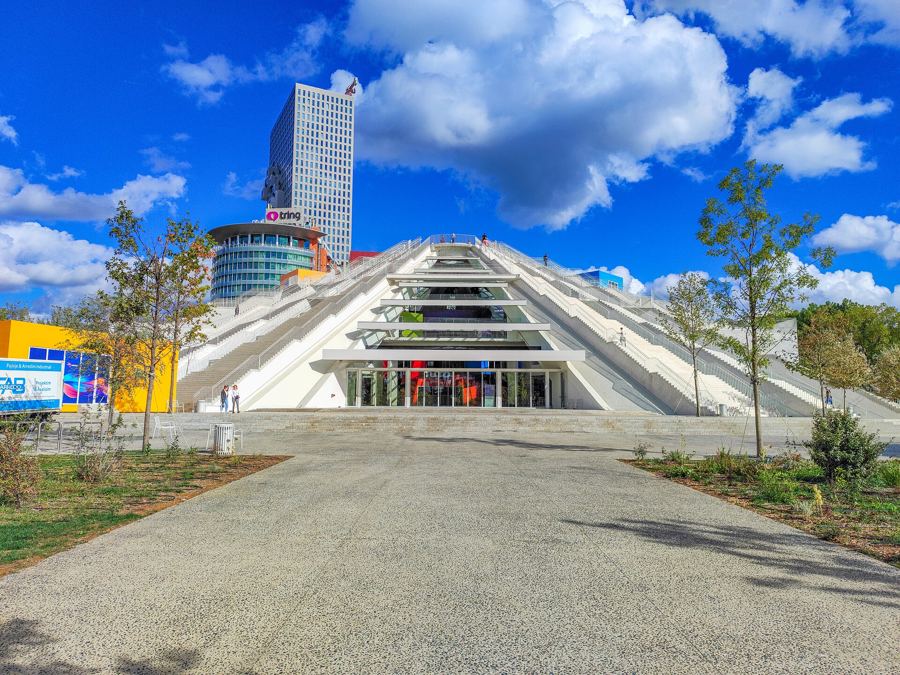
For the background to the period, two other stories help. The downtown Bunk'Art 2 covers the communist state and its police, and the story of the Pyramid follows a single building through the same decades. For a broad first walk through the city that takes in some of these streets, start with Tirana in a day.
The painted blocks are best seen on a bright morning, before the haze, when the colours are at their sharpest against the sky and the mountain behind. Look up from the pavement as you go. The stripes are usually above the shop signs, two or three floors up, faded but unmistakable, a record of the years when Tirana decided to change its face before it could afford to change anything else.
Filed under Tirana