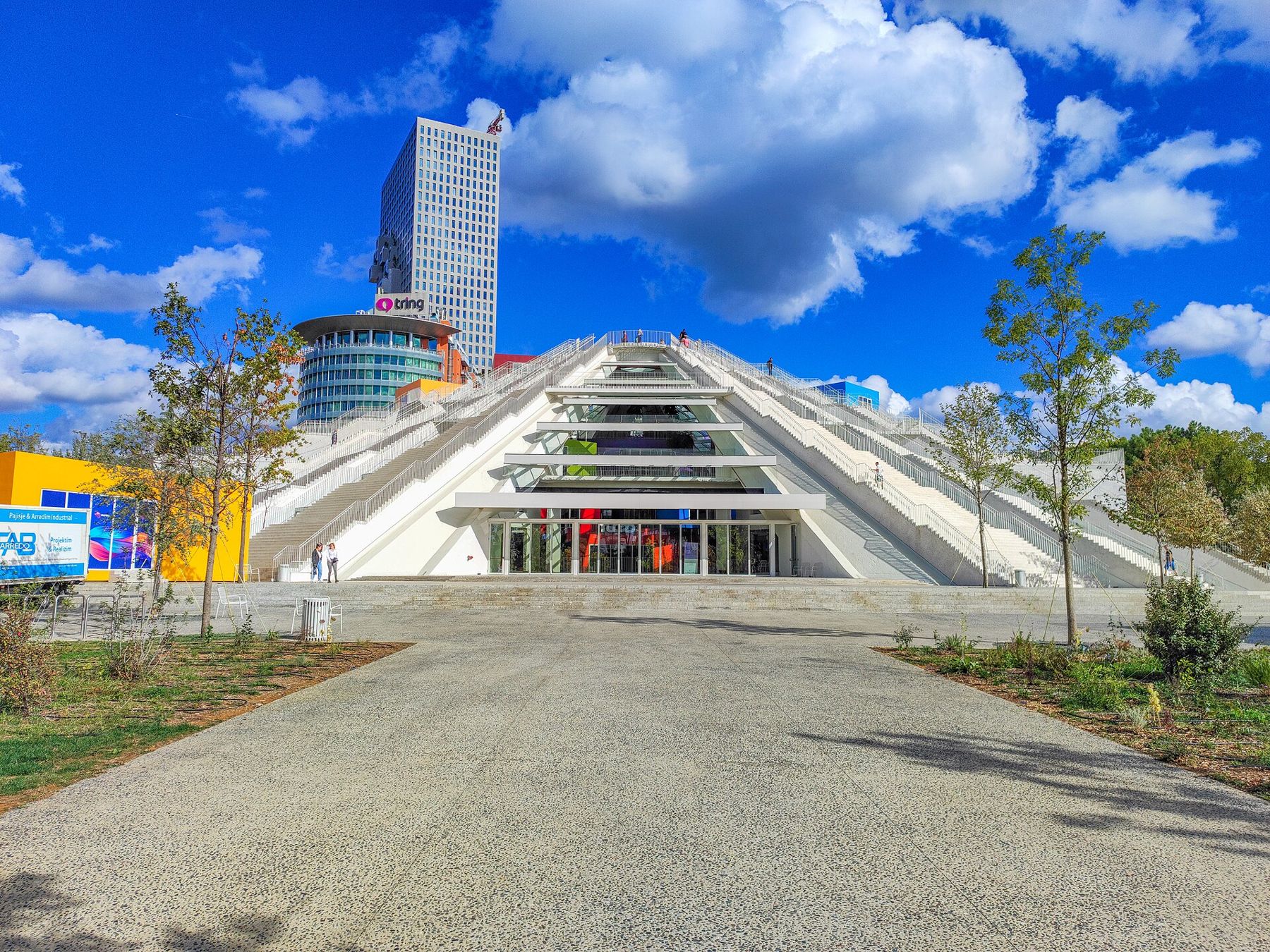
At about six on a summer evening, the slopes of the Pyramid fill up. Teenagers sit in rows on the steps with their phones. A father hauls a toddler up towards the top, one stair at a time. Somebody has brought a speaker. From the platform at the summit the boulevard runs away towards Skanderbeg Square, the towers of the new centre catch the last of the light, and above all of it Mount Dajti turns slowly blue.
Few buildings anywhere have changed meaning as many times as this one. It went up as a monument to the man who had ruled Albania for four decades. Within three years of opening it had lost its purpose. It spent the next thirty years as a cultural centre, a television studio, a refugee aid base, a nightclub and a ruin with graffiti on its flanks, and the city argued constantly about whether to knock it down. In the end it was saved, and today it is a place where young people learn to programme computers and anyone can climb to the top.
A monument to Enver Hoxha
Enver Hoxha led Albania from the end of the Second World War until his death in April 1985. Three years later, in 1988, the Pyramid opened on the main boulevard as a museum devoted to his life and work. Among its architects was his daughter, Pranvera Hoxha, working with her husband and other colleagues.
The design was unlike anything else in the city: a low, spreading pyramid with sloping white marble-clad sides, glass panels and a central space under the apex. Seen from above it has the outline of a star or a spread eagle, depending on who is describing it. Inside, the museum presented Hoxha's life in the heroic register of the state's own history. It was meant to be a place of respect, almost of pilgrimage.
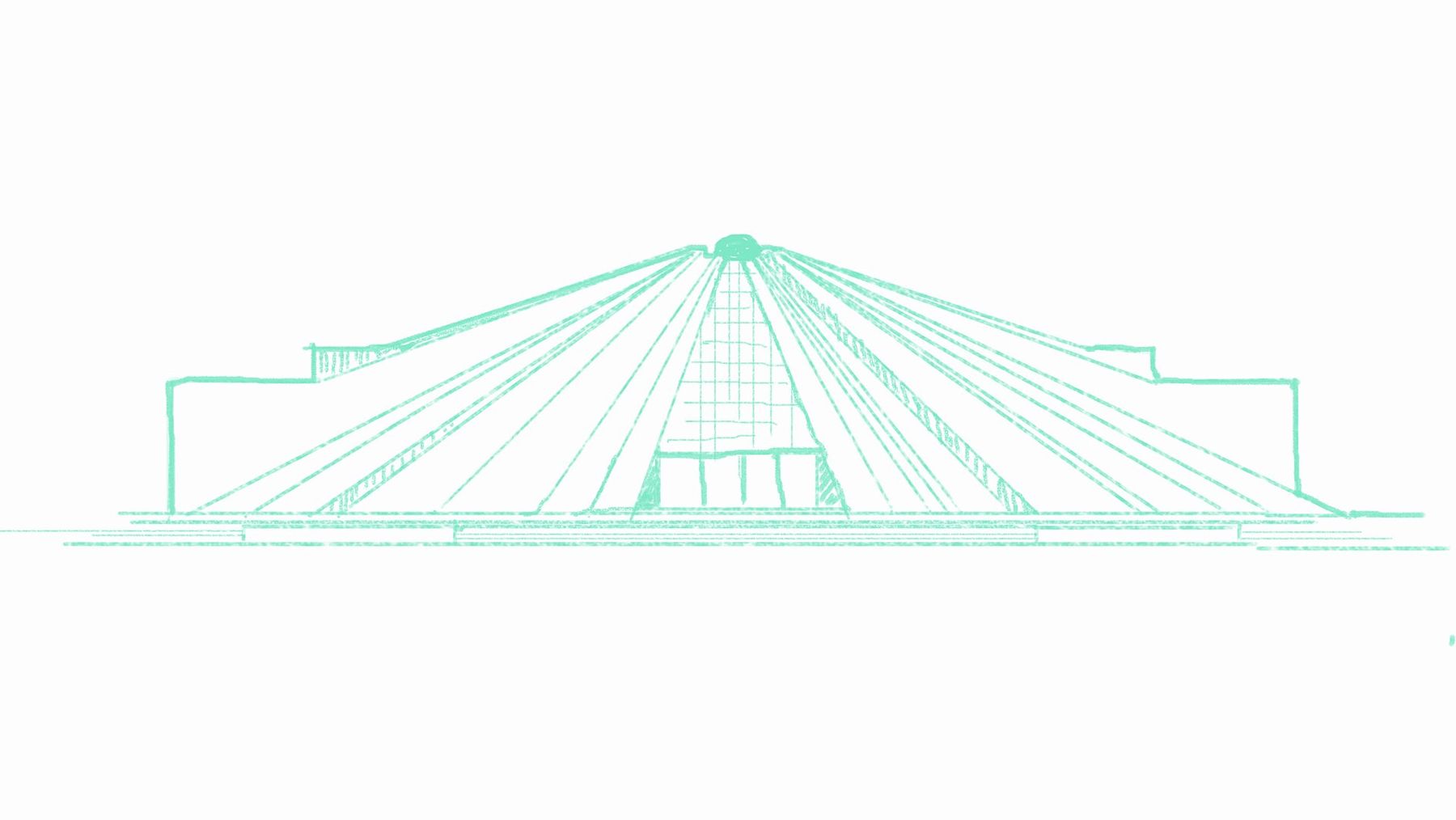
The timing was against it. The late 1980s were the last years of the system the building celebrated. In 1990 and 1991 the student protests, the opening of the borders and the end of the one-party state swept away its purpose, and the museum closed.
Thirty years of other lives
In the 1990s the building was turned into a cultural and conference centre, and later named after Pjetër Arbnori, a writer who spent nearly three decades in prison under the communist government. Parts of it were let to television and radio broadcasters, whose studios worked inside for years. It housed offices, events and, at one point, a nightclub.
During the Kosovo crisis of 1999, when hundreds of thousands of refugees crossed into Albania, the Pyramid served as a base for the international operations that supported them. It was a brief and practical use, and it shows how much the building had become simply a large space in the middle of the city, available for whatever was needed.
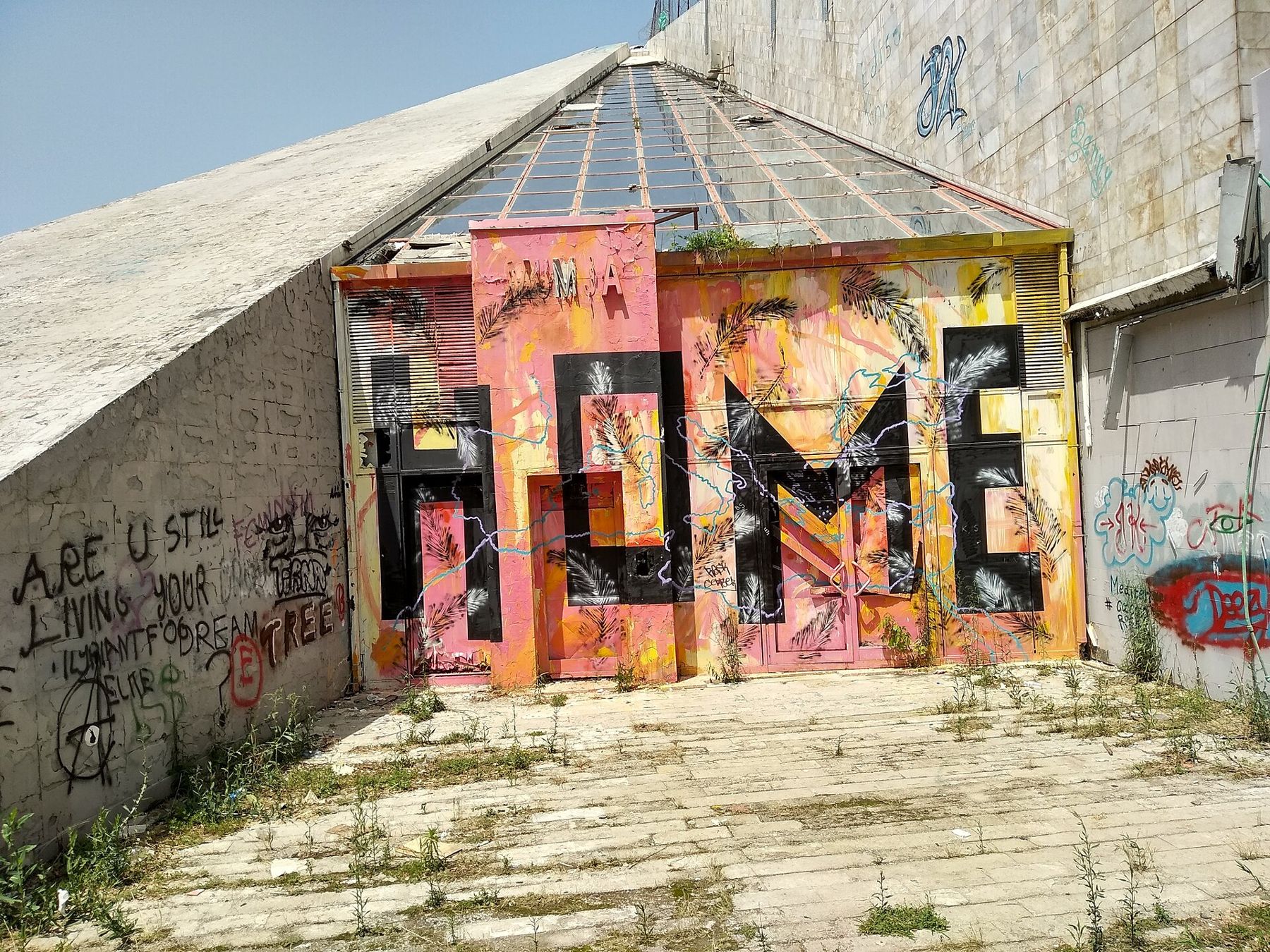
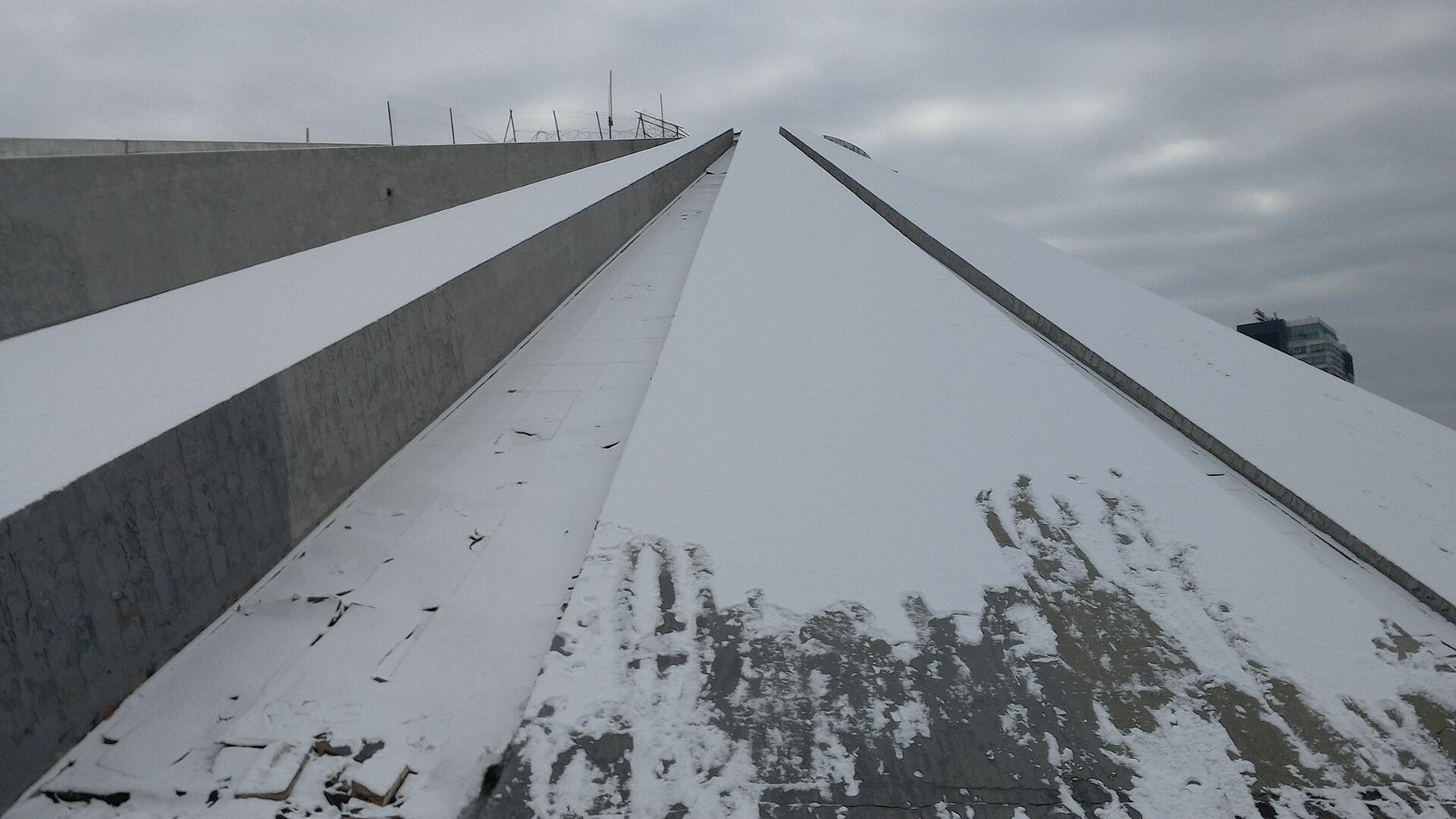
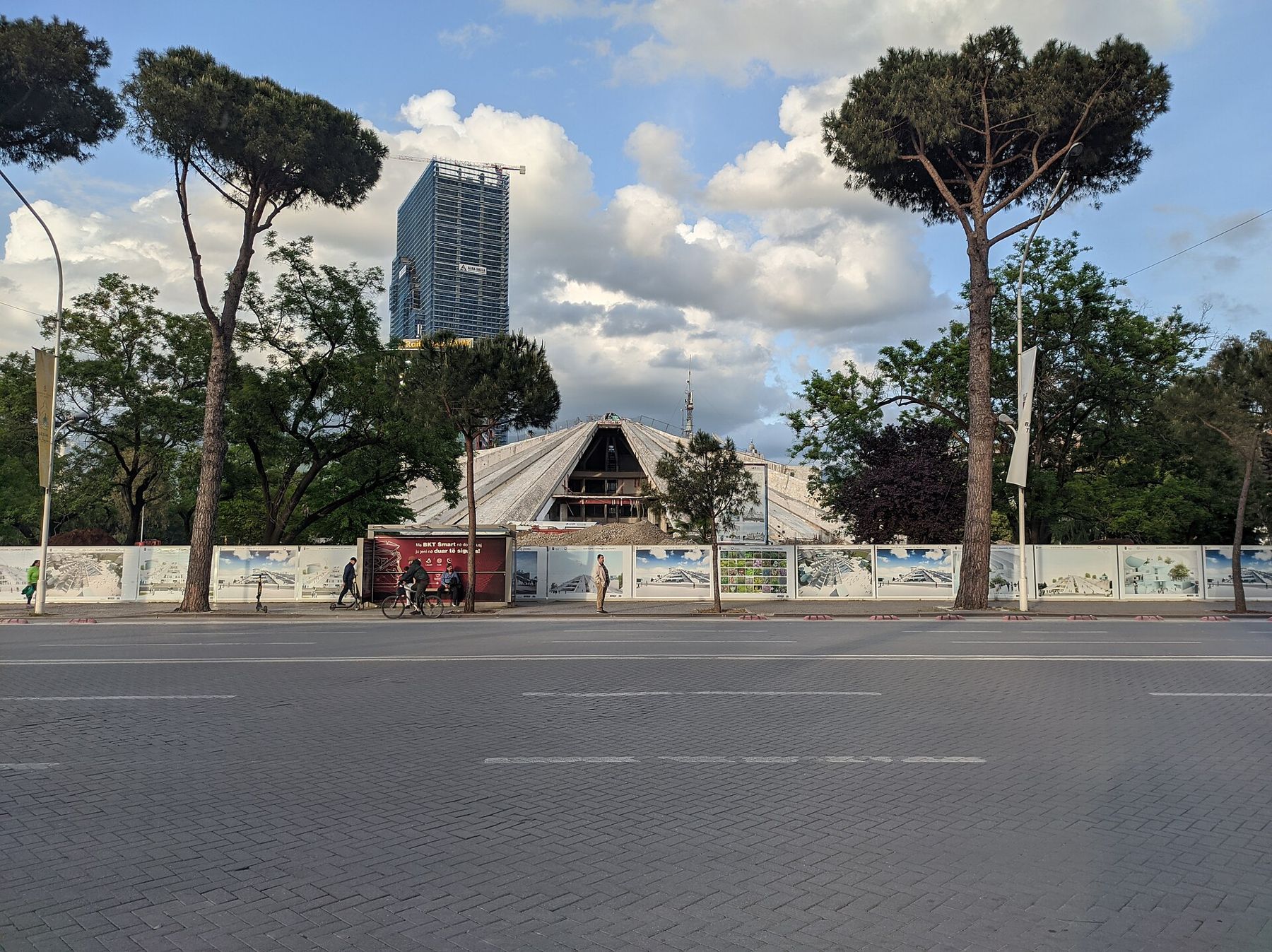
Meanwhile the marble cladding came away, panels broke, and the slopes were taken over by people. Children, students and visitors climbed up the sloping concrete and slid back down it, a dangerous game that many in Tirana remember fondly. The walls carried graffiti, the windows were boarded, and the area around it filled with kiosks and cafés. The Pyramid had become a ruin at the centre of the capital, both an eyesore and a playground.
A building people argued about
For a whole generation the Pyramid was a question the city kept asking itself. To some it was simply the most hated building in Tirana, a monument to a regime that had imprisoned and impoverished its people, and the sooner it went the better. To others it was the opposite: a record of that regime that should be kept precisely because it was uncomfortable, and a striking piece of late modern architecture besides.
 Read nextThe House of Leaves, where the state listened
Most people held something in between. They remembered queuing at school to visit the museum, and then, a few years later, sliding down the same sloping walls with their friends. The building had absorbed both memories, and it became hard to treat it as only one thing. Artists used it for installations, photographers for its strange silhouette against the mountain, and teenagers for a view and a dare.
The arguments were rarely about the architecture alone. They were about what to do with the past in general: whether to clear away its traces, leave them to decay, or find a way to live with them. The Pyramid, sitting on the main boulevard where nobody could avoid it, was the place where that argument kept coming back.
Saved from demolition
Around 2010 the government of the day proposed to demolish the building and put a new parliament on the site. The plan prompted protests from architects, artists and residents who, whatever they felt about the man it was built for, did not want to lose the building itself. Petitions were signed and debates held, and the plan was eventually dropped. It was not the last proposal for the site, but it set the tone: Tirana wanted the Pyramid kept and changed rather than erased.
That instinct, to keep the communist past visible and turn it to new uses, runs through the city. It is the same instinct behind the bunker museums and the House of Leaves museum of surveillance, and behind the quiet survival of the leader's villa in Blloku.
Steps up the slopes
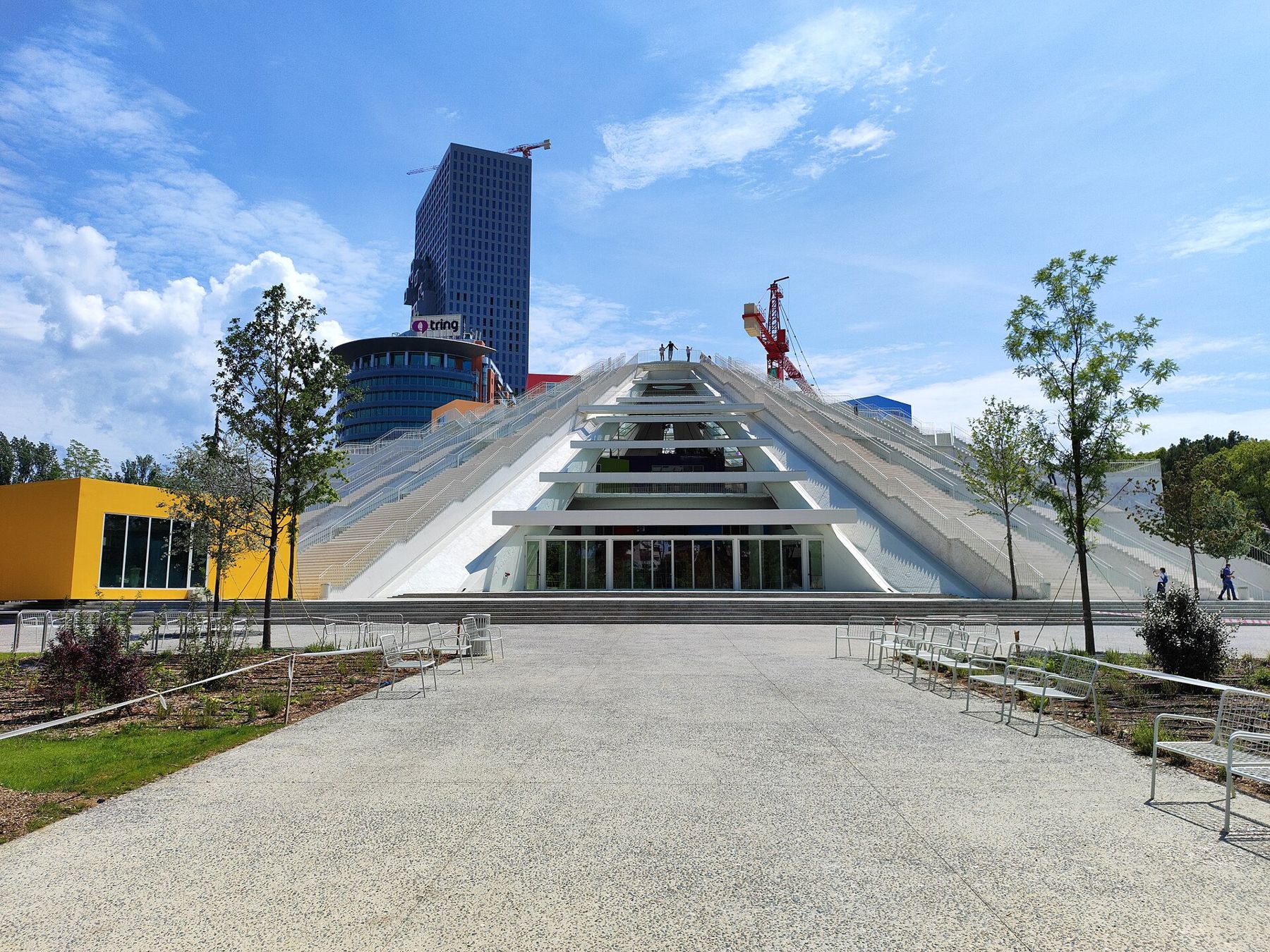
The renovation that finally settled the Pyramid's future began in 2021, to a design by a Dutch architectural practice. It kept the shape and opened the building up. The sloping sides were given flights of steps so that the climb that people had made for years, illegally and at some risk, became the official way to use the roof. At the top is a viewing platform.
Around and inside the old structure, the architects placed brightly coloured boxes that hold classrooms, studios and workshops. The building reopened in 2023 as a technology and creative learning centre for teenagers, where they can study programming, design, animation and music free of charge. It also has cafés and space for events. The interior is primarily for the young people who study there, and public access inside varies.
The sloping sides were given flights of steps so that the climb that people had made for years, illegally and at some risk, became the official way to use the roof.
What you can see today
The Pyramid stands on Bulevardi Dëshmorët e Kombit, the main boulevard, just south of the Lana river and a short walk from Skanderbeg Square. The outside is open to all, and the steps make the climb easy for anyone who can manage stairs. There are no handrails on some sections, so take care, especially with children, and avoid the slopes in rain, when the surfaces can be slippery.
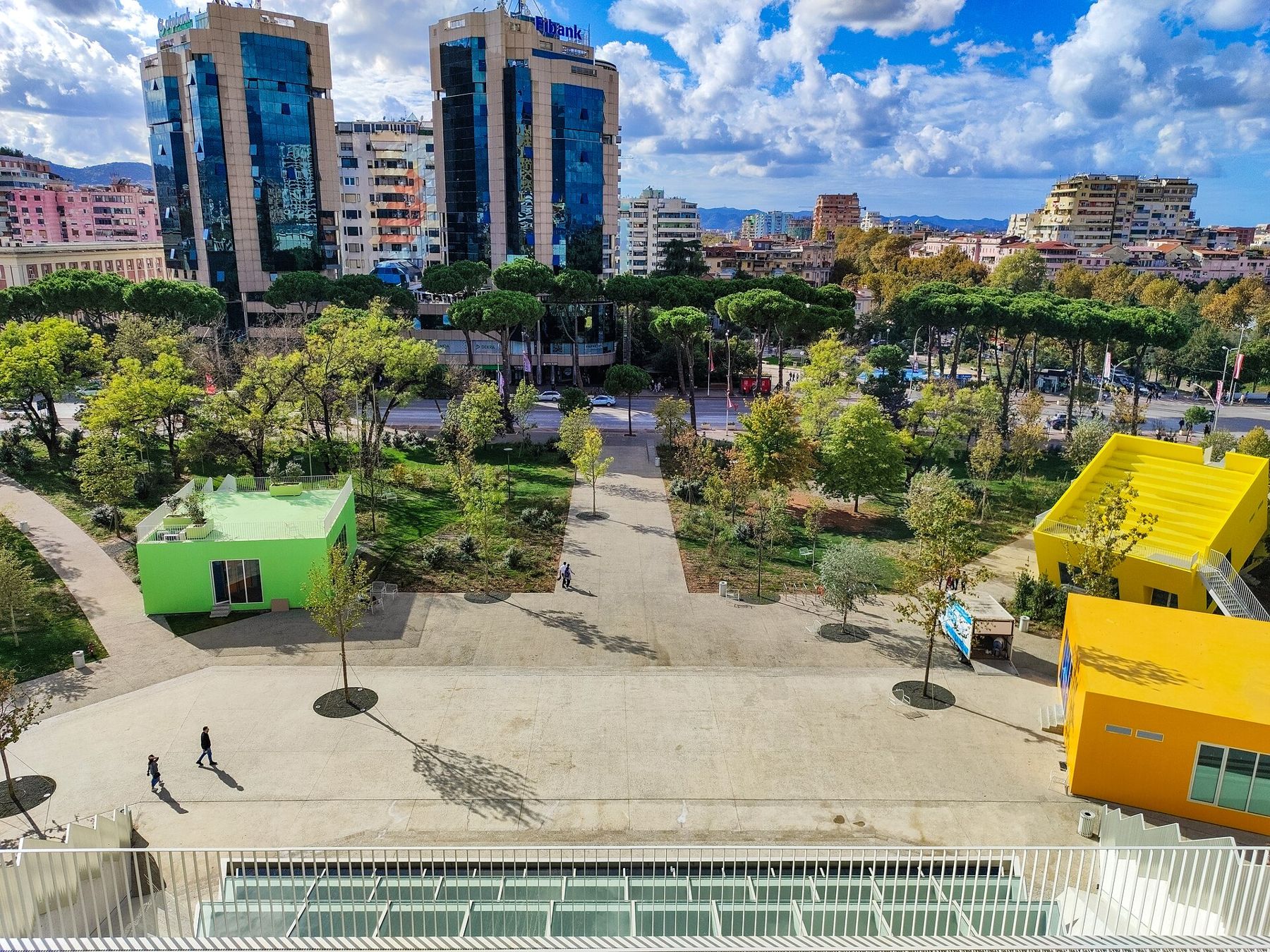
From the top you see the centre of Tirana as a layered city: the low roofs of older districts, the Italian-era ministries along the boulevard, the new towers that have risen since the 2010s, and the mountain beyond. Around the base, look for the large bell made from cartridge cases collected after the unrest of 1997, a memorial to peace that many visitors walk past.
Come in the early evening, when the heat has gone out of the day and the city is out walking. The Pyramid is part of most walks through the centre, including the route in Tirana in a day. Sit for a while on the steps among the students and the families. It is hard to imagine a stranger fate for a monument to a dictator than to become the most popular place in town to watch the sunset, and that, for many in Tirana, is exactly the point.
Filed under Tirana