Seen from the bridge, Berat looks like a wall of windows. The white houses of Mangalem climb the hillside in tight rows, one above another, and each house has its rows of tall windows facing the river. In the late afternoon the sun catches them all at once and the slope seems to watch you. People call it the town of a thousand windows, and once you have stood on the riverbank you understand why.
The name of the town is older than its houses. Under the Slavs who settled the region in the Middle Ages it was called Belgrad, the white city, and the name wore down over time into Berat. Before that it had Greek and Byzantine names, and before those an Illyrian hill fort stood on the rock where the castle is now.
Berat is one of the most complete Ottoman towns in the Balkans, and one of the most rewarding places in Albania for a day out of Tirana. It is a town to walk slowly: down by the river, up through the lanes, and into a castle that has never stopped being lived in.
A town on both banks
Berat sits where the Osum river cuts through a gorge below a rocky hill. On the north bank, beneath the castle, is Mangalem, the old Muslim quarter, with its houses packed onto the slope. Across the river is Gorica, the old Christian quarter, quieter and greener, facing Mangalem like a mirror. The two are joined by the Gorica bridge, a stone bridge of several arches.
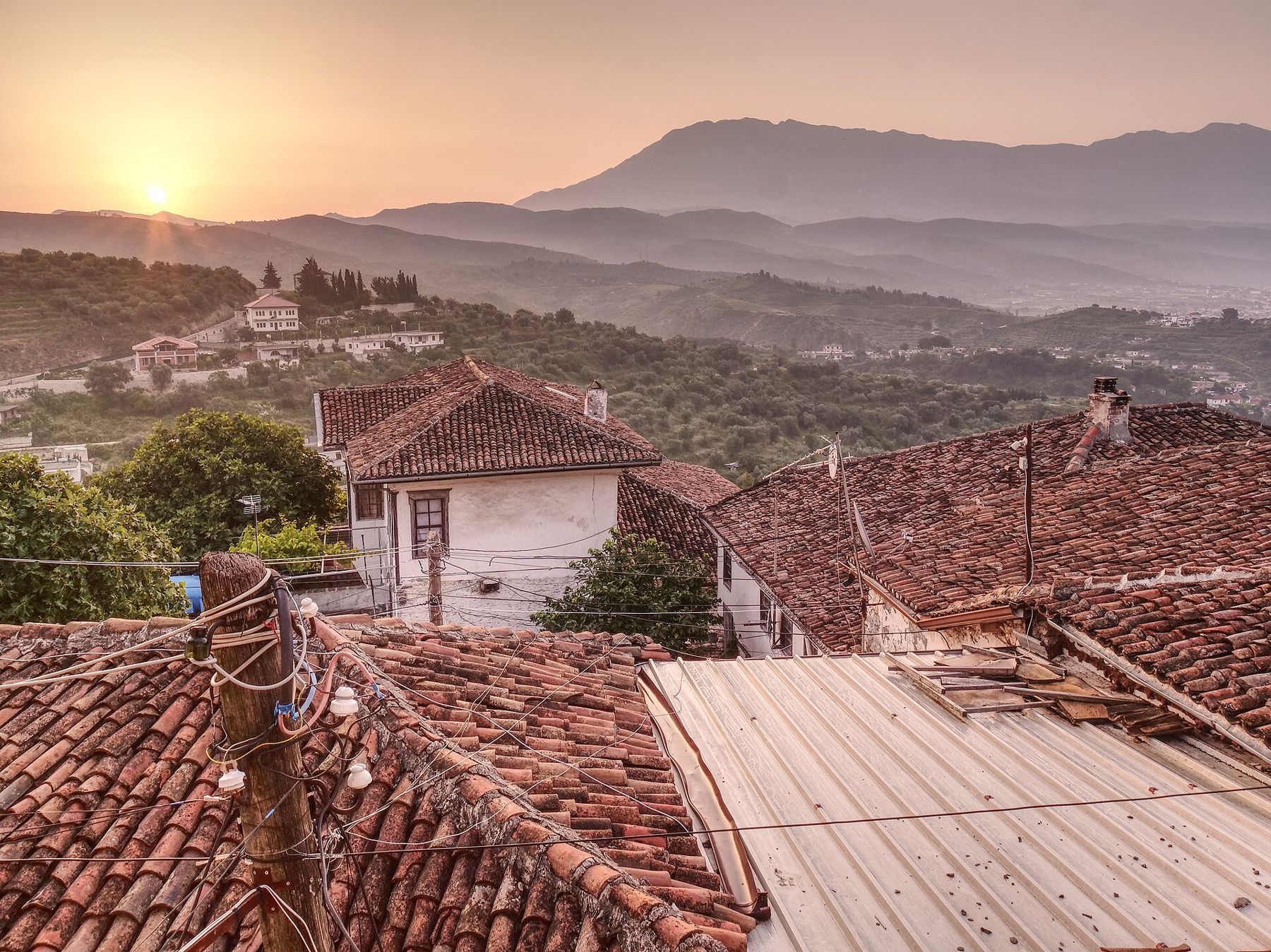
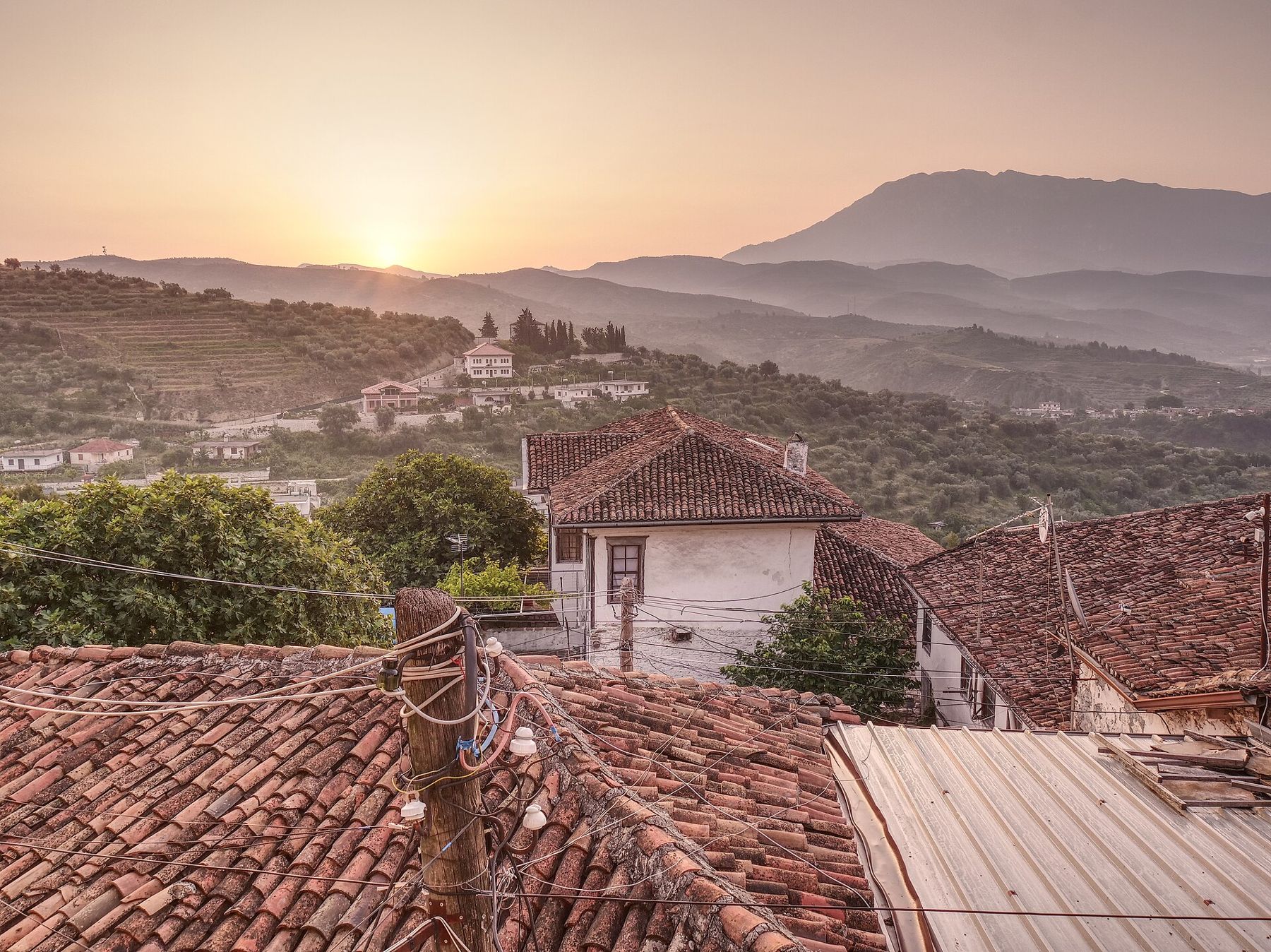
The houses are the reason Berat looks the way it does. Most date from the eighteenth and nineteenth centuries. They are built of stone on the lower floors, with whitewashed upper floors and tiled roofs, and they are set into the slope so that one house does not block another's light and view. The windows are what you see from below. From inside, they frame the river and the mountains.
Above the town to the east rises the great ridge of Mount Tomorr, sacred to the Bektashi order, whose pilgrims climb it each summer. It gives Berat its backdrop, grey and blue and often capped with snow into spring.
A long history in brief
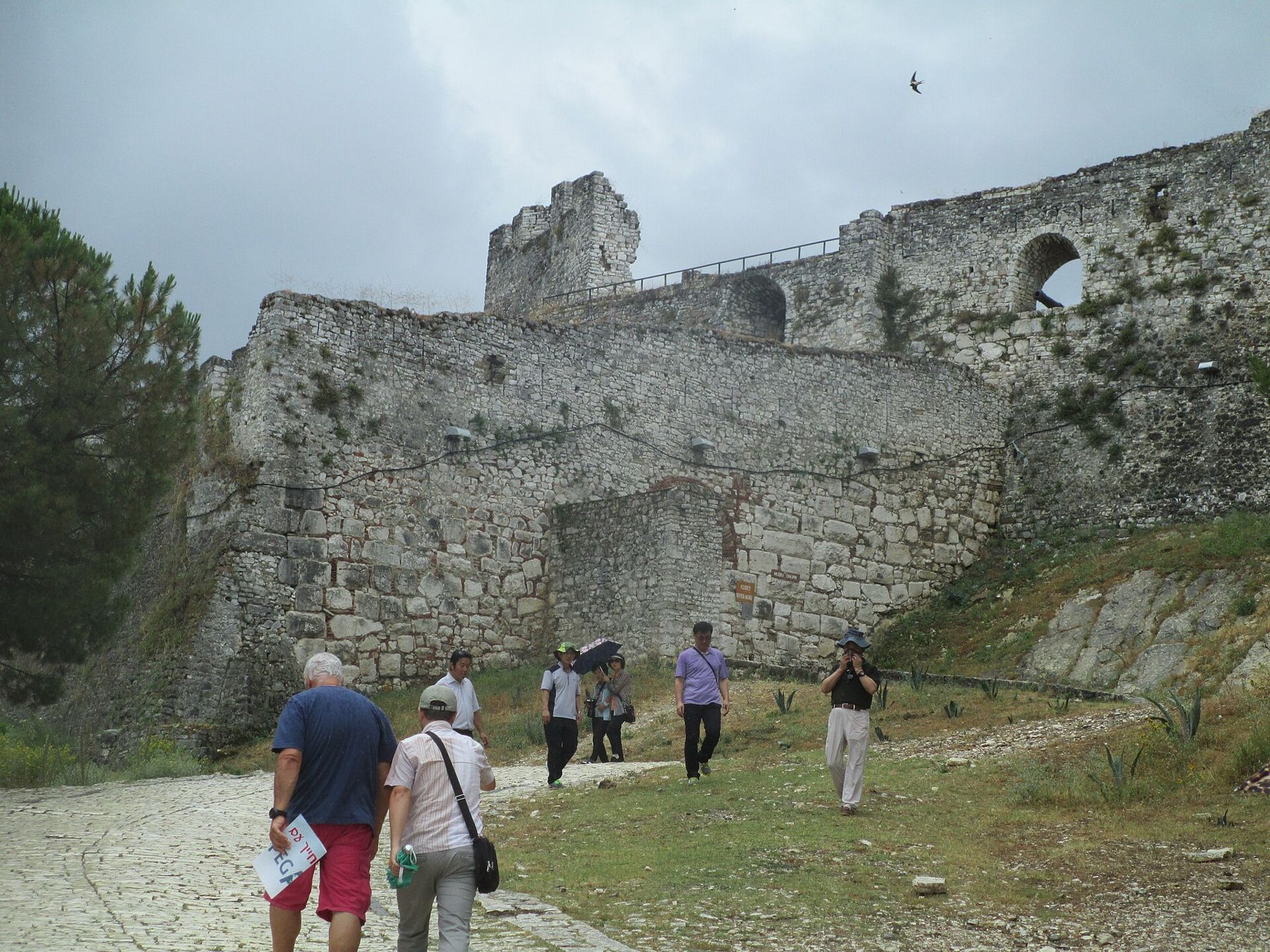
The castle hill has been fortified for well over two thousand years. Rome held it, and later Byzantium, which rebuilt the walls. In the late thirteenth century an army sent by Charles of Anjou besieged the castle and was defeated by Byzantine forces in 1281, one of the largest battles fought in medieval Albania. The Ottomans took the town in the early fifteenth century, and it stayed under their rule until independence in 1912.
The Ottoman centuries gave Berat most of what visitors see today: the mosques, the tekke, the bazaar by the river and, above all, the houses of Mangalem. In the eighteenth century the town was the seat of powerful local pashas and grew rich on trade and crafts. The old quarters still follow the street plan of that time, which is why they feel so complete.
The castle that people still live in
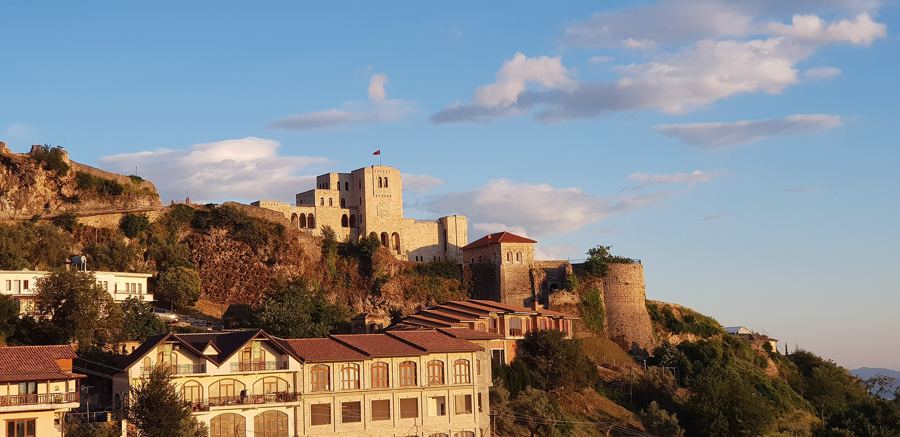
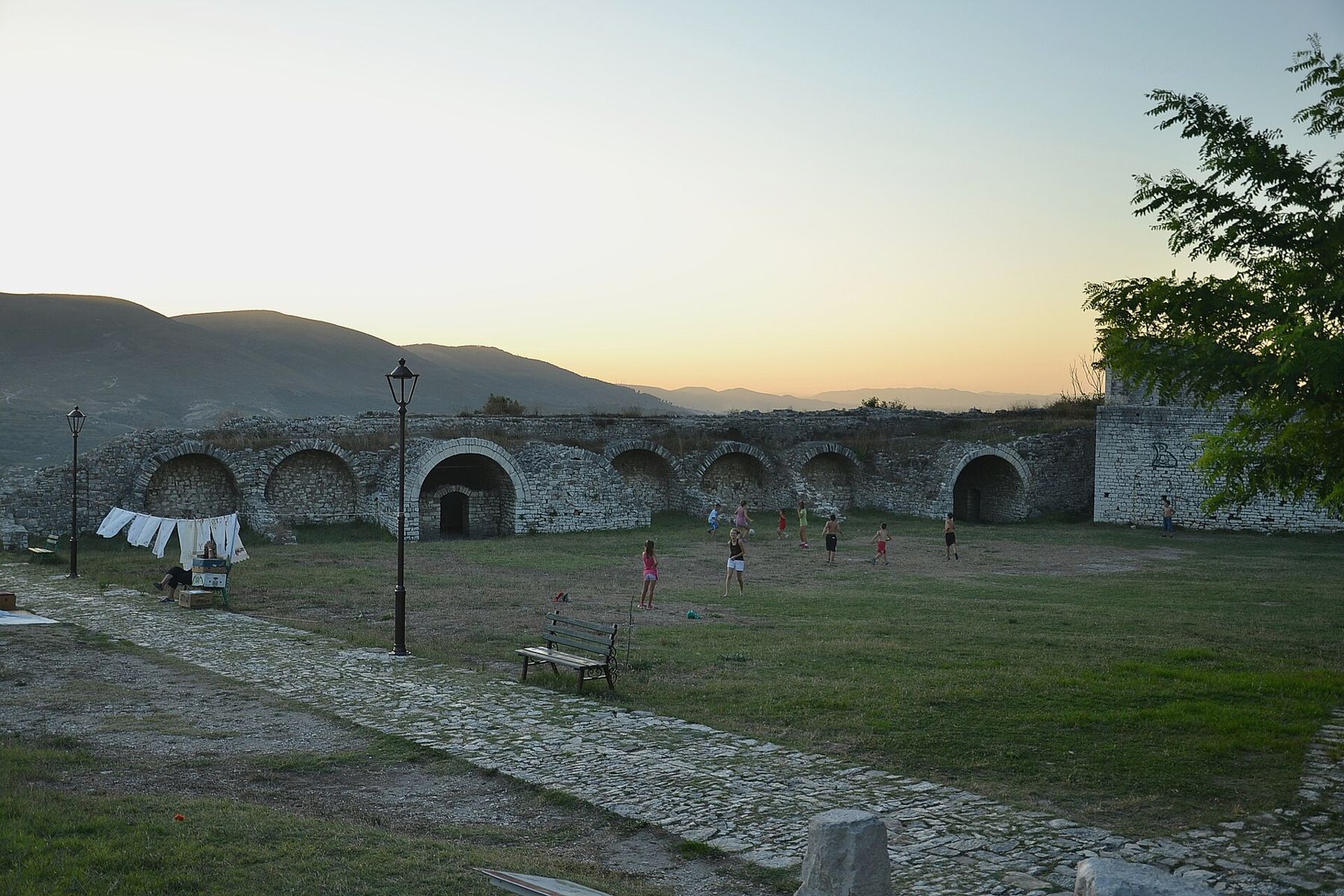
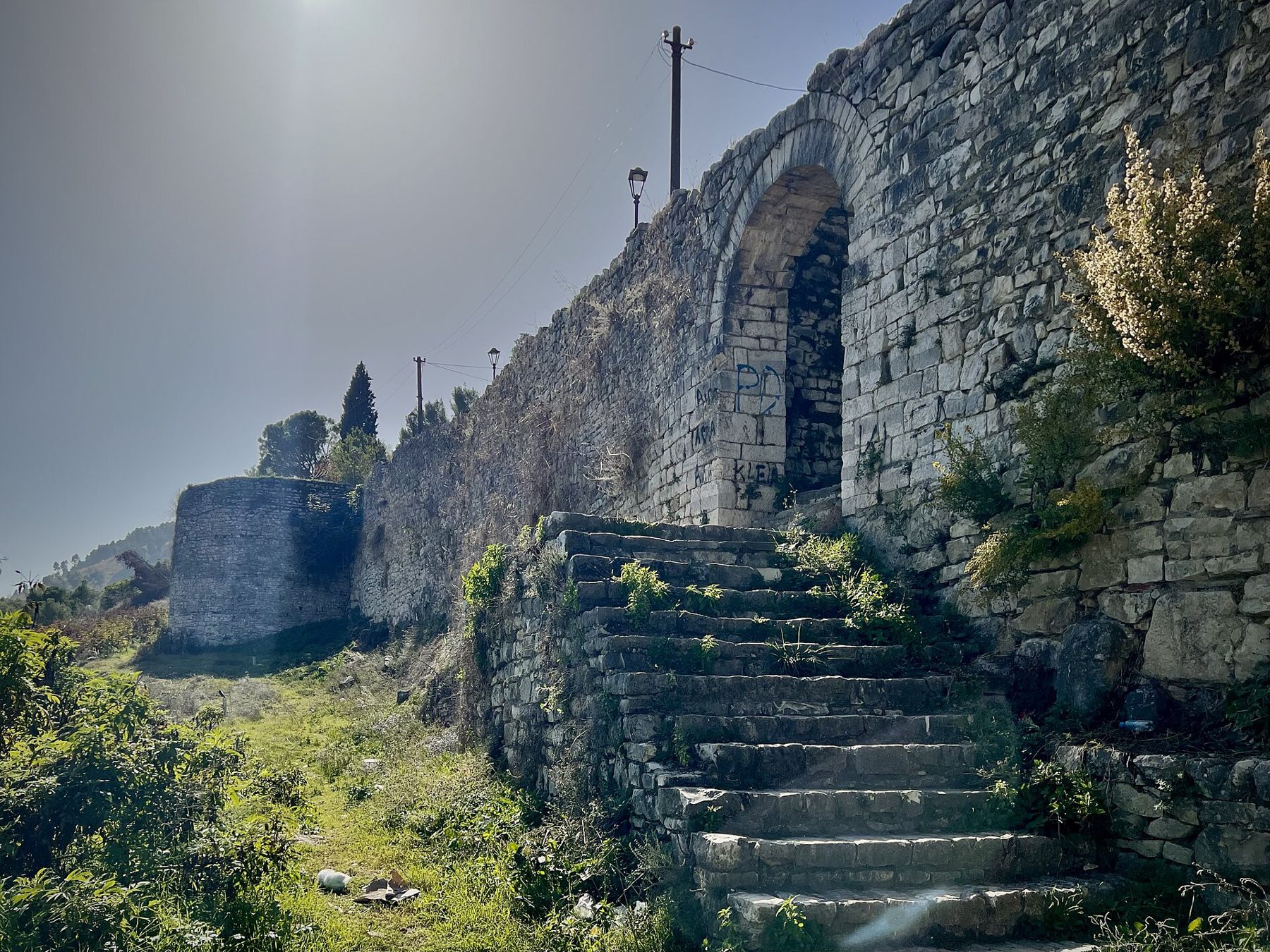
The castle of Berat covers the whole hilltop above Mangalem. Its walls date in part from the thirteenth century, built on much older foundations, and they enclose a small town of their own. Unlike most castles, it is still inhabited. People live in houses inside the walls, hang their washing in the lanes and grow vines over their doors.
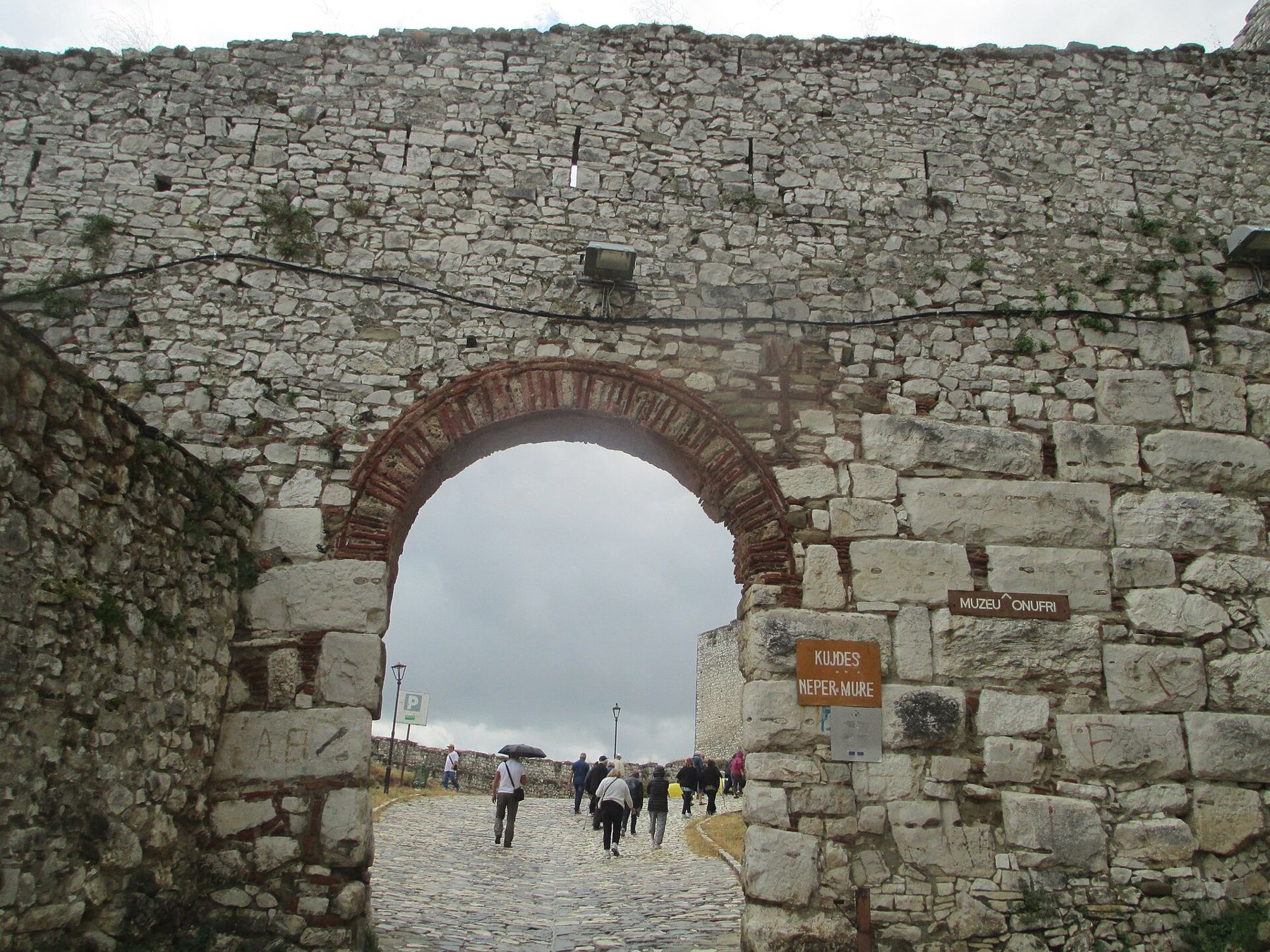
The climb up from Mangalem is steep and cobbled. Inside the gate, lanes wander between houses and ruined churches. There were once many churches inside the walls, and several survive, small and stone, some with frescoes. There are also ruins of two mosques, the Red Mosque and the White Mosque, from the Ottoman period.
Two churches outside the main gate deserve the extra steps. The Church of the Holy Trinity, a small Byzantine church of brick and stone, stands on the slope below the walls, its domes and patterned brickwork glowing in the late sun. Further round, the Church of St Michael sits on a ledge of the cliff high above the river, so small and so exposed that it looks as if it has been placed there by hand. It is best seen from the riverbank below, where it catches the morning light, and it gives a sense of how steep the castle rock really is.
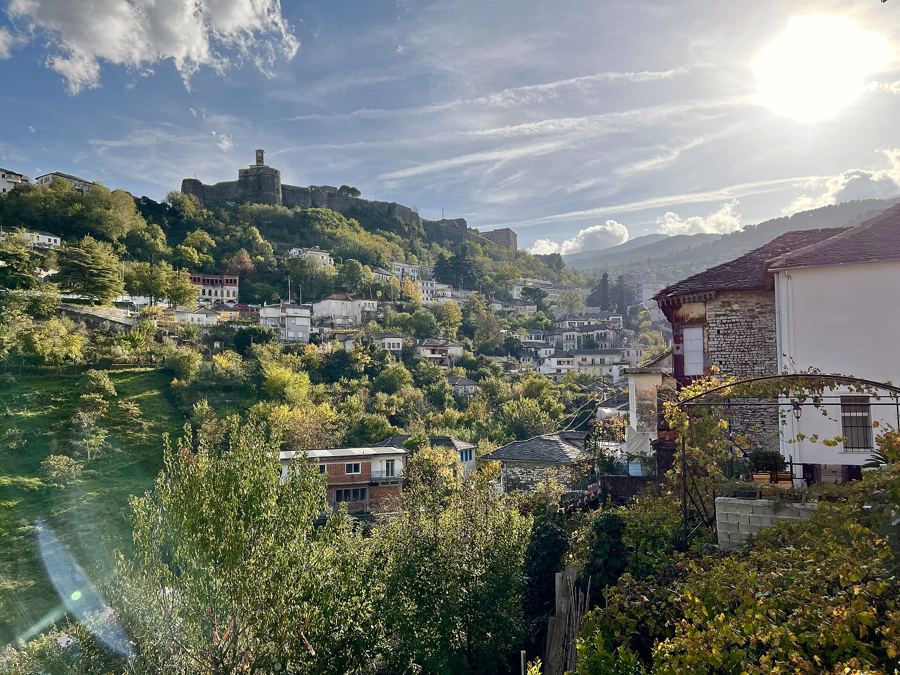 Read nextGjirokastër, the city made of stone
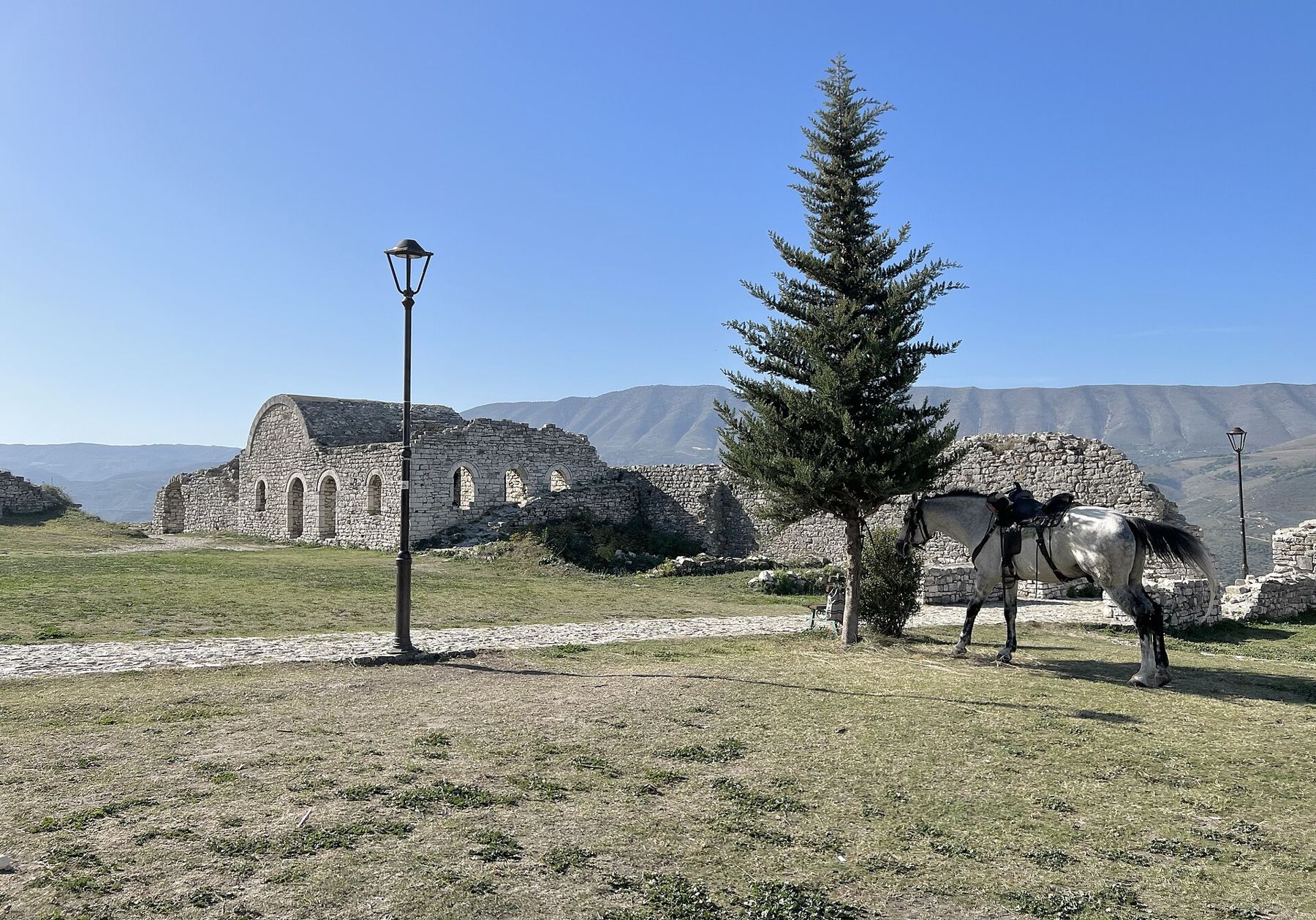
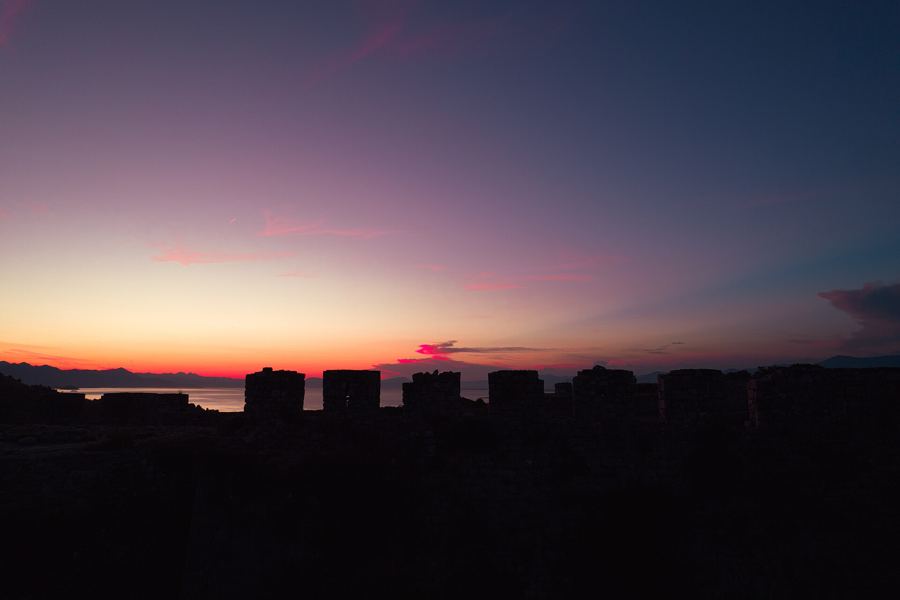
At the far end of the castle, a walk along the walls leads to a viewpoint high above the river. From there you can see the whole of Mangalem and Gorica, the gorge, and the plain beyond. It is one of the great views in Albania, especially at sunset.
Onufri and the red
Inside the castle, the Church of the Dormition of St Mary holds the Onufri Museum. Onufri was a sixteenth-century painter of icons and frescoes, the most famous of Albania's religious artists. He is remembered especially for a deep, glowing red that he used in his robes and backgrounds, a red that later painters tried to match.
The church itself, built in the late eighteenth century, has a richly carved wooden iconostasis, gilded and dark. The museum shows icons by Onufri and by other painters of the period, including his son, Nikolla. Even if you are not drawn to religious art, the colours are startling after the white and grey of the castle outside. Hours and ticket prices change, so check before you go.
Mangalem and the mosques
Back down in the town, the lanes of Mangalem are a pleasure to get lost in. They are narrow and steep, with stone steps and walls of whitewashed houses. Doorways open onto small courtyards, and grapevines shade the paths.
Berat has several fine Ottoman mosques. The Lead Mosque, named for the lead that once covered its dome, stands near the riverside centre and dates from the sixteenth century. The King's Mosque and the Bachelors' Mosque are close by, along with the Halveti tekke, a small Sufi lodge with a painted interior. Under communism many religious buildings in Albania were closed or destroyed, but many of Berat's were protected as monuments.
It is a town to walk slowly: down by the river, up through the lanes, and into a castle that has never stopped being lived in.
That protection is part of why the town survived. In 1961 Berat was declared a museum city, which limited new building in the old quarters. In 2008 it was added to the UNESCO World Heritage List, joining Gjirokastër, listed three years earlier, as the Historic Centres of Berat and Gjirokastra.
Gorica and the river
Cross the Gorica bridge and the town changes. Gorica is quieter, with fewer visitors and more gardens. Its lanes climb the hillside opposite Mangalem, and from them you get the classic view back across the river: the rows of windows, the castle walls above, the minarets below.
In the evening, the riverside boulevard fills for the xhiro, the evening stroll. Families walk up and down, cafés set out their tables, and the light fades on the windows of Mangalem one by one. It is the best hour in Berat.
Berat also eats well. The town sits in a wine region, and local reds and whites are served in most restaurants, along with raki made from grapes. Look for slow-cooked lamb, stuffed peppers, fresh cheese, olives from the hills and pies baked in the oven. Several restaurants in the old houses set their tables on terraces facing the river, so dinner comes with the view.
Getting there and staying over
Berat is a long day from Tirana but a manageable one. The drive south takes around two to two and a half hours, depending on traffic and roadworks. Buses run from Tirana through the day; times change, so check before you travel.
We think Berat is worth a night. The castle is quiet after the day visitors leave, and the town is at its best at dusk and in the early morning, when the light is low and the river is still. Many of the old houses have been turned into small guesthouses, so you can sleep in one of the thousand windows.
If you are planning a longer route, Berat fits naturally into a week in Albania, on the way south to Gjirokastër and the coast. For shorter trips, see day trips from Tirana compared. Either way, leave time at the end of the day for the riverbank, a coffee, and the windows turning gold.
Filed under Day Trips