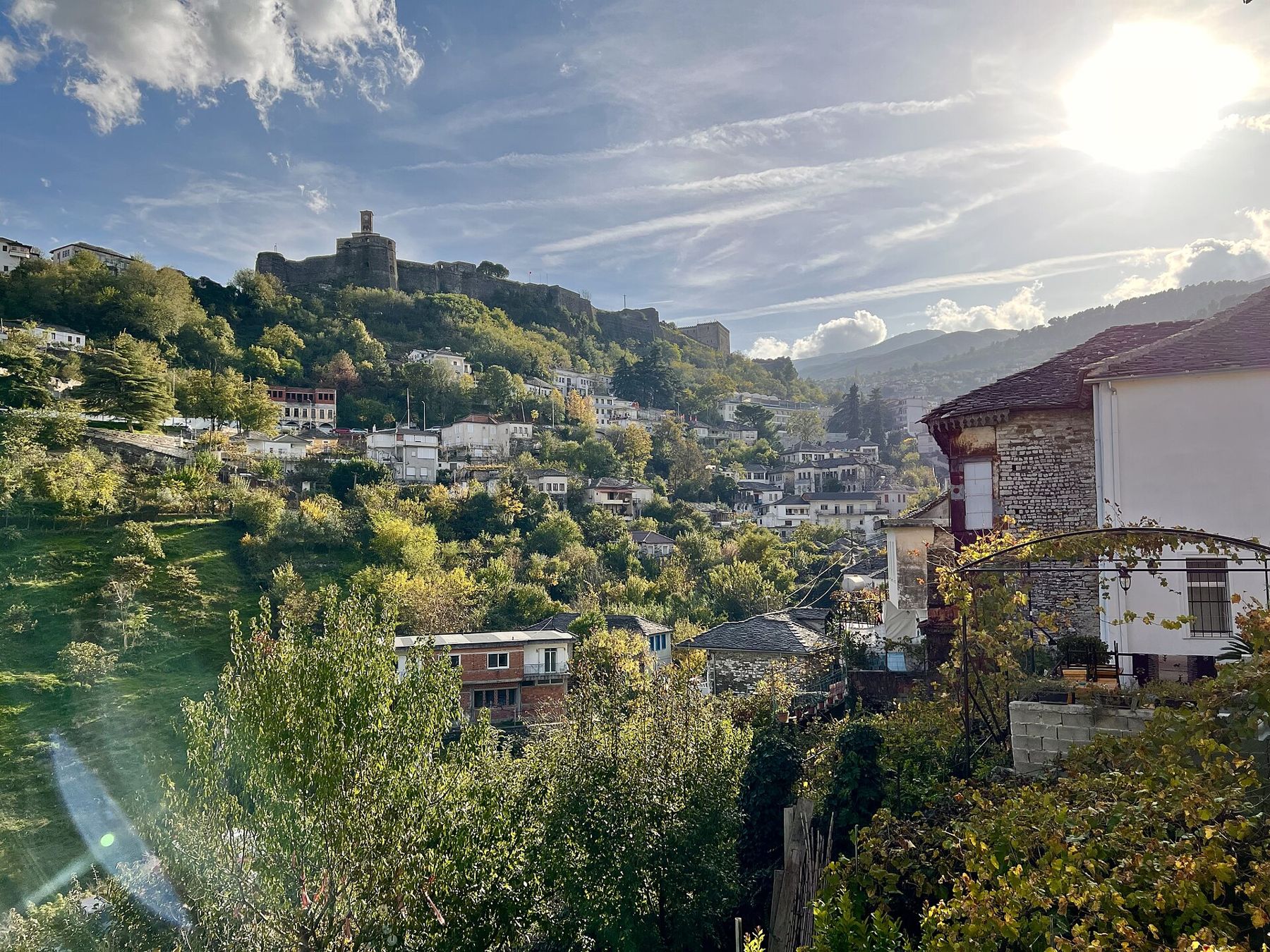
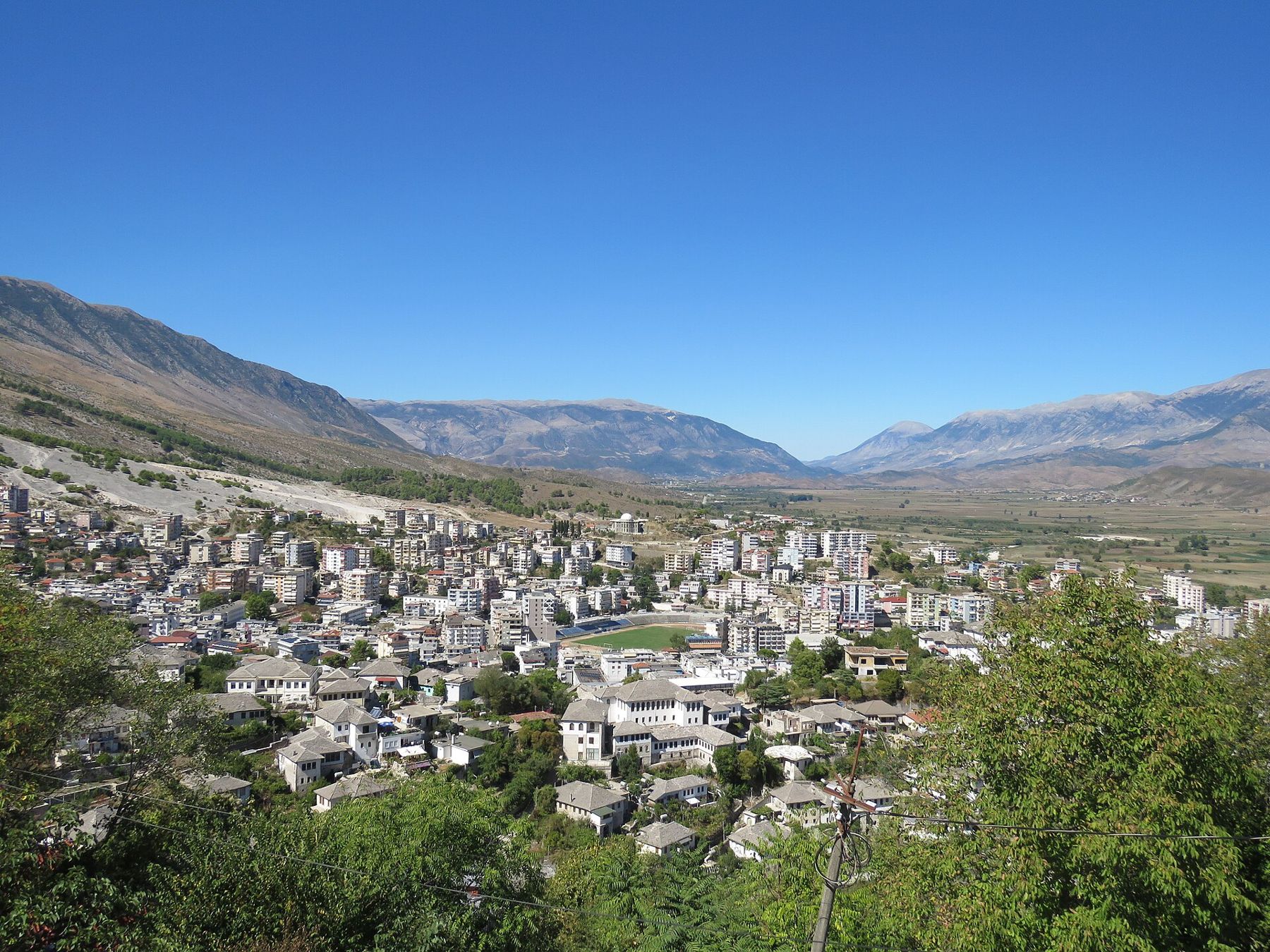
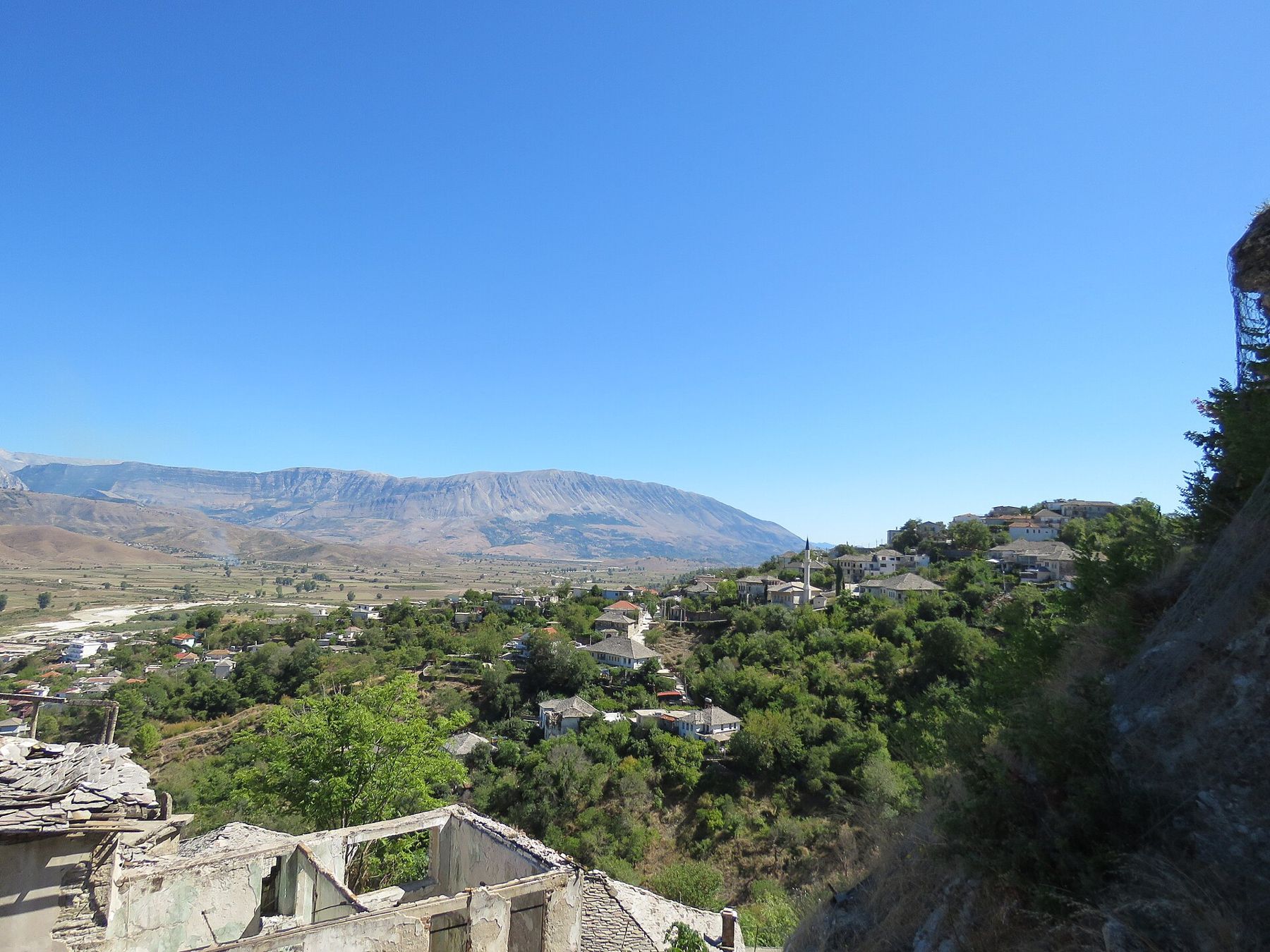
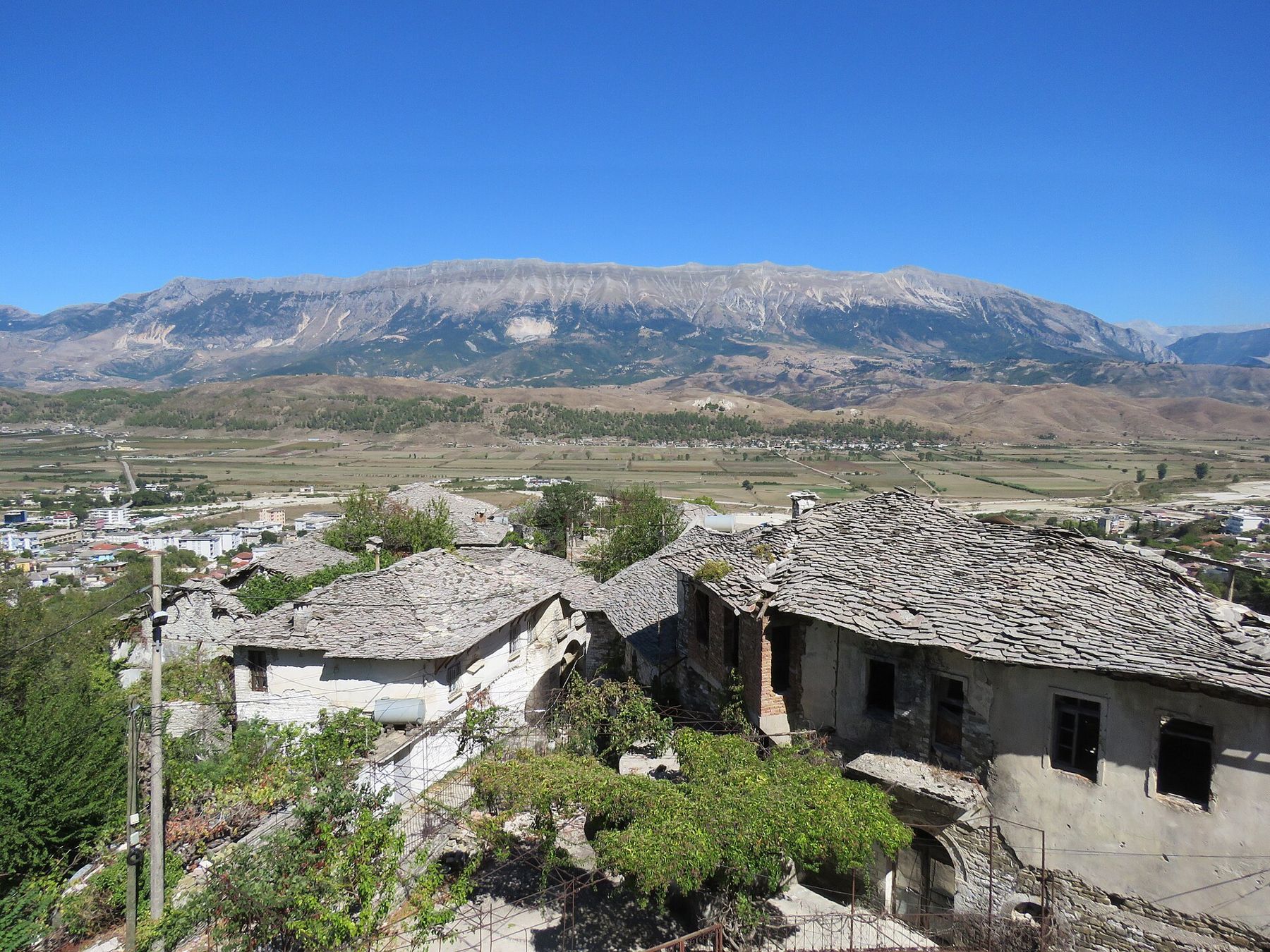
Everything in Gjirokastër is made of stone. The lanes are paved with it, the walls are built of it, and even the roofs are covered with it: heavy grey slabs laid like fish scales, so that from above the old city looks like a single carved surface spread across the mountainside. Above it all, on a long ridge, stands one of the largest castles in the Balkans. Below, the wide valley of the Drino river runs south towards Greece.
Gjirokastër is the stone city, and its people have long been proud of it. It is the birthplace of the writer Ismail Kadare, who made it the setting of his novel Chronicle in Stone, and of Enver Hoxha, who ruled Albania for four decades. It is a city with a long memory, and it is one of the most striking places in the country.
The name comes from the Greek Argyrokastro, the silver castle, and the city has long had links with the Greek world to the south. The valley below is home to Albania's Greek minority, whose villages line the road towards the border. In the bazaar you will hear Albanian and Greek, and the menus often come in both.
The tower houses
The old houses of Gjirokastër are built like small fortresses. They are tall, with thick stone walls and few windows on the lower floors, which were used for storage and for water cisterns. The family lived on the upper floors, where the windows are larger and the rooms are lined with carved wood. Many houses have a room for guests, a room for winter and a room for summer.
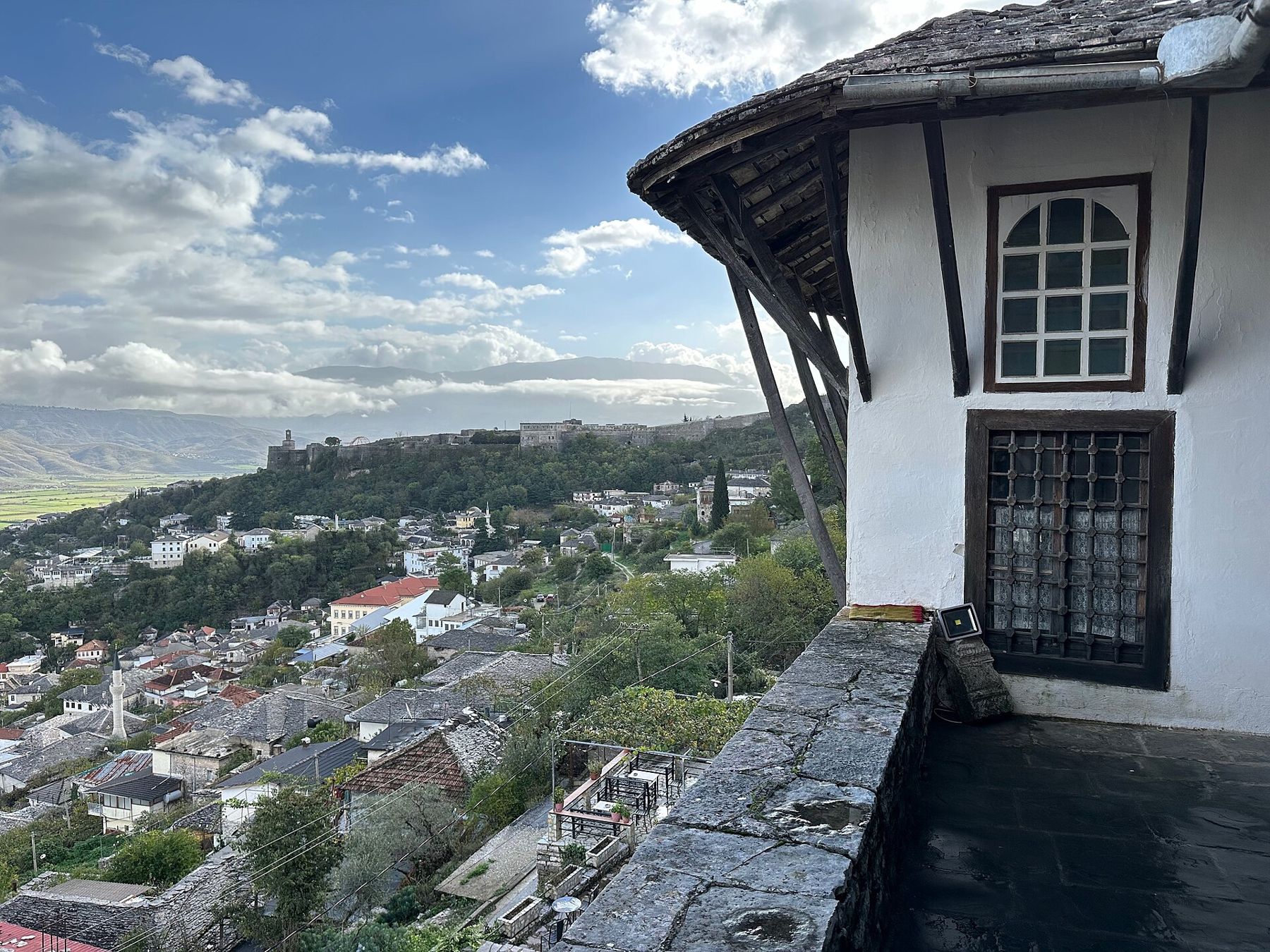
This design came from a hard history. The houses were built to withstand sieges, feuds and long winters, and to keep a family safe and supplied. Most date from the eighteenth and nineteenth centuries, when the city prospered under Ottoman rule.
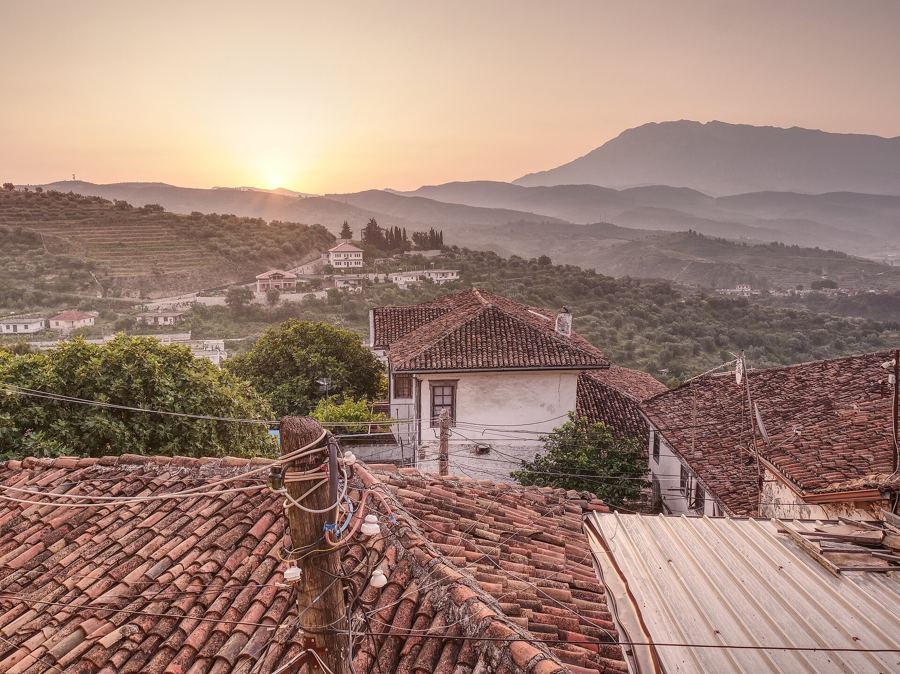
The roofs are the city's signature. They are made of thick slabs of local stone, cut and laid by hand, overlapping so that rain runs off them. Such roofs are very heavy, and they need strong timber frames beneath them. Keeping them in repair is slow, skilled and expensive work, and the city's craftsmen have had to keep the old methods alive. When a roof is mended you can see the pale new slabs among the old grey ones, which darken with lichen and weather over the years. From the castle walls, the roofs below look like the scales of some vast, sleeping creature.
Two houses are open to visitors and show how they worked. The Zekate House, built in the early nineteenth century, stands high on the slope with twin towers and a long arched gallery. Its upper rooms have painted ceilings and carved cupboards, and the view from its windows takes in the whole city. The Skenduli House is another fine example, with its many rooms, fireplaces and wooden ceilings. Opening times change, so check before you go.
The castle
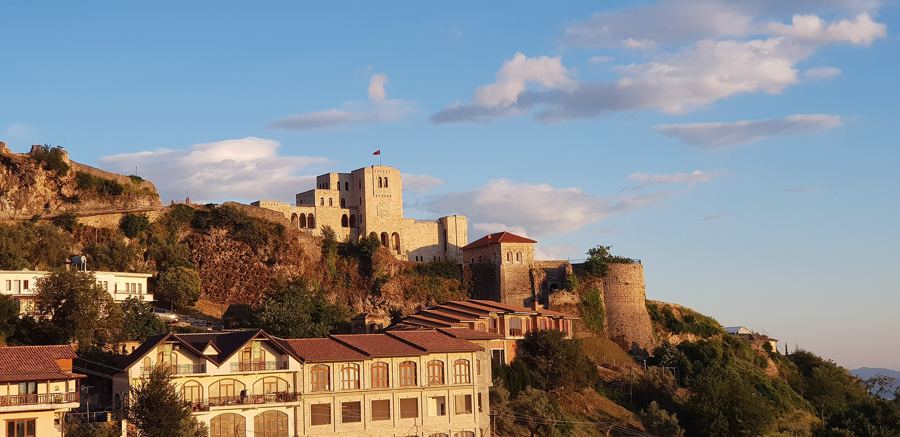
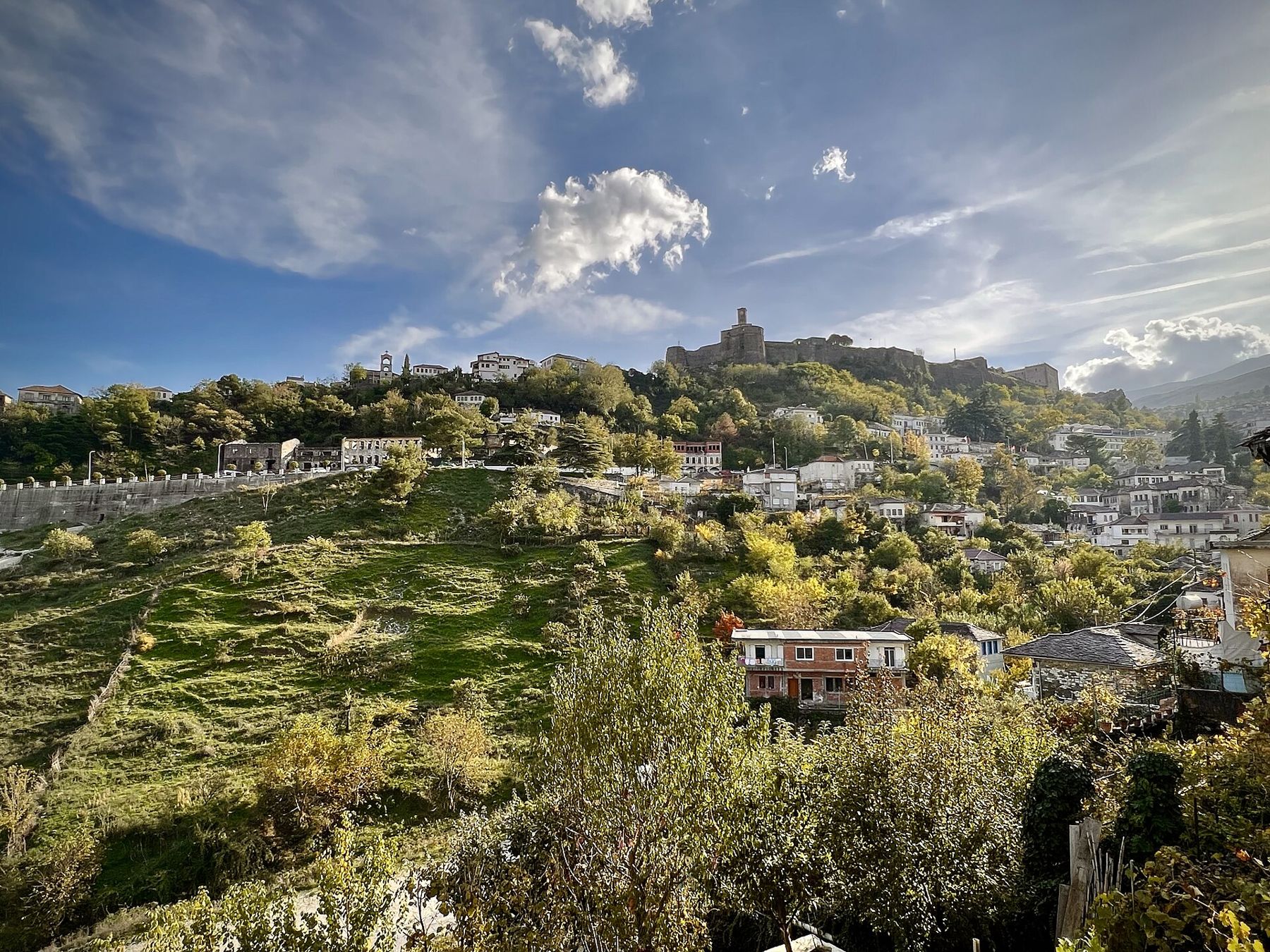
The castle of Gjirokastër stretches along the top of the ridge above the old city. It was built in stages from at least the twelfth century, and was greatly expanded in the early nineteenth century by Ali Pasha of Tepelena, the Ottoman ruler who governed much of southern Albania and northern Greece from his capital at Ioannina.
Inside, the castle is a series of vast vaulted galleries, dark and cool. One of them holds the National Museum of Armaments, a collection of weapons from many periods, including guns and artillery from the Second World War. Outside, on the battlements, stands a United States Air Force jet that came down in Albania in 1957 and was put on display as a Cold War trophy.
The castle also held a prison, used under King Zog and then under the communist regime. Its cells can be seen today. The atmosphere is grim, and it is worth taking the time to read what is shown.
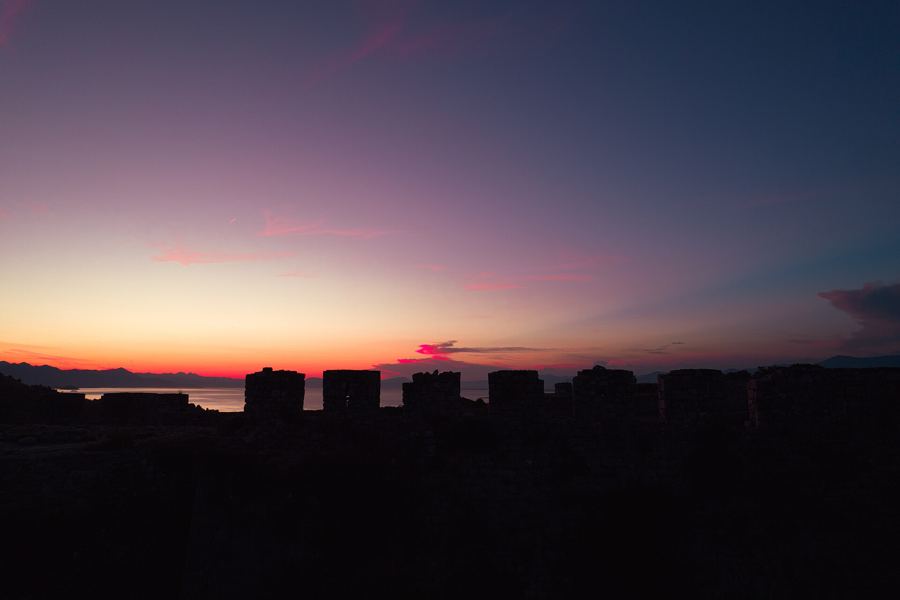
At the western end of the castle is the stage of the National Folklore Festival, held here every few years since 1968. When it is not in use, the open stage and the ramparts make a fine place to watch the sun go down over the valley.
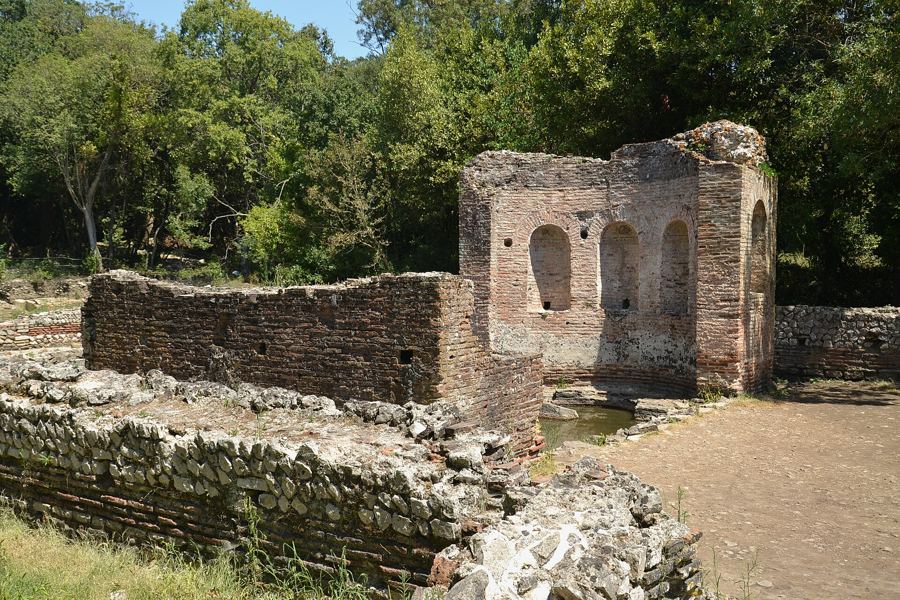 Read nextKsamil and Butrint, two faces of the far south
The bazaar
Below the castle, where several lanes meet on a saddle of the hill, is the old bazaar. Its stone streets are lined with shops selling carpets, embroidery, copper, carved wood and the stone and slate work of the region. It is busy in the evening, when cafés and restaurants fill and the light falls slanting along the lanes.
The food here is the food of the south. Look for qifqi, small rice balls with herbs and egg, which are a speciality of the city. There is also lamb, cheese, yoghurt, flatbreads and pies, and local wine and raki.
The bazaar is also a good place to sit and watch. The lanes are steep, and everyone moves slowly. Old men sit on low walls. Children run up and down the steps. Cats sleep on the warm stone.
In the middle of the bazaar stands the Bazaar Mosque, an eighteenth-century building with a small dome and a minaret, the most prominent mosque in the old city. From the square outside it, lanes fan out in all directions, uphill to the castle and the old quarters, downhill to the newer town. Take any of them and you will find steps, arches, fountains and the high blank walls of the tower houses.
Kadare, Hoxha and the city's memory
Ismail Kadare was born in Gjirokastër in 1936 and died in 2024. He is Albania's most famous writer, and his novel Chronicle in Stone tells the story of the city during the Second World War, seen through the eyes of a boy. His family home has been rebuilt as a museum. Reading the book before a visit is one of the best ways to see the city.
It is a city with a long memory, and it is one of the most striking places in the country.
Enver Hoxha was born here in 1908. He led the communist regime that ruled Albania from 1944 until his death in 1985. His family house later became the Ethnographic Museum, which shows the furniture, clothing and tools of a traditional household. The museum says little about him directly, and the silence is part of what it shows.
Under communism, Gjirokastër was declared a museum city in 1961, which protected the old quarter from new building. In 2005 it was added to the UNESCO World Heritage List, and in 2008 the listing was extended to include Berat. Beneath the city there is also a Cold War tunnel, built as a shelter for the party leadership, which has been opened to visitors.
Around the city
If you have an extra day, the hills around Gjirokastër hold more. On a ridge across the valley lie the ruins of Antigonea, a city founded by Pyrrhus of Epirus in the early third century BC and named after his wife, Antigone. It was destroyed by the Romans less than two centuries later, and its walls and foundations now lie in a quiet archaeological park with wide views.
The villages of the Drino valley, many of them old and built of the same grey stone, are worth exploring by car. Their churches, some with frescoes, sit on hillsides among olive trees and oaks. Roads in the area vary, so ask locally before setting out.
Getting there and staying over
Gjirokastër is a long way from Tirana, roughly four hours by road, depending on traffic and roadworks. Buses run from Tirana; times change, so check on the day. It is possible as a very long day trip, but we do not recommend it. The city needs time, and it is best seen in the evening and early morning, when the stone glows and the lanes are quiet.
Gjirokastër is a natural stop on a week in Albania, between Berat and the coast at Sarandë, which is about an hour away. Many of the old houses now take guests.
Stay the night, climb to the castle for the sunset, and in the morning walk down through the lanes as the shutters open. The roofs will be grey and damp with dew, and the valley below will be full of mist.
Filed under Day Trips