At dusk the whole of Sarandë comes down to the water. The promenade fills from end to end: grandparents on benches, teenagers in groups, couples pushing prams, men selling roasted corn and balloons. The lights of the apartment blocks come on in tiers up the hillside, and across the strait the mountains of Corfu turn from green to violet to black, with a scatter of village lights along their foot. This evening walk, the xhiro, is the town's central ritual, and the best introduction to it.
Sarandë is not old in the way that Gjirokastër or Berat are old. Most of what you see was built in the last thirty years, and quickly. But it sits in a superb position, it is lively for most of the year, and it puts the whole far south within an hour's drive: Butrint, Ksamil, the Blue Eye, the southern end of the Riviera. As a base it is hard to beat.
A town around a bay
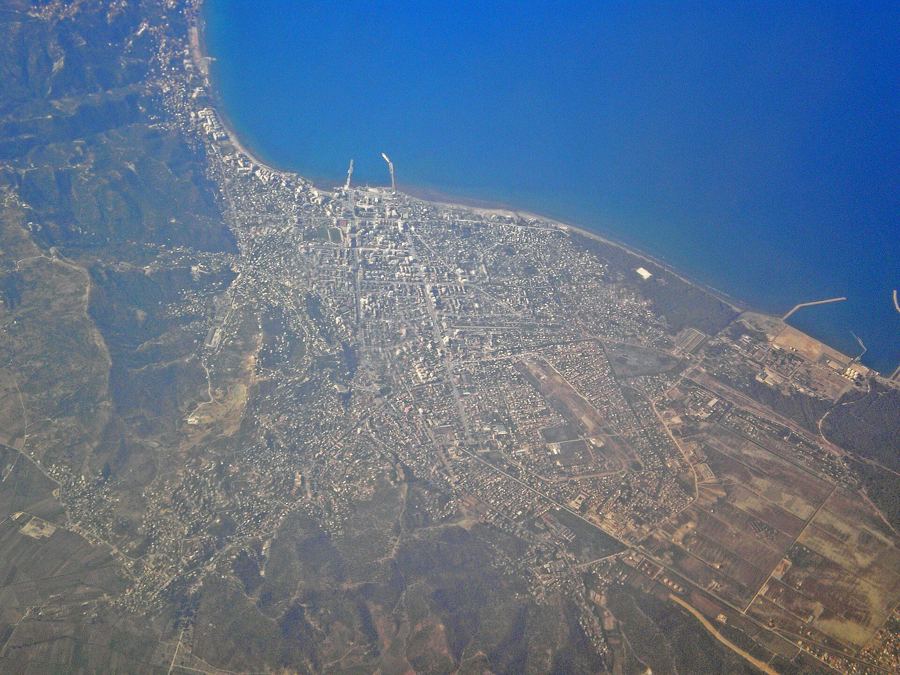
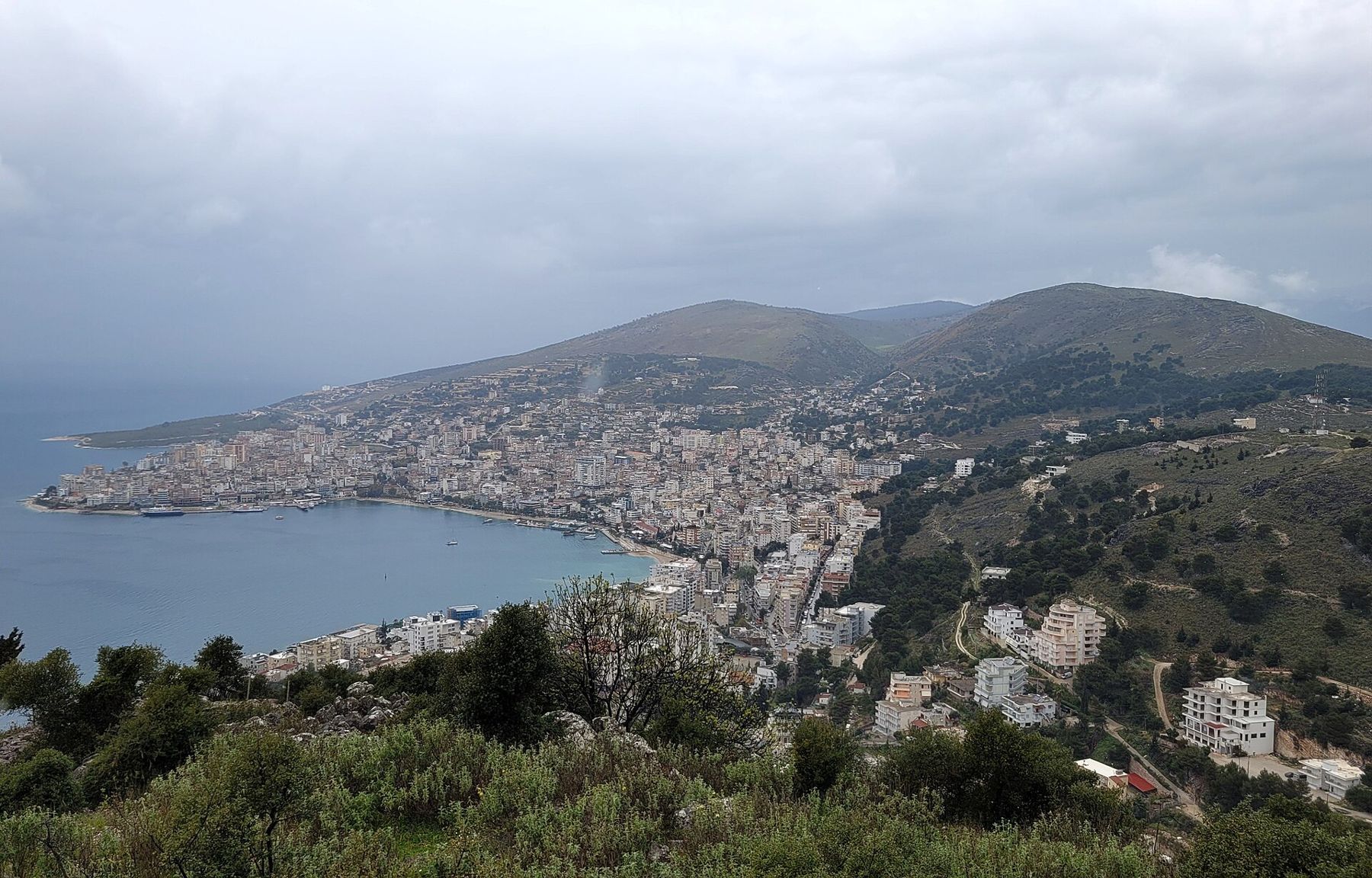
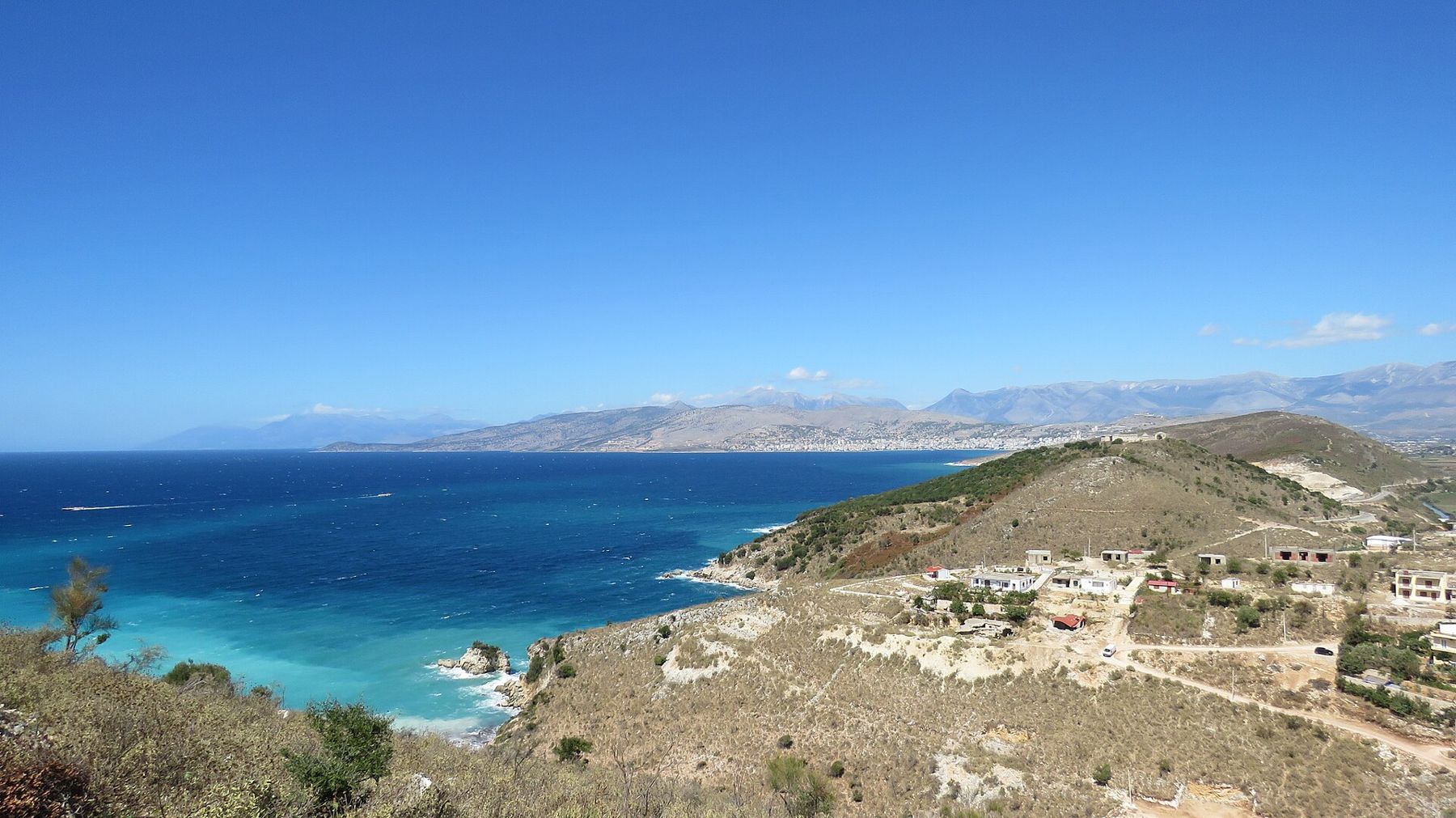
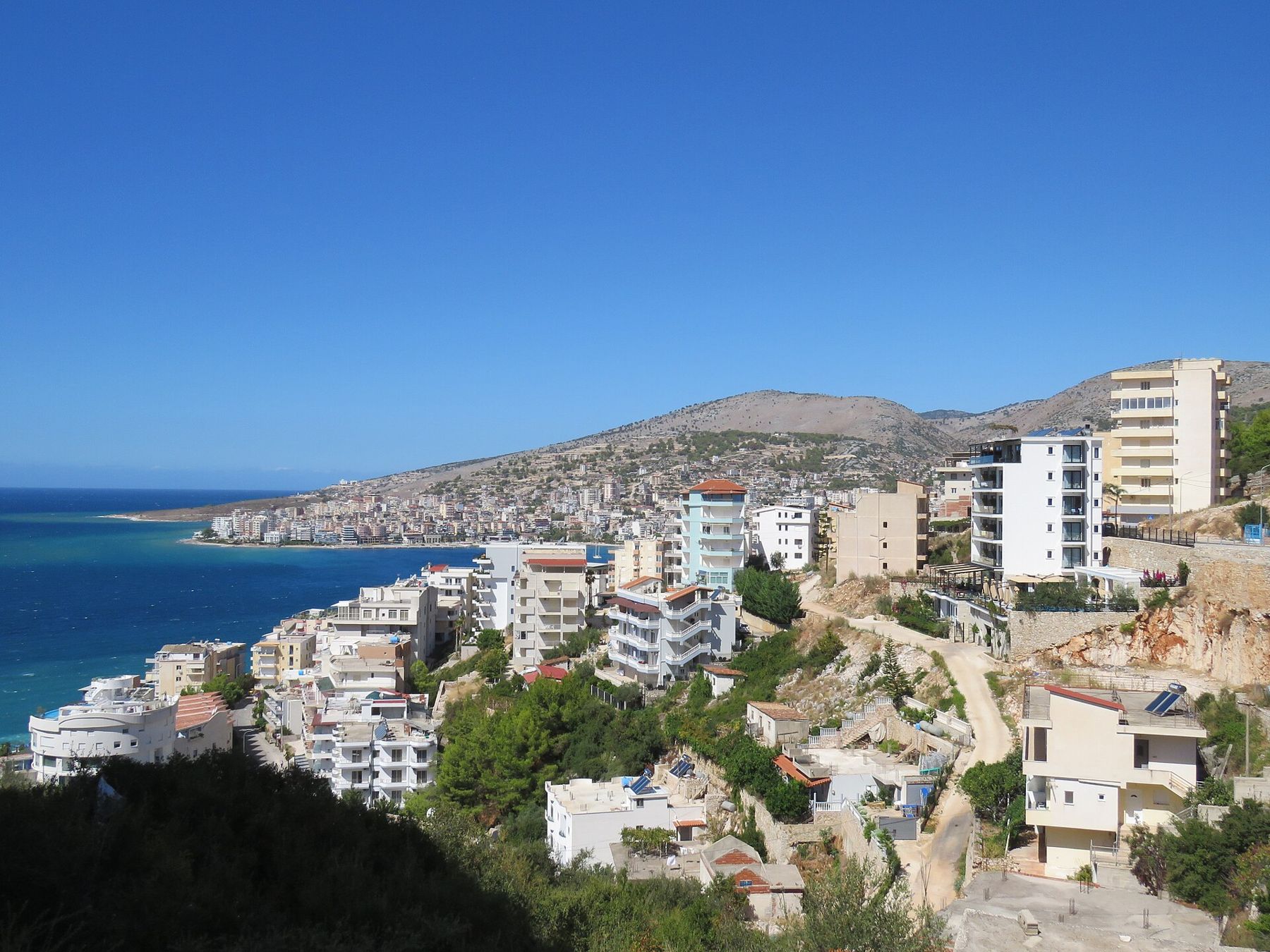
The town curves around a single bay, open to the south-west, with the hills rising steeply behind. The seafront road and the promenade below it run along the water from the port at one end towards the headlands at the other, lined with palms, cafés and restaurants. Streets climb inland in steps and switchbacks, and the higher you go the better the view over the roofs to the sea.
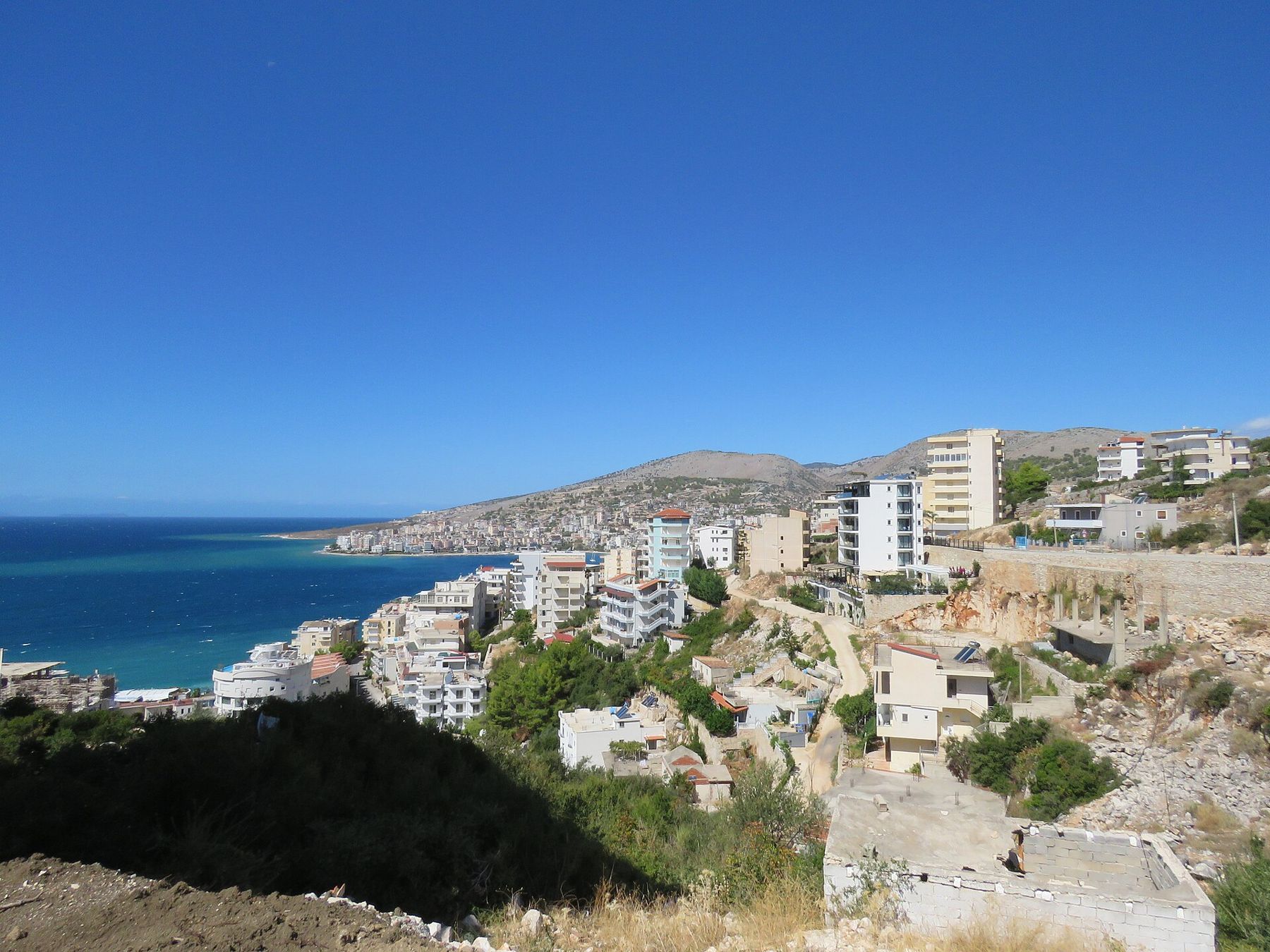
There was a town here in antiquity, Onchesmos, a harbour for the city of Phoenice inland. The modern name comes from the Greek for Forty Saints, after a Byzantine monastery dedicated to the Forty Martyrs of Sebaste that stood on the hill above. Its ruins are still up there, badly damaged during the Second World War but traceable in their walls and vaults.
In the centre of town, in a small fenced area among the apartment blocks, are the excavated remains of a late antique synagogue that was later converted into a church, with fragments of mosaic floor. It is easy to walk past. Stop, because it is a rare piece of evidence for the Jewish community that lived on this coast in the Roman and Byzantine centuries.
Lëkurës Castle
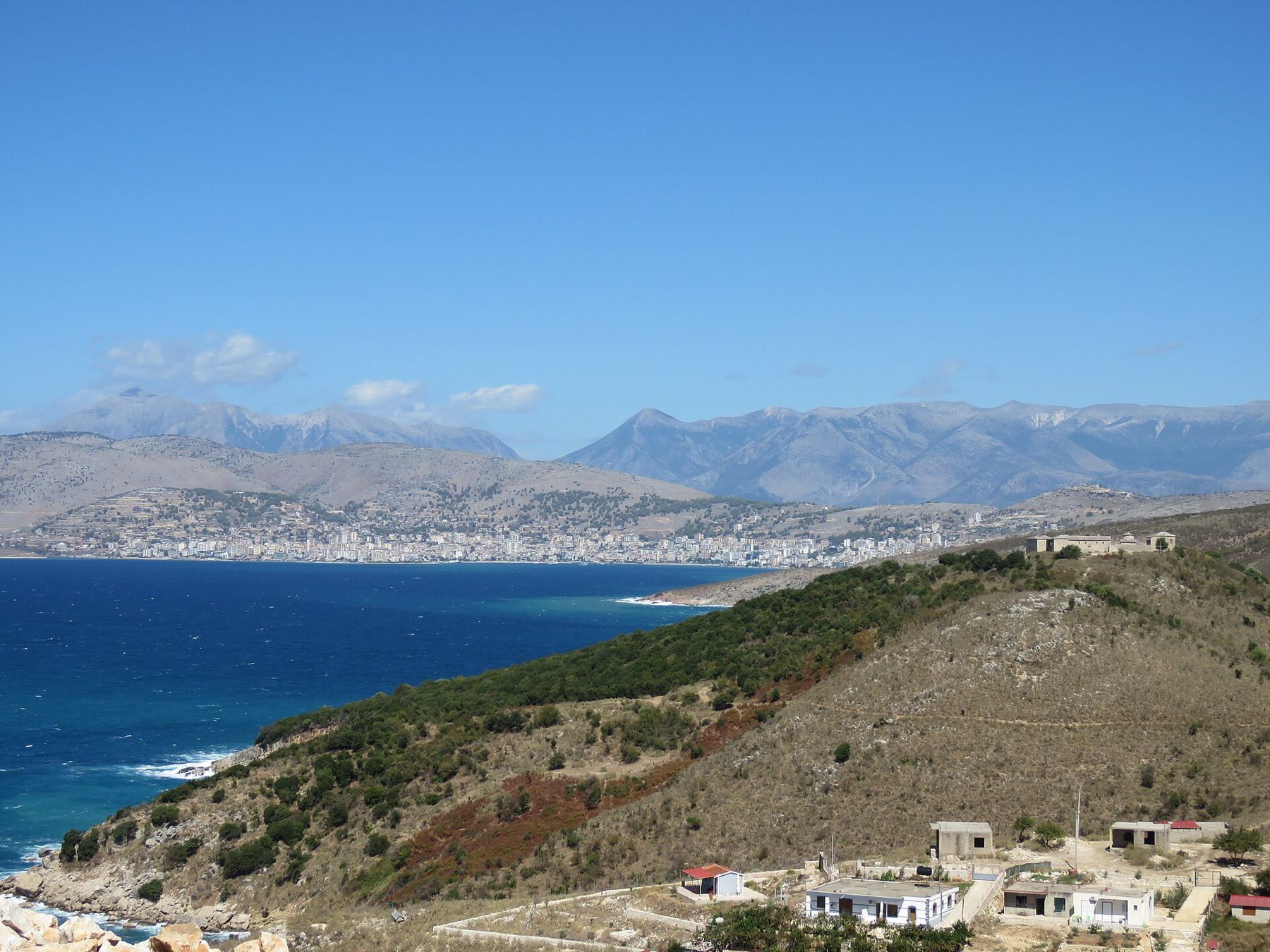
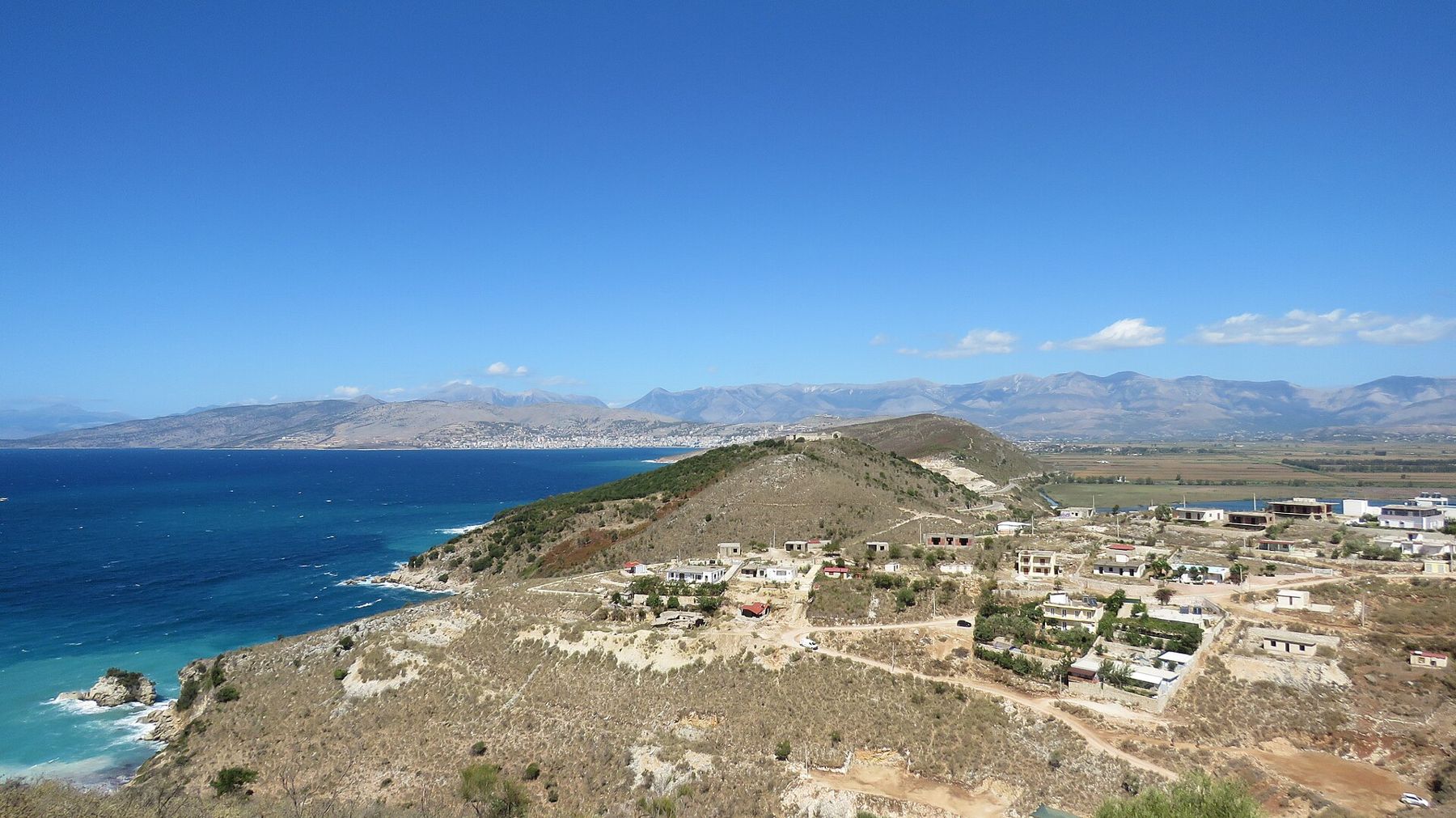
On the ridge south-east of town, above the road to Butrint, stands Lëkurës Castle, an Ottoman fort from the sixteenth century. It was built to control the bay and the coast road, and its position shows why: from its walls you see Sarandë below, the whole sweep of the strait, Corfu, and to the south the flat land and the shining water of Lake Butrint.
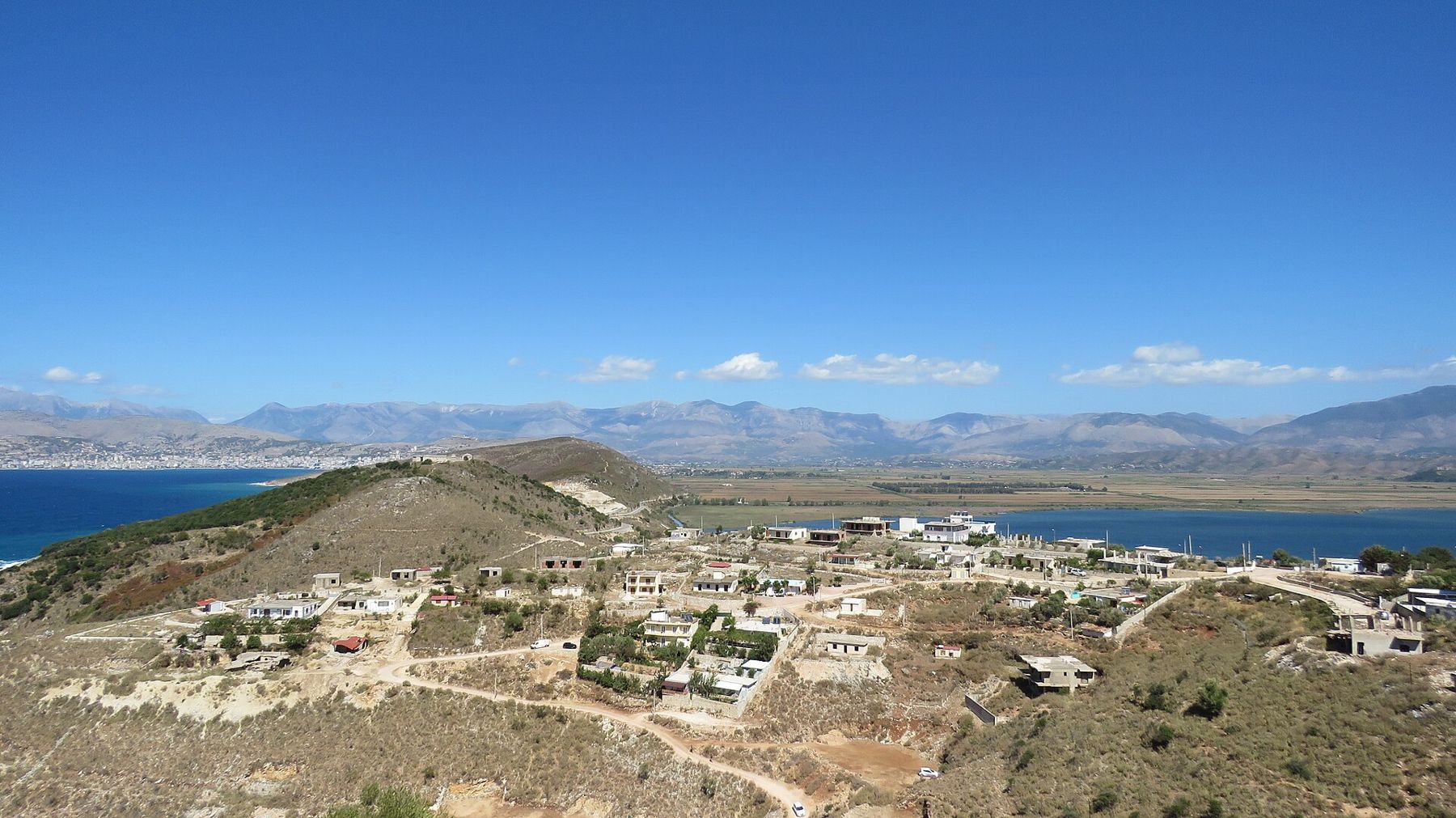
The castle has been restored and partly given over to a restaurant, so the interior is less atmospheric than a ruin, but the view is the point. Go at sunset. The drive up is short and steep, and many people walk it from the edge of town in the cool of the evening.
As a base it is hard to beat.
The hills above the southern end of town, around the district of Manastir, give a similar view at a lower height, looking back across the bay at the whole curve of Sarandë.
The Blue Eye
Inland, about half an hour's drive towards Gjirokastër, the road crosses a valley of plane trees and springs. A side road leads to Syri i Kaltër, the Blue Eye, a karst spring where water wells up from a deep shaft in the limestone. The pool at the surface is ringed with a deep blue that grades out to turquoise and green, and the water is cold all year. Divers have gone down a long way without reaching the bottom of the source.
The spring sits in a protected area, and the paths and car park have been reorganised several times. Fees, access arrangements and the rules about swimming have all changed over the years and are likely to change again, so follow what the signs and staff say on the day. In summer the site is busy from mid-morning; the early morning is quieter and the light on the water better.
The Blue Eye combines naturally with a day in Gjirokastër, the stone city an hour or so further inland, or with a slow drive back to the coast through the hills.
 Read nextKsamil and Butrint, two faces of the far south
Crossing to Corfu
Corfu is so close that it dominates every view from the seafront, and the crossing is one of the reasons Sarandë grew. Ferries and faster boats run between Sarandë port and Corfu town, and in summer the traffic is heavy in both directions. Timetables, the number of sailings, and fares change with the season and with the operators, so check close to the date. Corfu is in the European Union and the Schengen area, so bring the right documents.
The reverse journey is how many travellers first arrive in Albania: a flight to Corfu, then a short crossing to Sarandë. For the other routes in, our guide to getting to Albania covers flights, ferries and land borders.
Living in the town
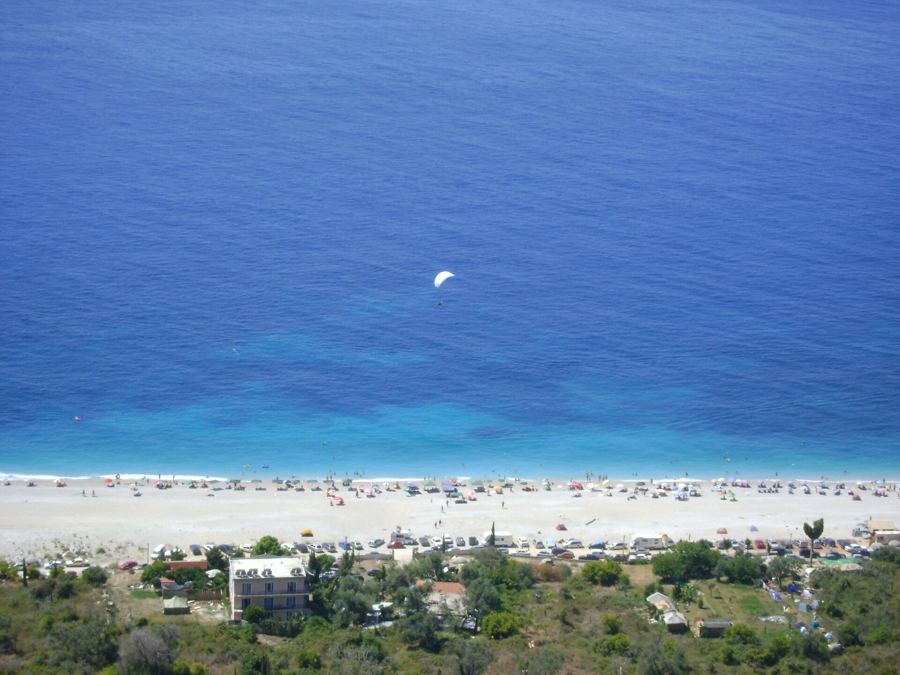
Sarandë is busiest in July and August, when the beaches in town are packed and the promenade runs late. The town beaches themselves are mostly small and pebbly, and many visitors swim at Ksamil or the coves to the north instead. Out of season it settles into an ordinary southern town, with fishermen on the breakwater, old men playing dominoes and cafés open on the sunny side of the street.
Food is a strong point. The fish restaurants along the front serve sea bream, sea bass, octopus and the mussels farmed in Lake Butrint, and inland villages supply cheese, honey and olive oil. A long lunch at a table over the water, with the ferries coming and going, is the town at its best.
Spring and autumn are the easiest times to stay. The sea is swimmable from late May into October, the heat is gentle, and rooms are easier to find. In winter the town is quiet but not shut, and it can be a pleasant base for walking and for the archaeological sites, which you will have almost to yourself.
A morning on foot
The town is best understood on foot, early, before the heat. Start at the port, where the ferries to Corfu tie up and fishing boats unload beside them. Walk the length of the promenade as the cafés put out their chairs and the street sweepers finish their rounds. The water at this hour is often perfectly still, and swimmers are already out from the small town beaches, mostly older residents keeping a habit of decades.
Turn inland at the ruins of the synagogue and climb a few streets into the town proper. Here the bakeries are busy, greengrocers stack peppers, figs and grapes on the pavement, and the smell of coffee comes out of every second doorway. The buildings are a mix of the plain blocks of the communist decades, the brighter towers of the 1990s and 2000s, and the occasional older house with a tiled roof and a vine over the door.
Keep climbing and the view opens again over the roofs to the bay and the island. By the time you come back down to the water the town is fully awake, the first excursion boats are loading, and the heat is starting to build. It is the right moment to sit down with a second coffee and plan the rest of the day.
Moving on
From Sarandë, buses and minibuses run north to Tirana, Vlorë and the Riviera villages and inland to Gjirokastër, with more departures in summer. Schedules change, and the departure points are not always obvious, so ask locally the day before. Driving, the coast road north to Himarë and Dhërmi winds slowly through the mountains; the inland road via Gjirokastër is faster for Tirana.
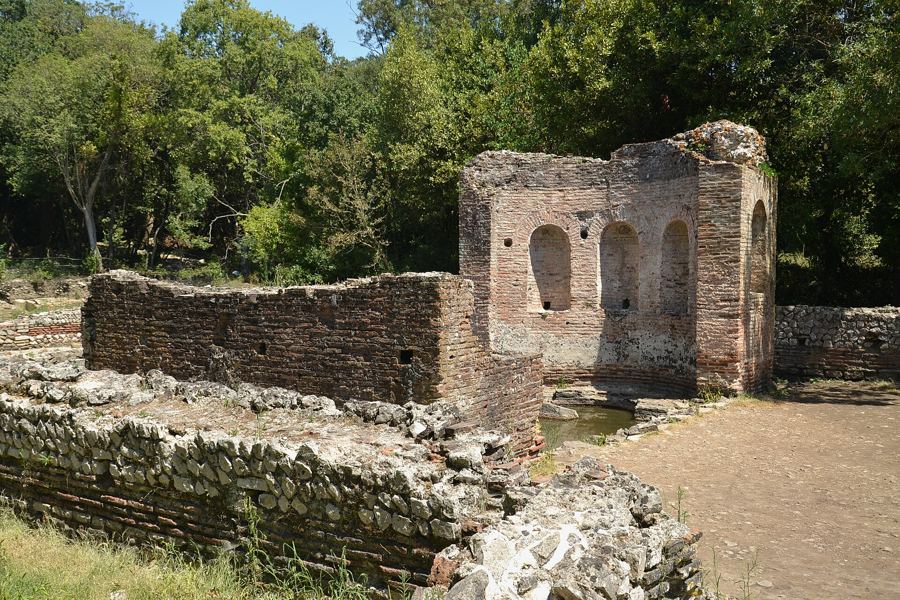
For the coast north of town, our story on the Riviera, bay by bay works up through Lukovë, Borsh, Himarë and Dhërmi to the Llogara Pass. To the south, the ruins of Butrint and the islets of Ksamil are a short drive away.
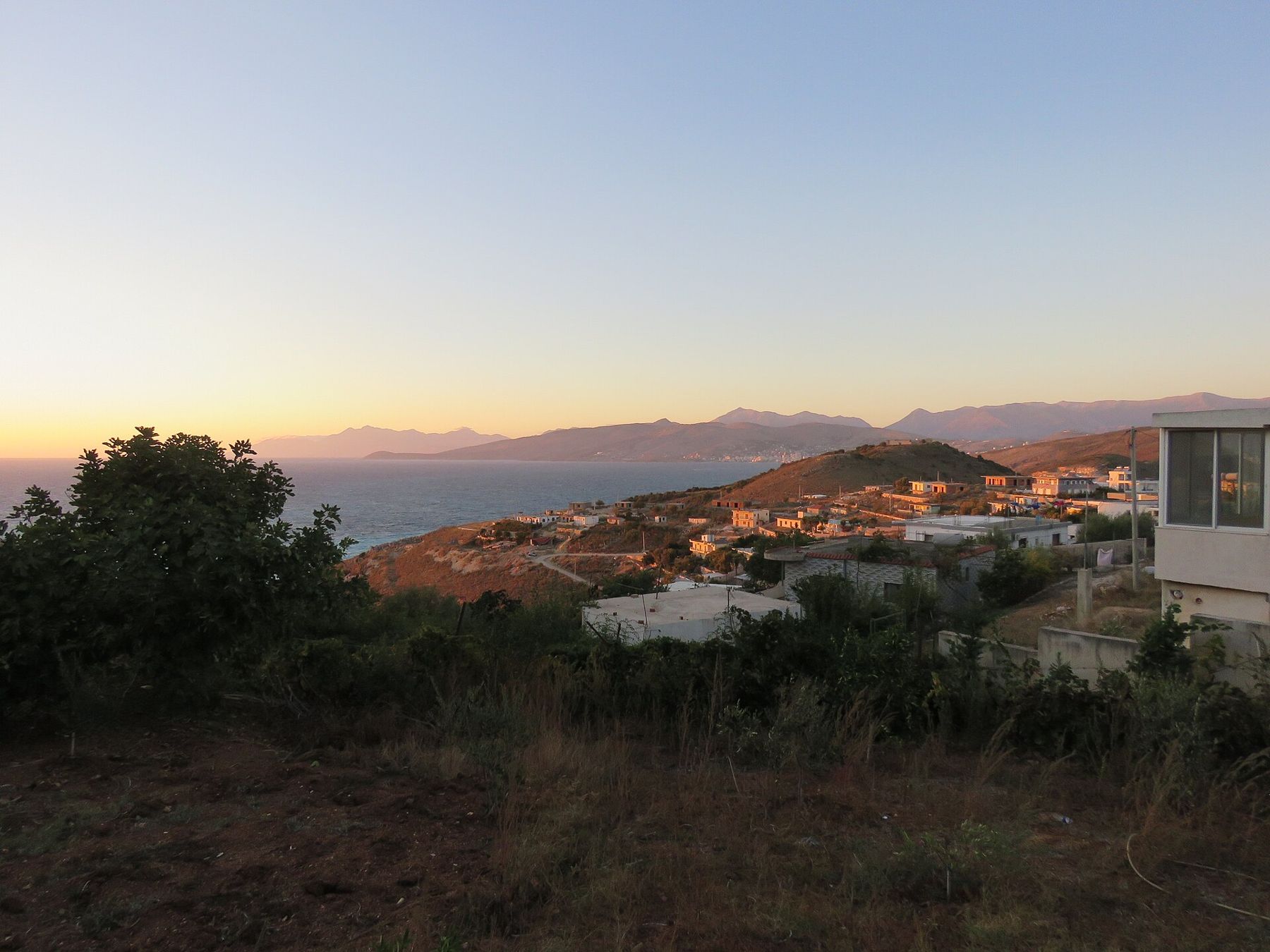
Whichever way you go, come back to the promenade one evening at the end of the trip. Buy a coffee, find a bench, and watch the light go out of Corfu's hills while the town walks past you.
Filed under The Coast