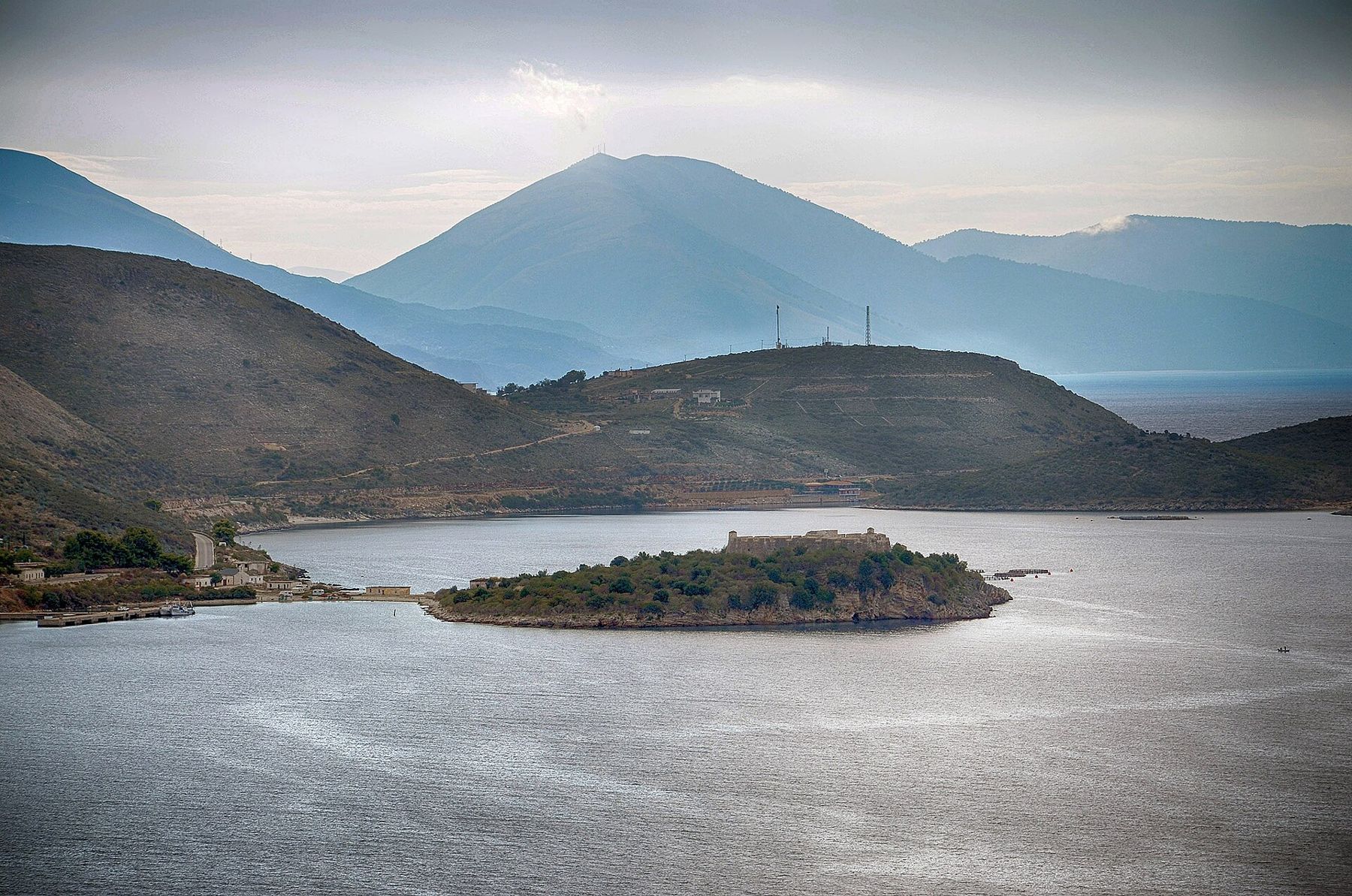
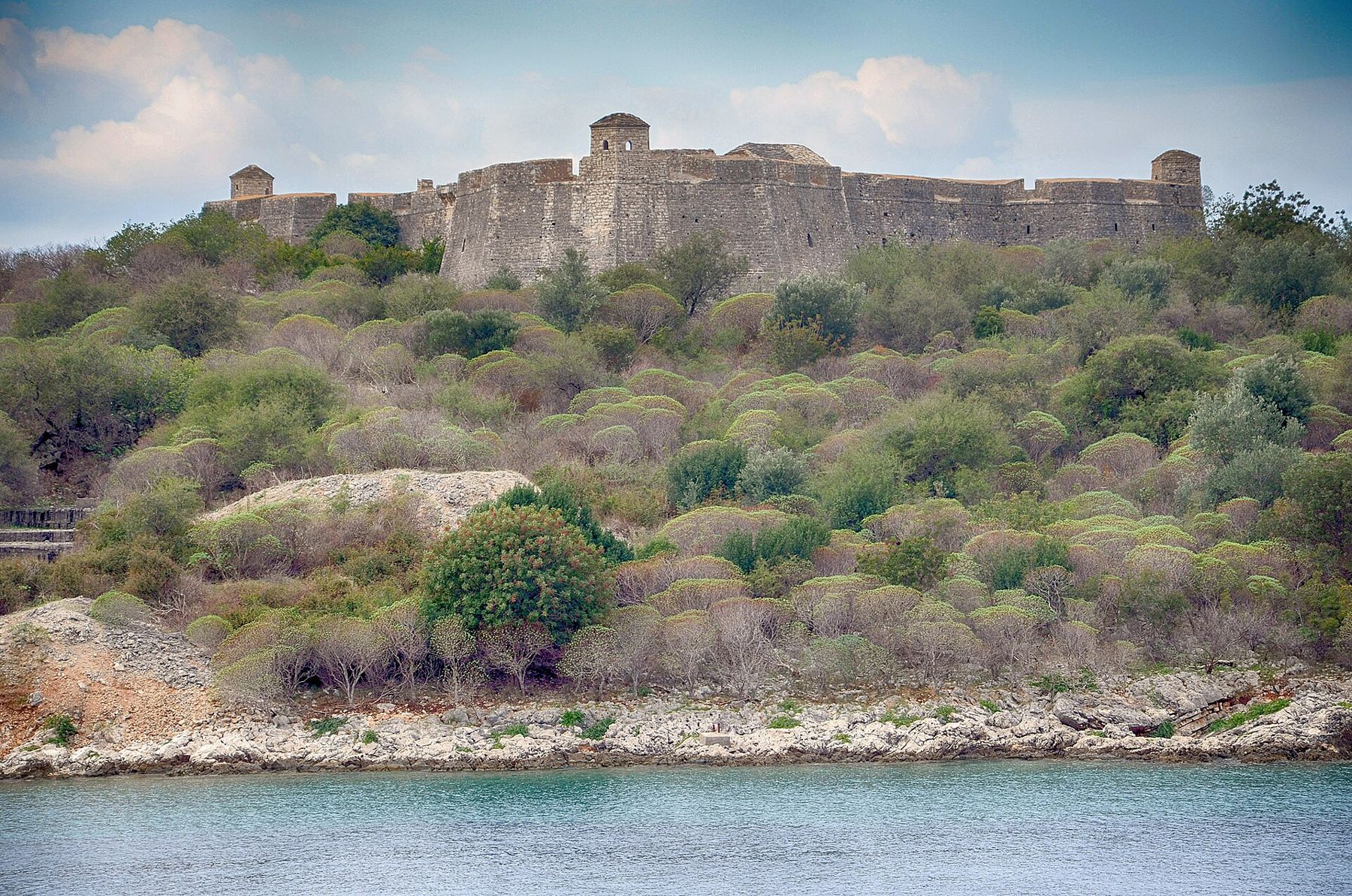
The coast road south of Himarë climbs over a shoulder of bare limestone and then, on a bend, shows you something that looks like a mistake in the map. Below is a bay almost entirely closed by land, its water a deep, still green-blue. In the middle of it, joined to the shore by a narrow neck, sits a low stone fortress with three sides and a round bastion at each corner. Nothing moves on the water. A few cars are parked by the gate.
This is Porto Palermo. The name is Italian, a later form of the ancient Panormos, a word Greeks used for a good all-weather harbour. That is what this place has always been, and every one of its layers, from the Ottoman castle to the Cold War tunnel across the water, comes back to the same fact: here a ship can hide.
Ali Pasha's coast
In the late eighteenth and early nineteenth centuries much of what is now southern Albania and north-western Greece was ruled, in effect, by one man. Ali Pasha of Tepelena was nominally an Ottoman governor based at Ioannina, but he behaved like an independent prince, negotiating with the British, the French and the Russians, building fortresses along his coast and fighting the Ottoman government when it suited him. He was finally besieged and killed in 1822.
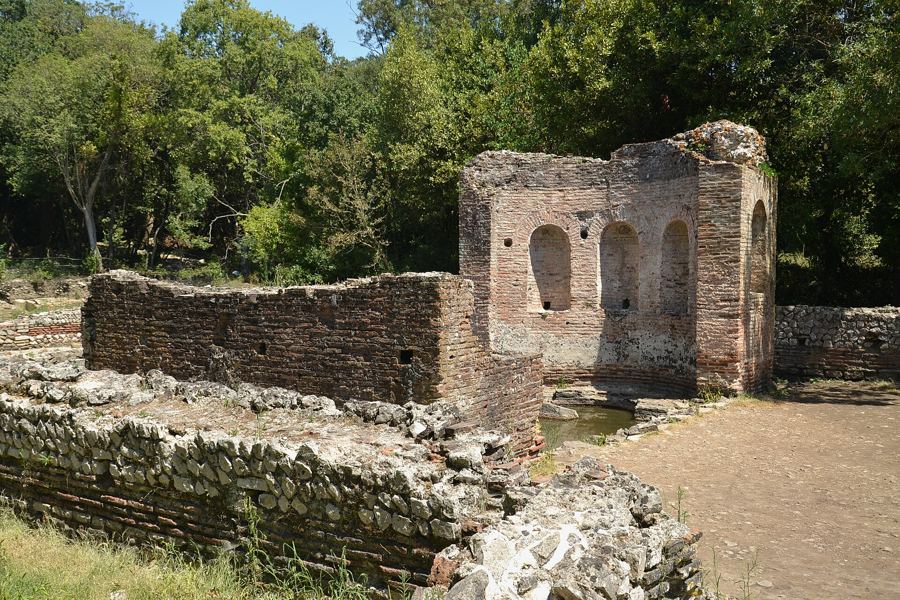
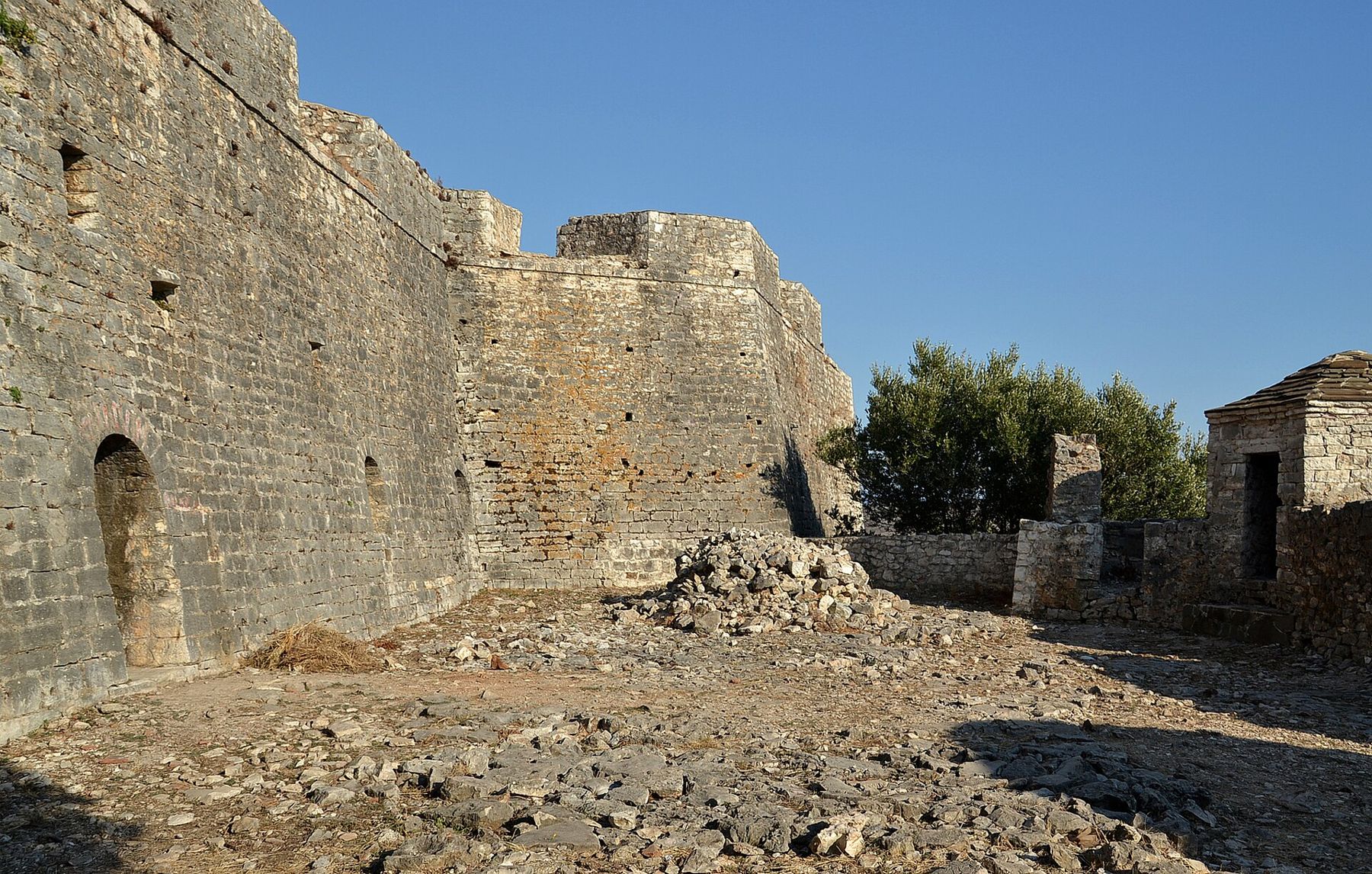
The castle at Porto Palermo is usually credited to him, from the early years of the nineteenth century, though some argue the Venetians fortified the spot first and that he rebuilt it. Its triangular plan, with bastions at the corners, is the same idea as his fortress across the channel at Butrint. Both were built to hold a harbour mouth against an enemy from the sea, at a time when the Ionian Islands opposite changed hands between Venice, France, Russia and Britain.
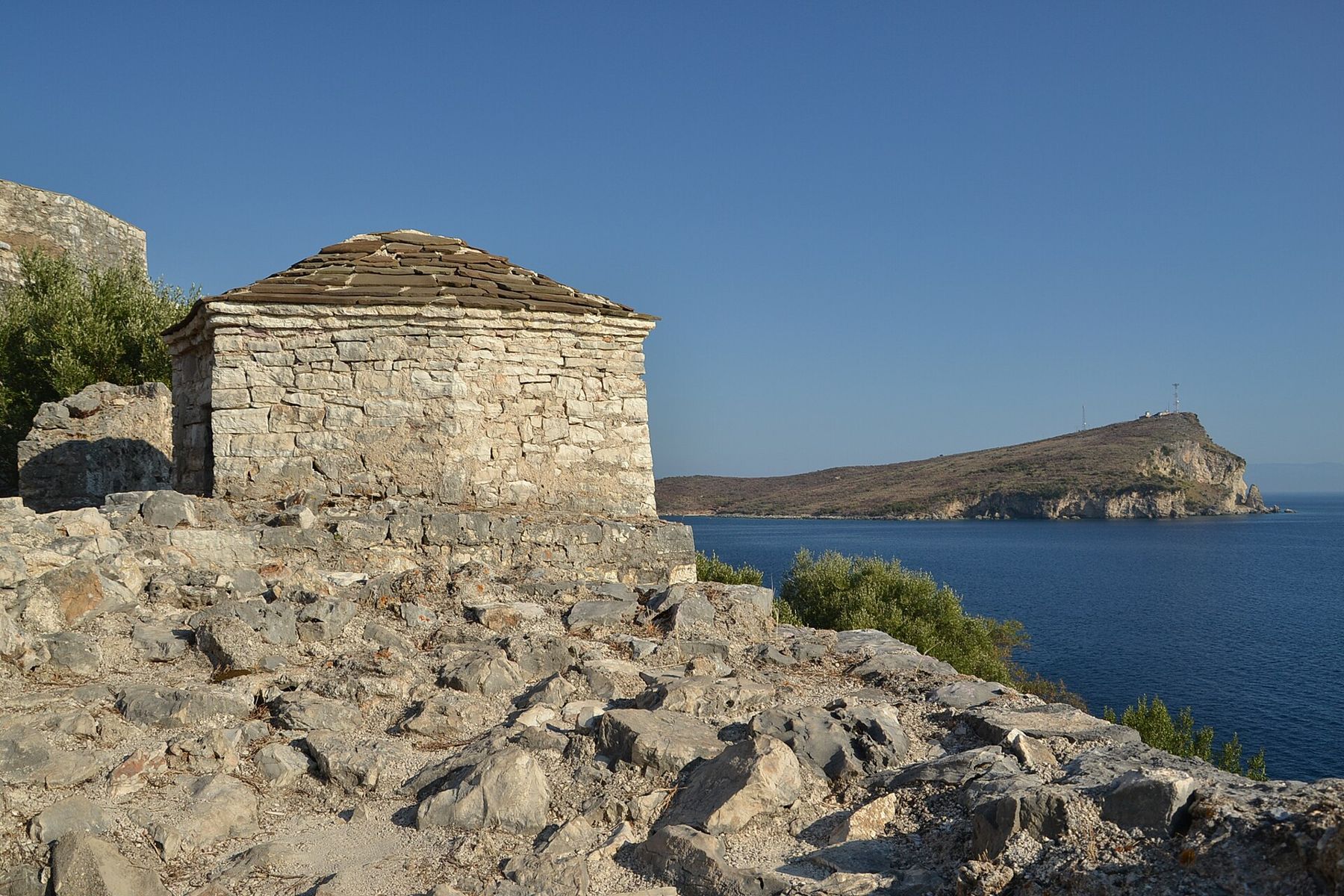
Local stories attach Ali Pasha's household to the castle, and you will hear them told at the gate. Treat them as stories. The building's purpose was military: a garrison, guns covering the water, and a secure anchorage for his ships.
Ali Pasha was famous across Europe in his lifetime. Lord Byron travelled to meet him at Tepelenë in 1809 and described the visit in letters and in the second canto of Childe Harold's Pilgrimage, and painters and novelists turned him into a figure of oriental splendour and cruelty. The real man was a hard, capable and ruthless politician who built a state of his own inside a crumbling empire, and whose fortresses still stand along this coast and in the valleys inland.
His fall came when the Sultan's government decided he had grown too strong. Imperial armies besieged him at Ioannina, and his death there in 1822 came just as the Greek War of Independence was breaking out to the south. The castle at Porto Palermo outlived him by two centuries, passing from one garrison to the next.
Inside the walls
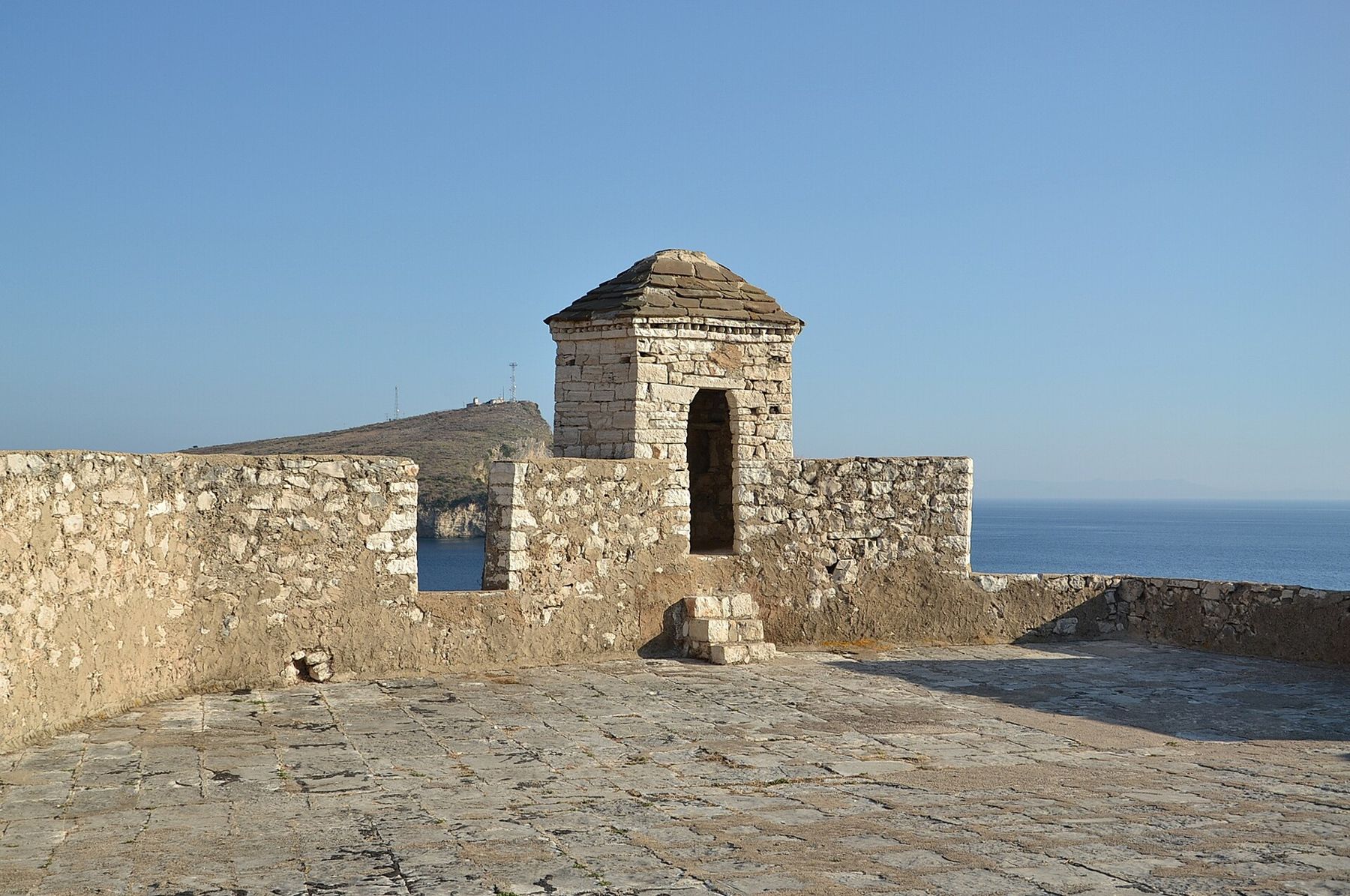
You reach the castle by a short causeway and a path through olive and scrub. The walls are thick, built of rough local stone, and the entrance leads through a dark passage into a central courtyard. Around it are vaulted rooms and stairs that take you up to the ramparts, and from the top you can walk most of the way around the walls.
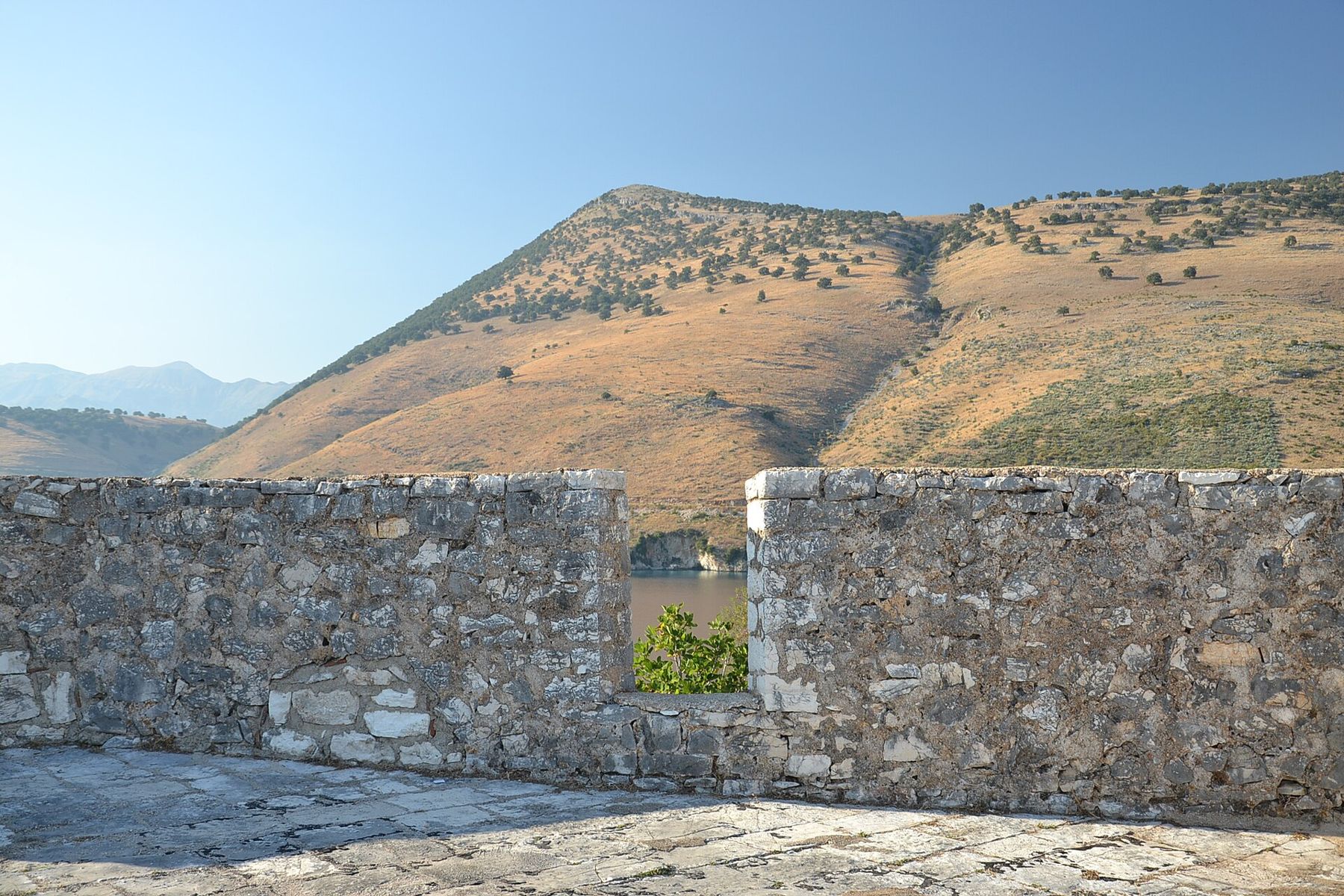
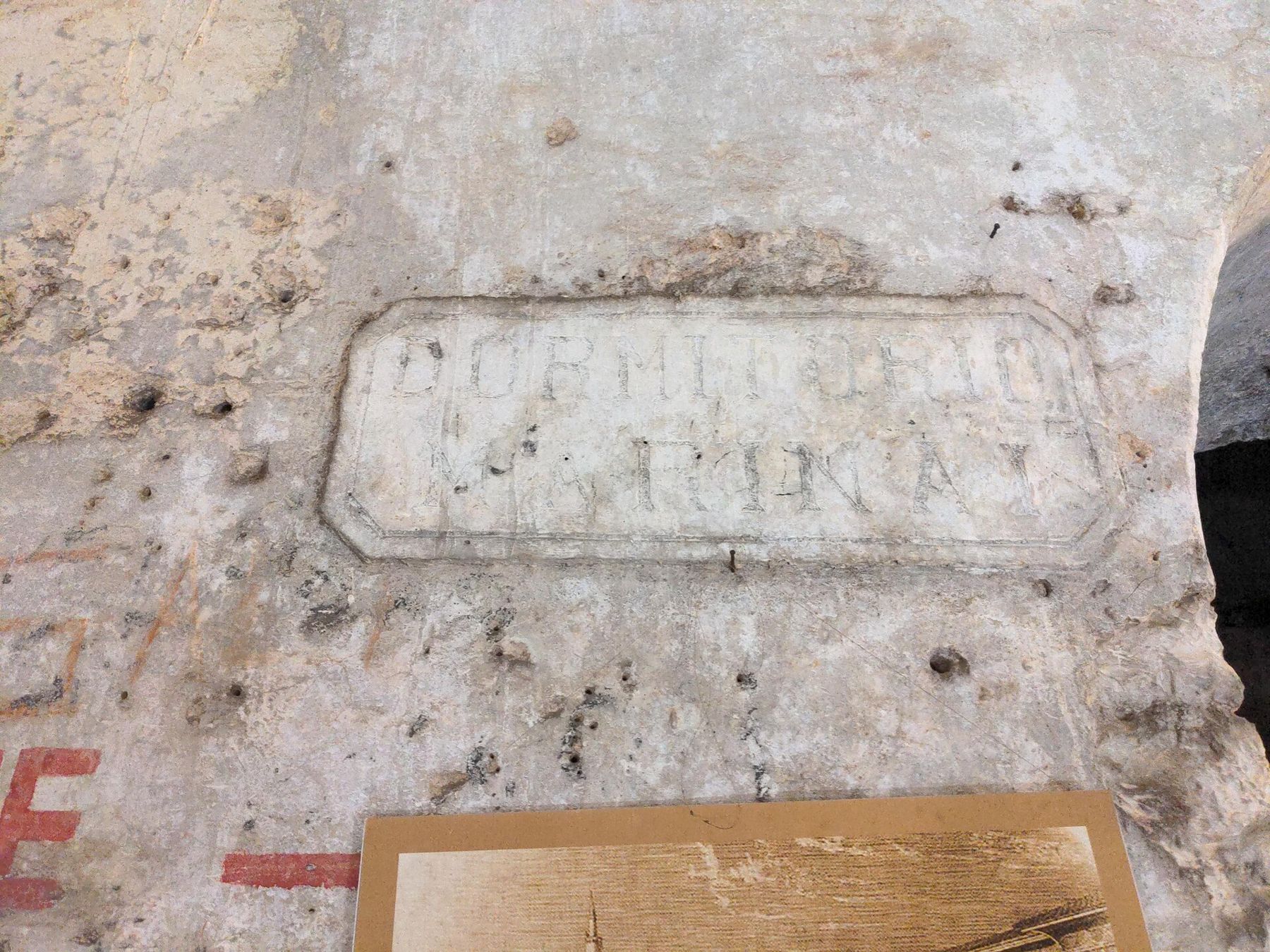
The interior is plain. There are no furnishings, just stone, cool shadow and the occasional swallow. On some walls you can still make out painted words from later military use, a reminder that the castle served other armies after Ali Pasha's.
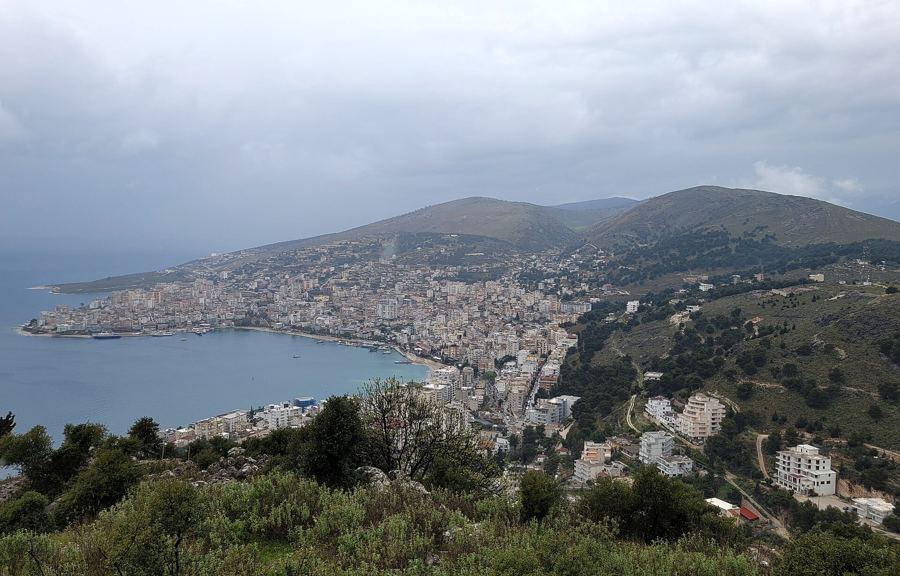
What you come for is the view from the roof. On one side the bay lies so enclosed that it looks like a mountain lake. On the other, beyond the headland, the open Ionian runs to the horizon. The hills behind are grey limestone dotted with olive and holm oak, and in the summer the cicadas are deafening.
 Read nextSarandë, the southern base
The tunnel in the hill
The bay's second history began after the Second World War. Under Enver Hoxha's communist government the whole Albanian coast became a closed military frontier, and sheltered anchorages like this one were put to use. On the northern side of the bay a tunnel was cut into the mountain large enough to take a submarine, so that vessels could be hidden from aircraft and satellites.
For decades this meant Porto Palermo was simply not a place for visitors. Even after 1990, when the regime fell and the country opened, the military presence lingered. The tunnel entrance can be seen from the coast road and from the castle, a dark opening at the waterline. Whether you can get closer depends on the current arrangements, which have changed several times; do not enter areas that are fenced or signed as military.
It is worth pausing on what this place was for most of the last century. The ordinary Albanians who live on this coast now, running cafés and renting rooms, grew up in a country where the beach was watched, where the sea was a border, and where looking towards Corfu from the wrong spot could bring questions. The quiet you find here today is new.
The quiet you find here today is new.
Swimming and lingering
The water in the bay is calm on all but the worst days, and the shore around the castle and along the southern side has small pebble beaches and rocks to swim from. There is no resort here. In summer a couple of simple places serve drinks and grilled fish, and a few boats anchor in the bay for the night, but the development that has transformed Dhërmi and Ksamil has largely passed it by, at least so far.
The hillsides around the bay are good for a short walk in the cooler months, along goat paths through the scrub and over the headland for views down the coast towards Qeparo and Borsh. Spring brings wildflowers to the limestone, and autumn a soft, low light that suits the grey stone of the castle.
Snorkellers will find the water clear over the rocks near the castle, with small fish around the boulders and sea urchins in the crevices, so watch your feet. Bring your own mask; there is nowhere reliable to hire one on the bay.
Getting there and when to go
Porto Palermo lies on the coast road roughly halfway between Himarë and Borsh. Coming from either direction, a side road drops from the highway to the shore and the castle car park. Buses along the Riviera will stop on the main road if you ask, though the walk down and back up again in summer heat is not trivial. With a car, it fits easily into a day of moving along the coast.
The castle's opening hours and entry fee vary by season, and it may be closed at odd times out of season. Late afternoon is the best time to come, when the stone turns warm in colour and the heat eases. Bring water, and shoes that grip, because the ramparts are uneven and have no rails in places.
Out of season the bay can be completely empty, and that is when it is at its most striking: the castle shut and silent, the water flat, a single fishing boat working along the far shore. Even in August it rarely feels crowded, because most beach-goers drive straight past on their way to the longer strands at Borsh and Himarë. Come mid-morning on a weekday and you may share the ramparts with no one at all.
For more of the coast around it, our story on the Riviera, bay by bay works south from the Llogara Pass. Our comparison of the coast's beaches covers Borsh, the long strand just to the south, and Butrint has Ali Pasha's other triangular fortress, standing guard over the Vivari Channel.
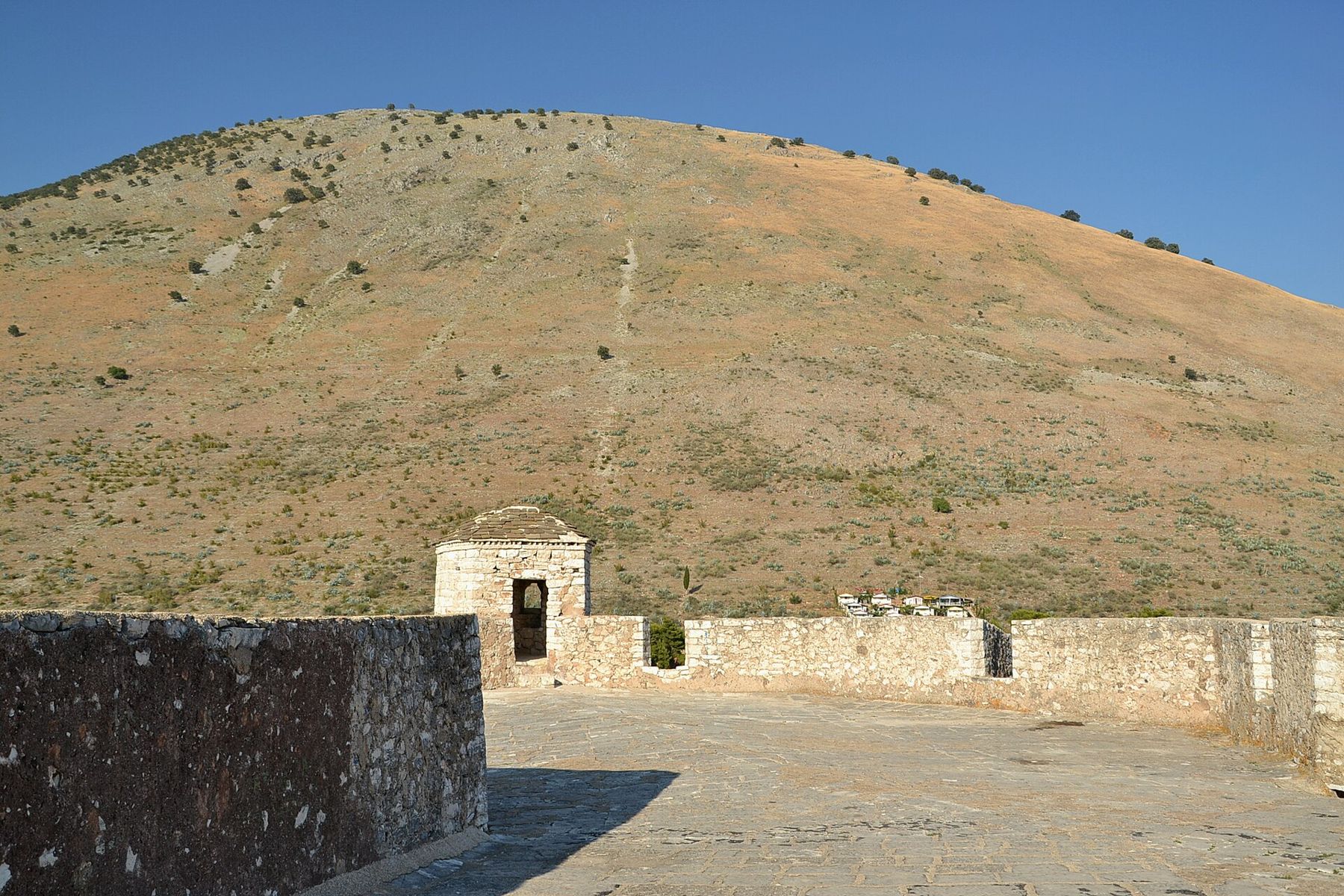
Stay on the castle roof until the sun touches the sea beyond the headland. The bay goes dark first, the hills hold the light a few minutes longer, and the only sound is a boat engine somewhere out on the water, heading for shelter.
Filed under The Coast