The Albanian Ionian is a coast of white limestone and clear water, and almost every bay has a beach of some kind at its foot. They are not interchangeable. Some are at the end of a long walk, some under a row of apartment blocks; some are fine pebble, some sand, some boulders. Below, the eight most people ask about, from north to south, with an honest note on each. For the villages behind them, our story on the Riviera, bay by bay covers the coast road.
A few general points first. Most Albanian beaches are pebble rather than sand, so water shoes make life easier. Loungers and umbrellas are rented by the day on the developed beaches, and prices change by place and season. Almost every beach is free to use if you bring your own towel and find a patch not given over to loungers. And on many beaches the sea deepens fast, so keep an eye on children.
Gjipe
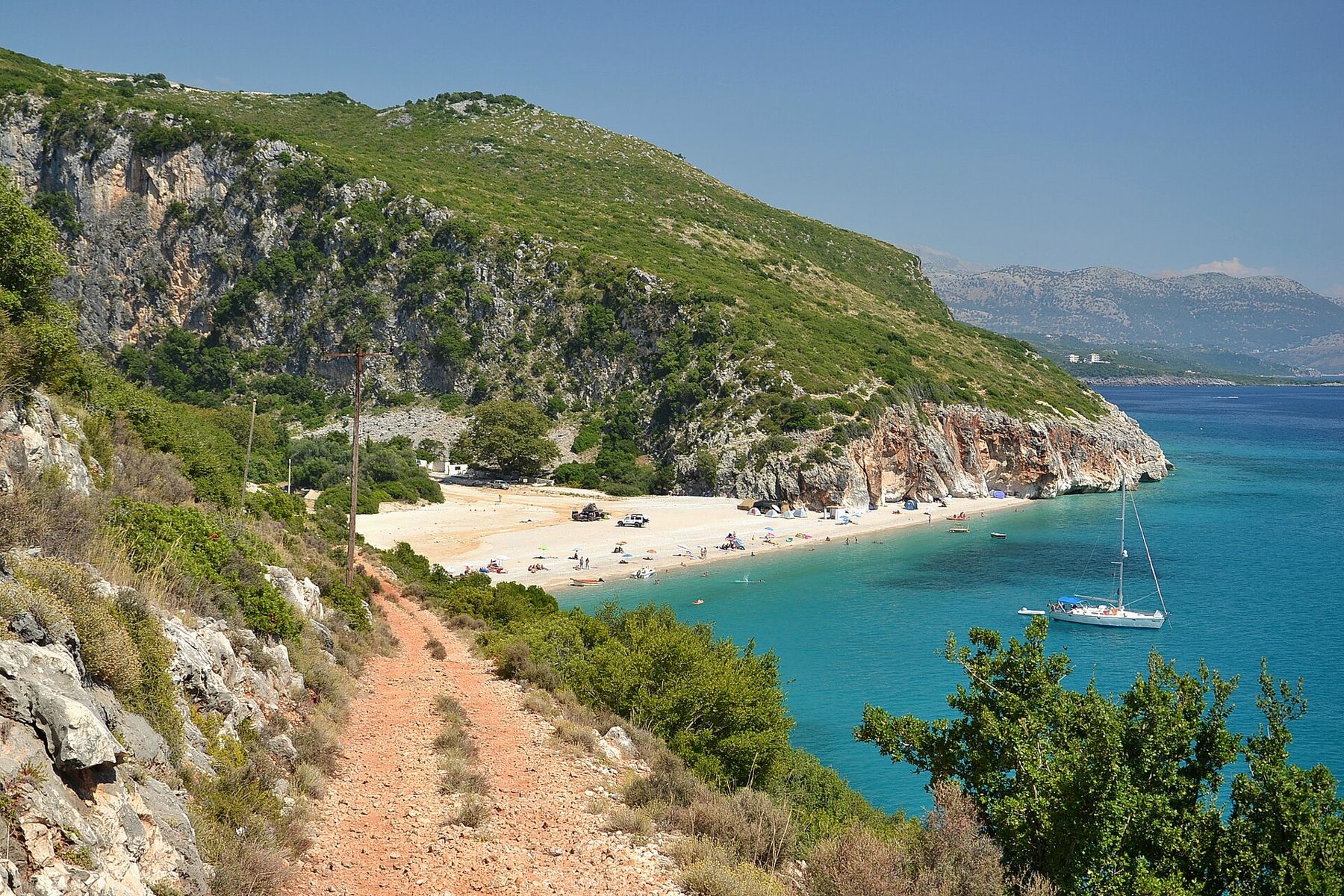
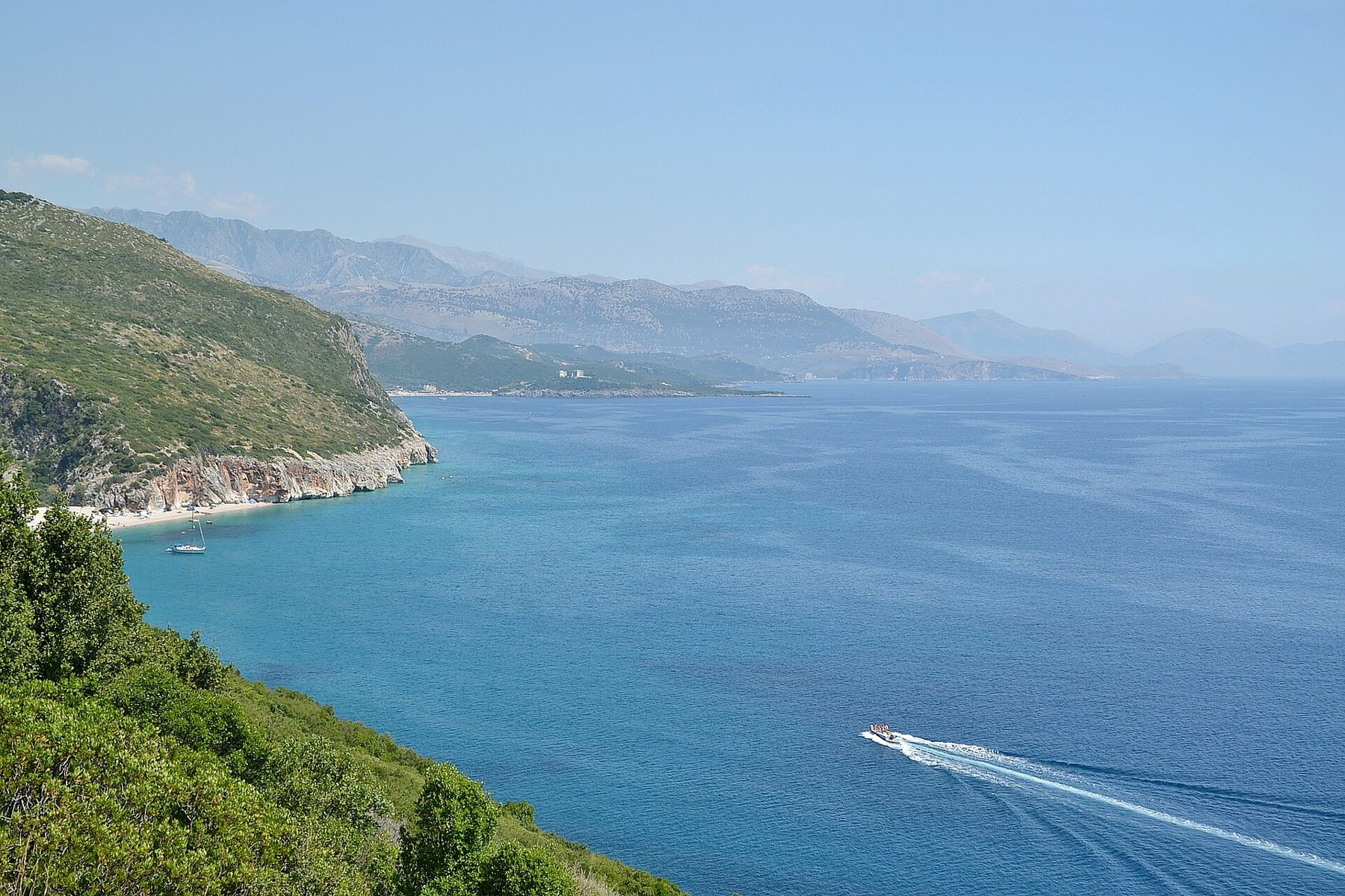
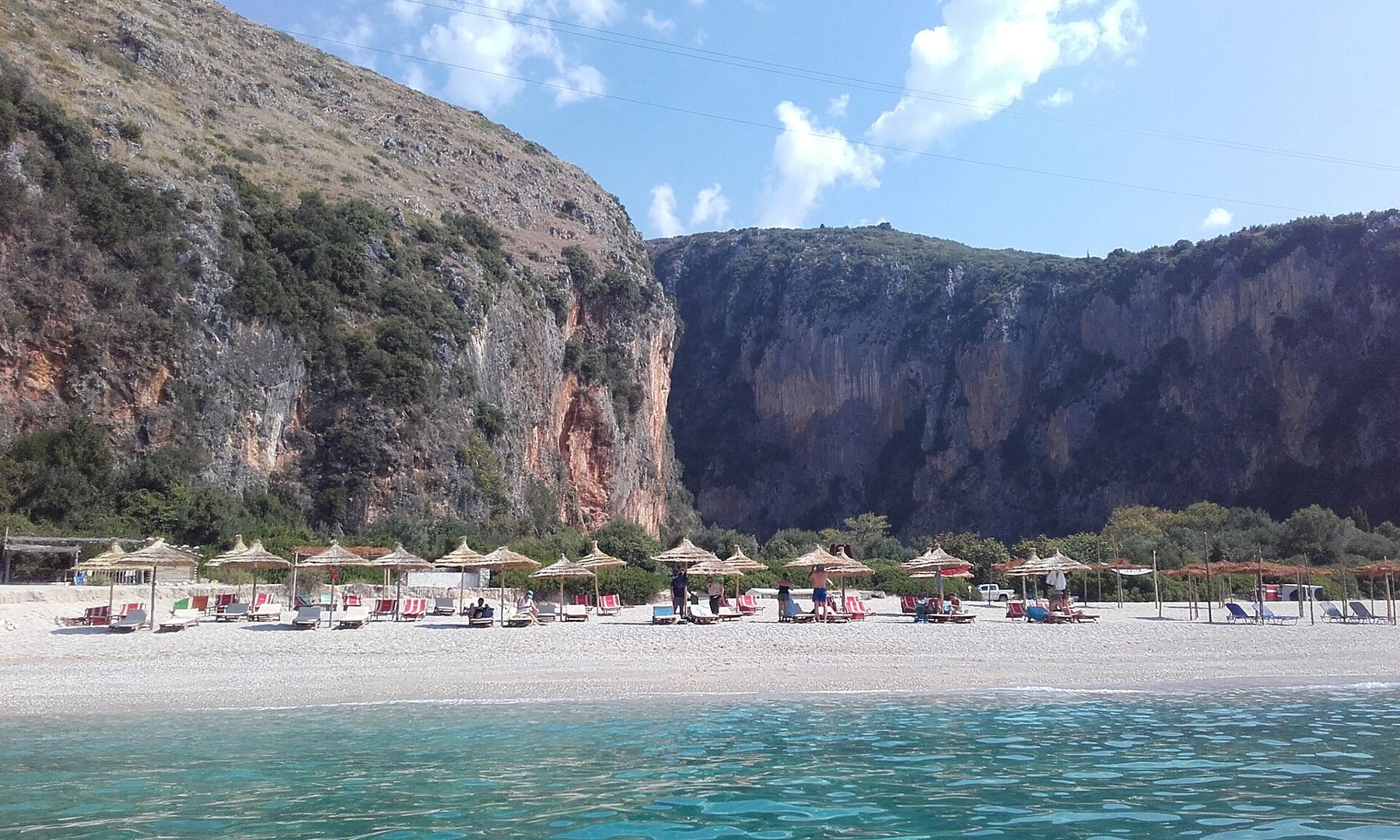
Gjipe lies at the mouth of a narrow limestone canyon between Dhërmi and Jalë, and no road reaches it. You park on the track above and walk down, about half an hour each way, with the return uphill in the sun. Boats also bring people from nearby beaches in summer. The reward is a cove of pale pebble and sand between high cliffs, with the canyon walls behind and very clear water. A few simple bars and campers appear in high season, but it remains the wildest of the well-known beaches. Bring water, shade and sturdy shoes, and avoid the hottest hours for the climb back.
Dhërmi
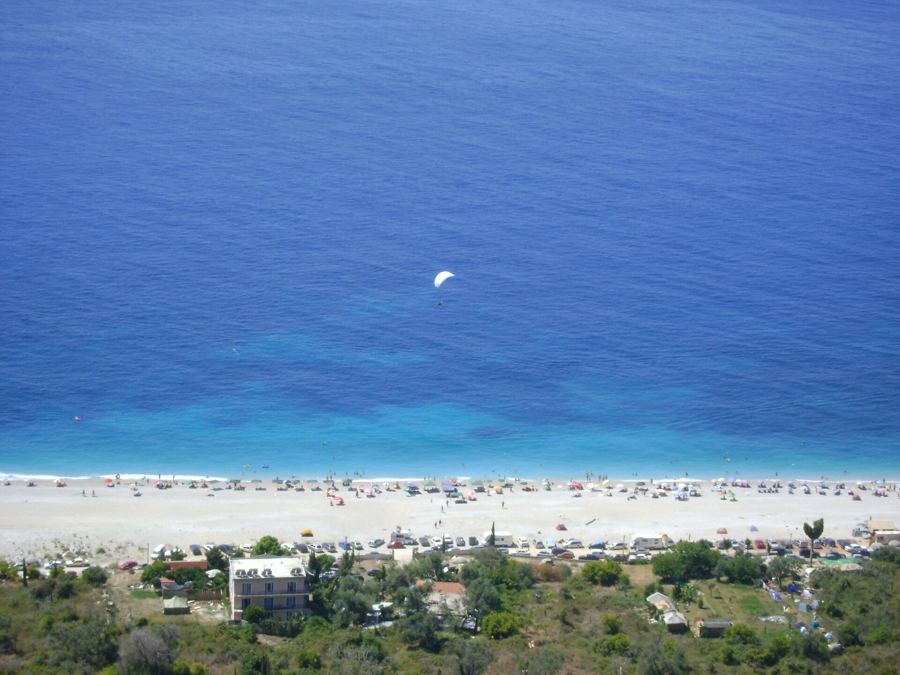
Dhërmi is the Riviera's best-known beach and its liveliest. A long curve of white pebbles runs beneath the village, with clear water that deepens quickly. Behind it, beach clubs, hotels and apartments have filled the slope, and in July and August the music runs late and the loungers stand in solid rows. Access is easy by road, though parking is tight in high season. If you want a scene, this is it. If you want peace, come in June or September, or walk to the far ends of the bay, where the crowd thins and the rocks offer places to swim from.
Jalë
Jalë is a short, sheltered beach in a small bay between two rocky arms, reached by a side road from the highway between Dhërmi and Himarë. It was once a campers' cove and is now lined with guesthouses and bars, but the shape of the bay keeps it compact and the water usually calm. The beach is a mix of pebble and coarse sand. It fills quickly on summer weekends, partly because it is small. Early morning, before the umbrellas go up, is the best time to see it as it was.
Livadhi
Livadhi is the long bay just south of Himarë, framed by olive terraces and low hills. The beach is pebble, wide and generous, with clear water and a handful of bars and restaurants behind. It is quieter than Dhërmi and more relaxed, with families and long-staying visitors rather than the club crowd. Himarë's shops, bakeries and cafés are a short drive or a longer walk away, which makes Livadhi a good choice for a stay of several days. Access is by a short road from the town.
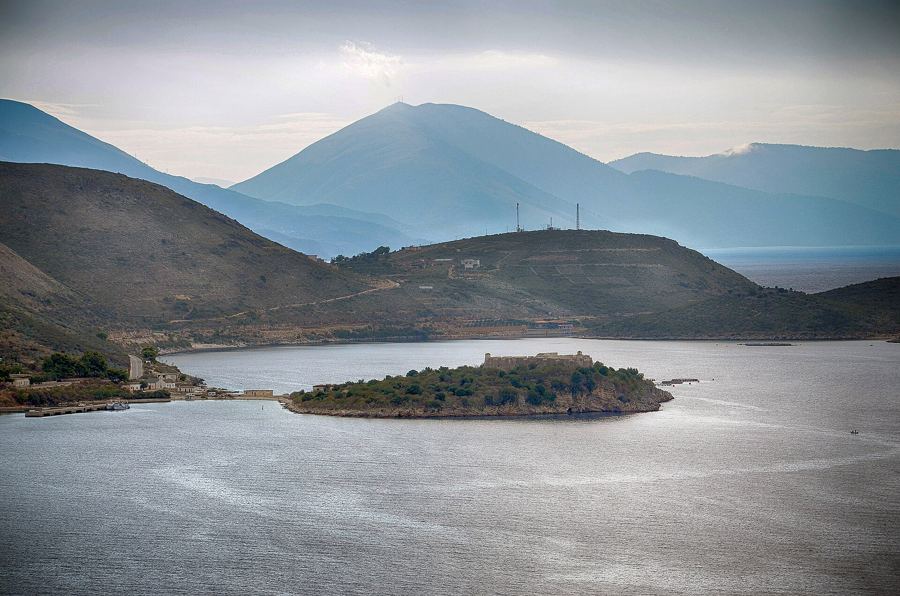 Read nextPorto Palermo and Ali Pasha's castle
Borsh
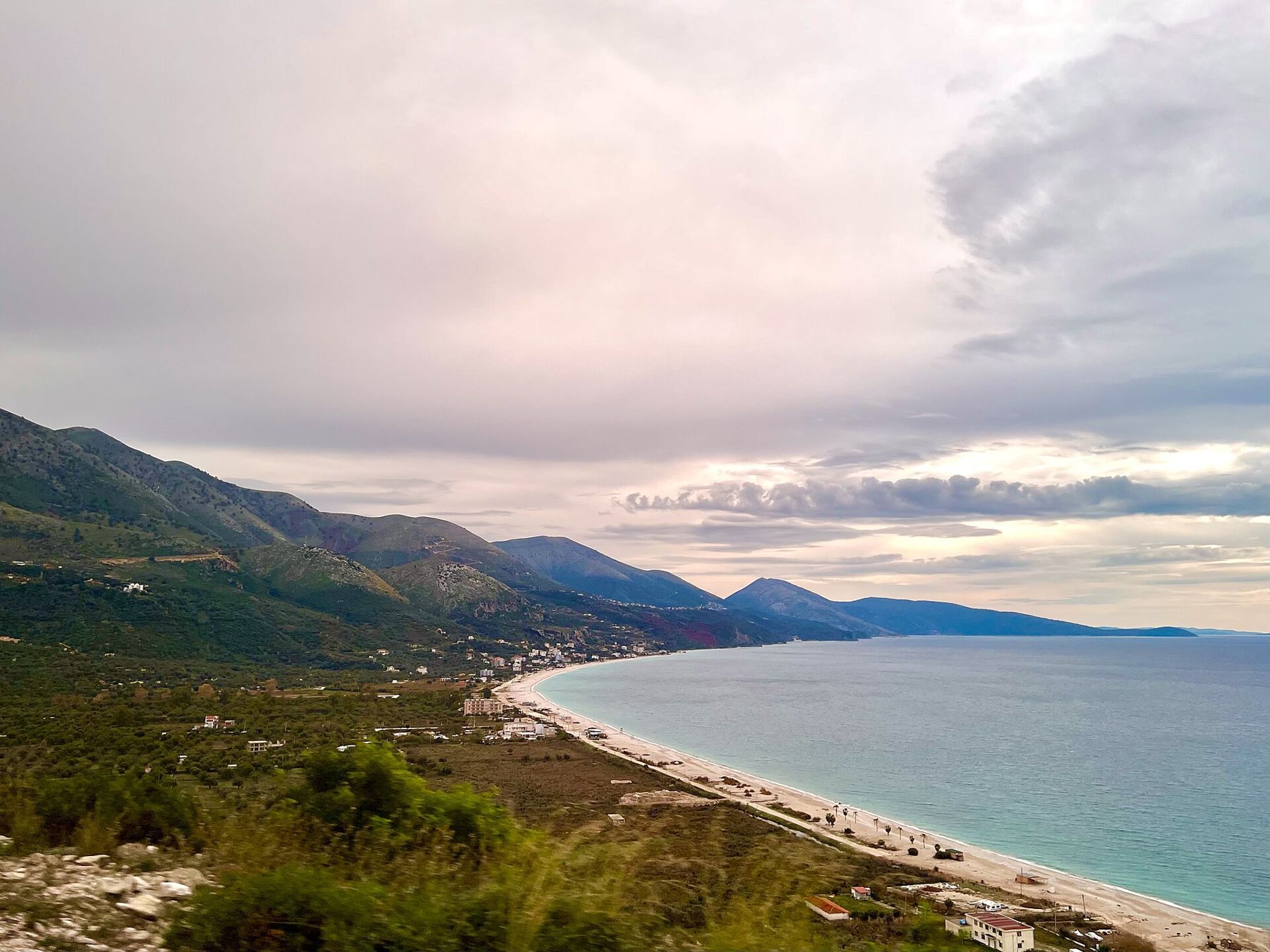
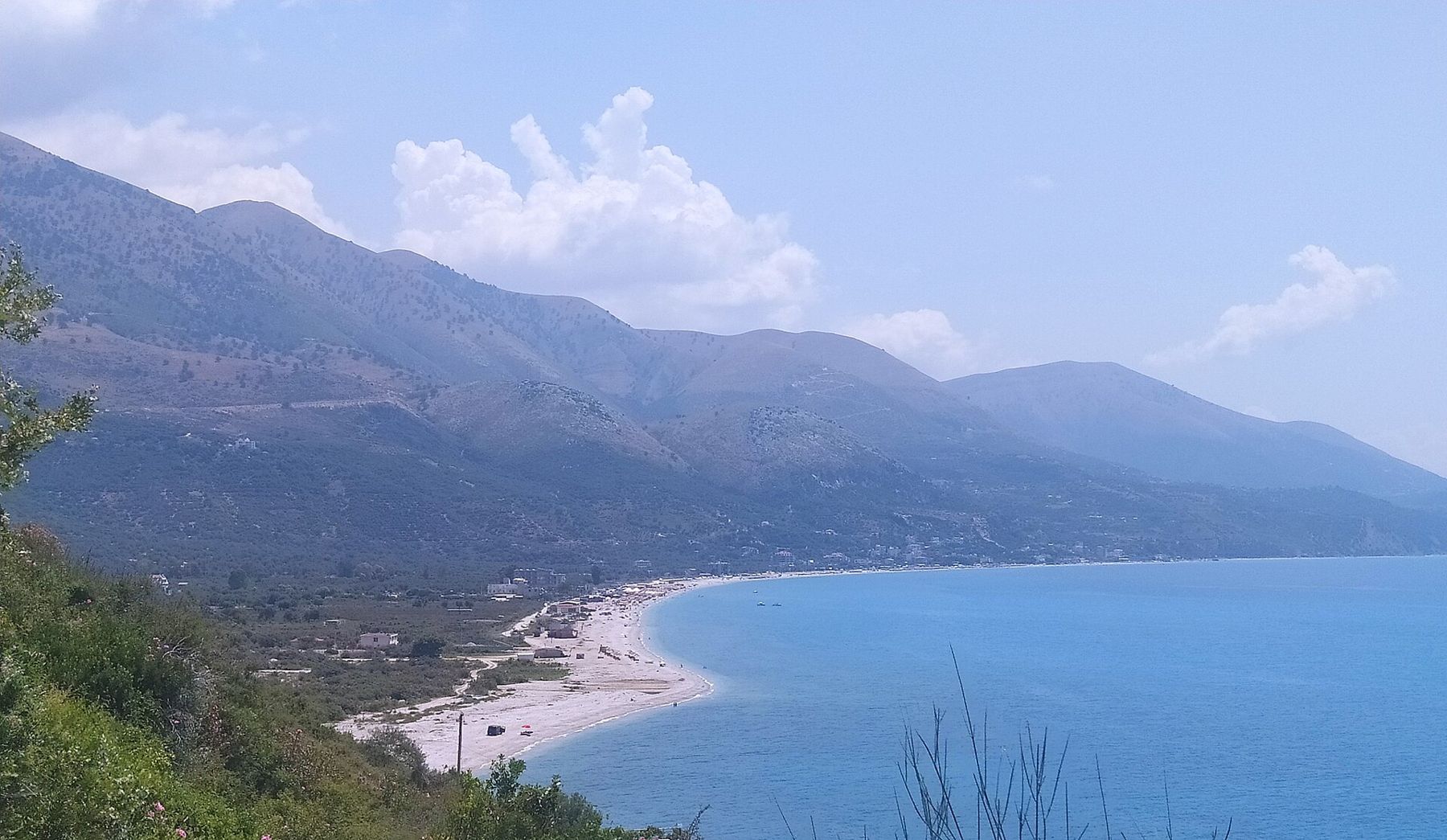
Borsh has the longest beach on the Albanian Ionian, several kilometres of pebble and patches of sand running beneath olive and citrus groves. The scale means that even in August you can usually find space, especially at the ends. Development has come, but it is spread thinly along the coast road rather than stacked up. The water is clear and deep close to shore. Springs run down from the hills behind, and the ruins of a castle stand on the spur above the village. For a long walk along the waterline, nowhere else comes close.
Lukovë
Below the village of Lukovë the coast breaks into several small beaches between rocky points, reached by tracks that drop from the highway through terraces. Some tracks are rough and steep, and it is worth asking locally which are passable. The beaches are pebble, the water very clear, and the number of people far lower than further north or south. Facilities are limited, with a few small bars in season. This is the stretch to choose if you have a car, a sense of adventure and no need for a sun lounger.
Ksamil
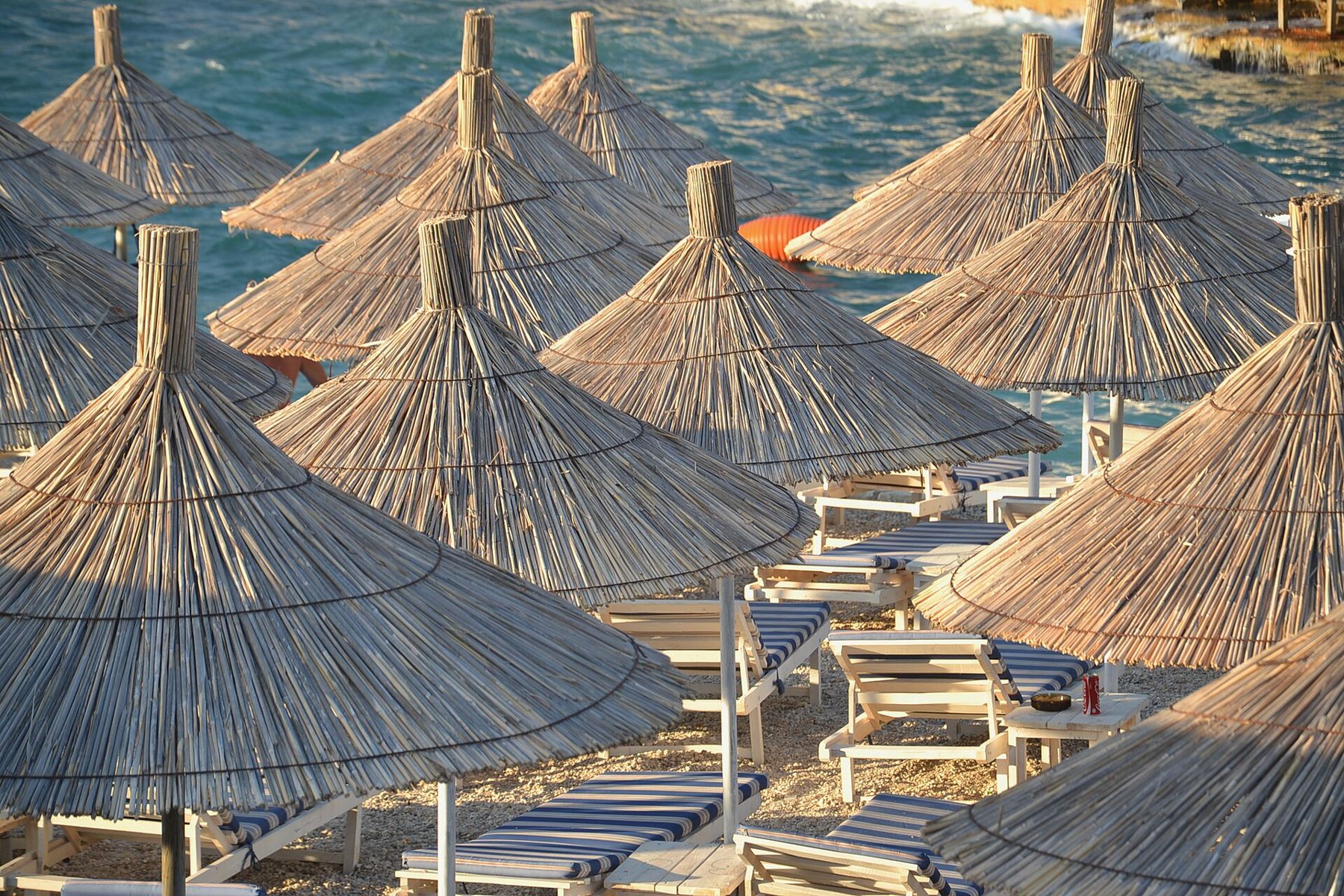
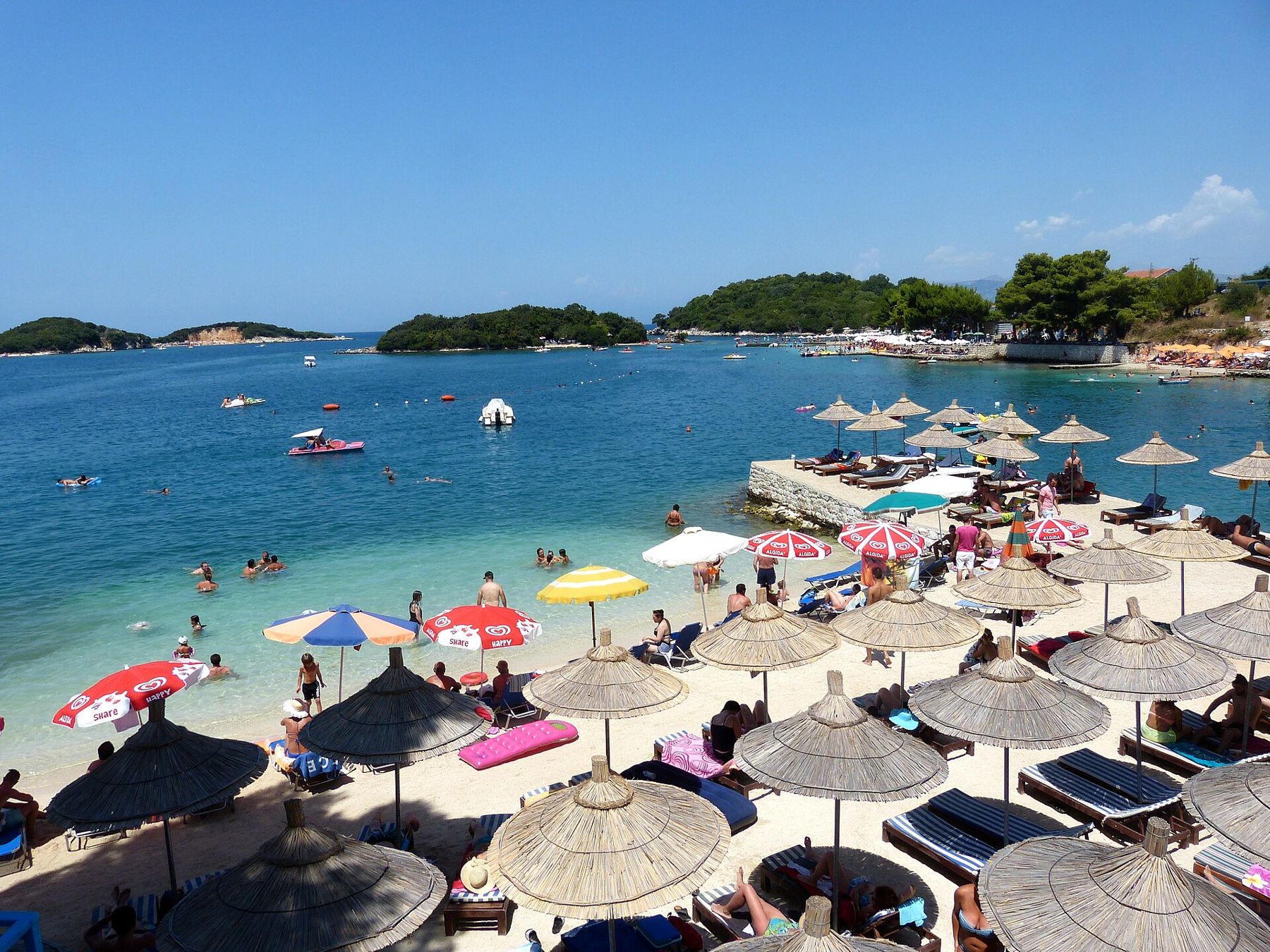
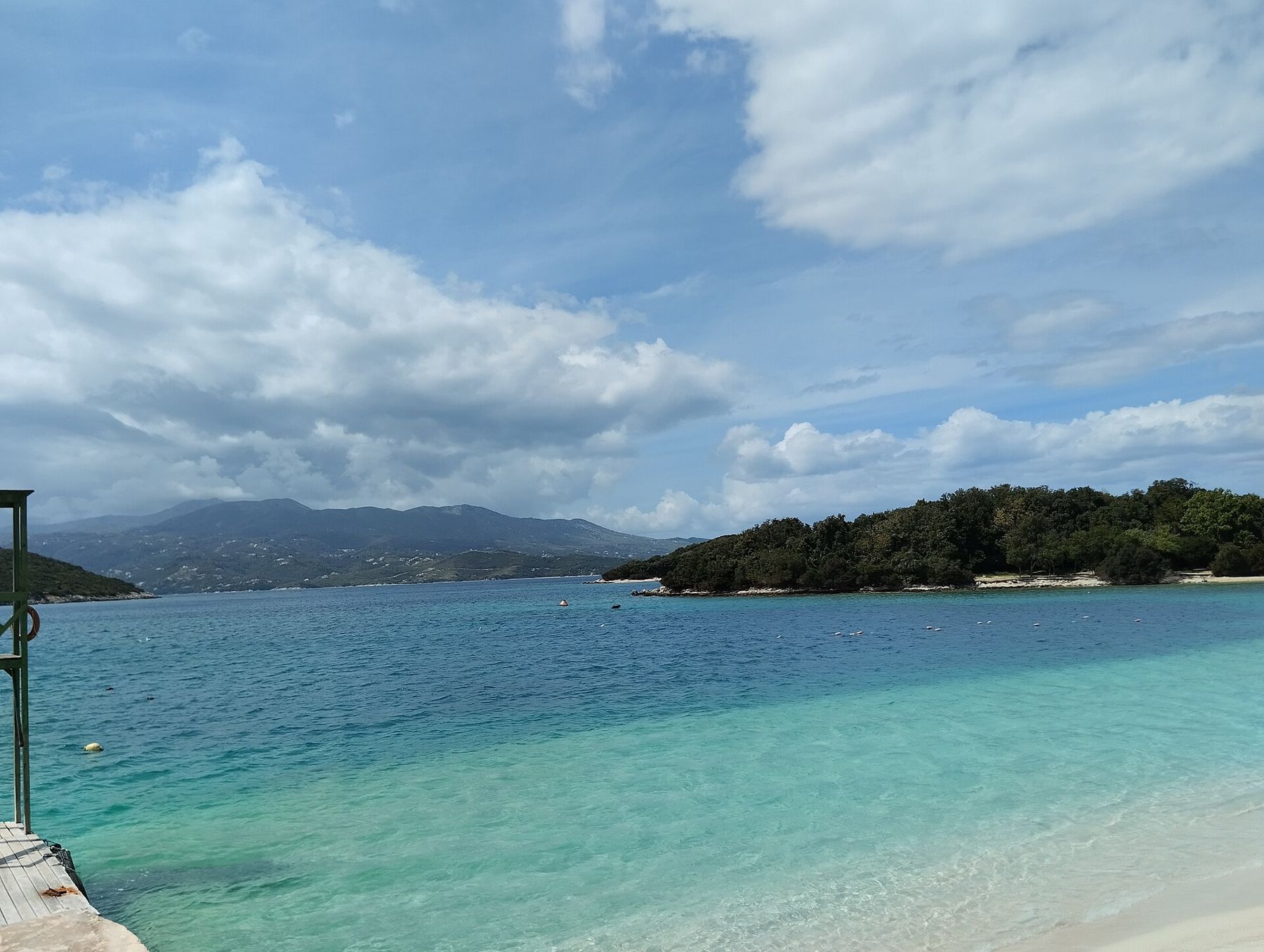
Ksamil has what the rest of the coast mostly lacks: sand. Its small bays of pale sand and fine pebble face four wooded islets, with shallow, turquoise water that makes it ideal for children and strong swimmers alike. It is also the most crowded place on the Albanian coast in summer. Almost every metre of beach is let out in loungers, the road from Sarandë backs up, and noise carries late. In May, June and late September it is lovely. In August, plan to swim early. Our story on Ksamil and Butrint covers the village and the ruins next door.
Mirror Beach
Mirror Beach, Pasqyra in Albanian, lies on the coast between Sarandë and Ksamil, at the foot of steps that drop from the road. It is a small cove of very white pebbles under a limestone cliff, and the brightness of the stone gives the water an intense, almost luminous colour. It has become popular through photographs, so it fills fast in summer and the steps can be busy. A bar operates in season. Go early, in shoulder season, or simply to look, and swim somewhere with more room.
How to choose
For wild and walk-in, choose Gjipe. For nightlife, Dhërmi. For space and a long walk, Borsh. For a quiet base with a town nearby, Livadhi. For sand and shallow water, Ksamil, out of high season. Whatever you choose, the coast is at its best in June and September, and on any beach the first hour after sunrise is the one to remember. Our guide to the best time to visit weighs the months.
Filed under The Coast