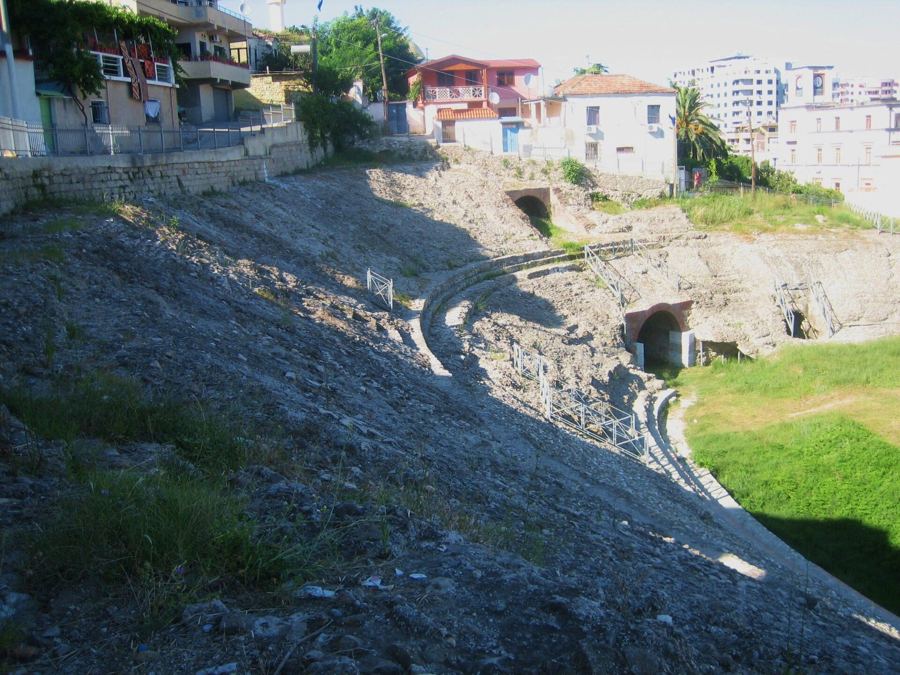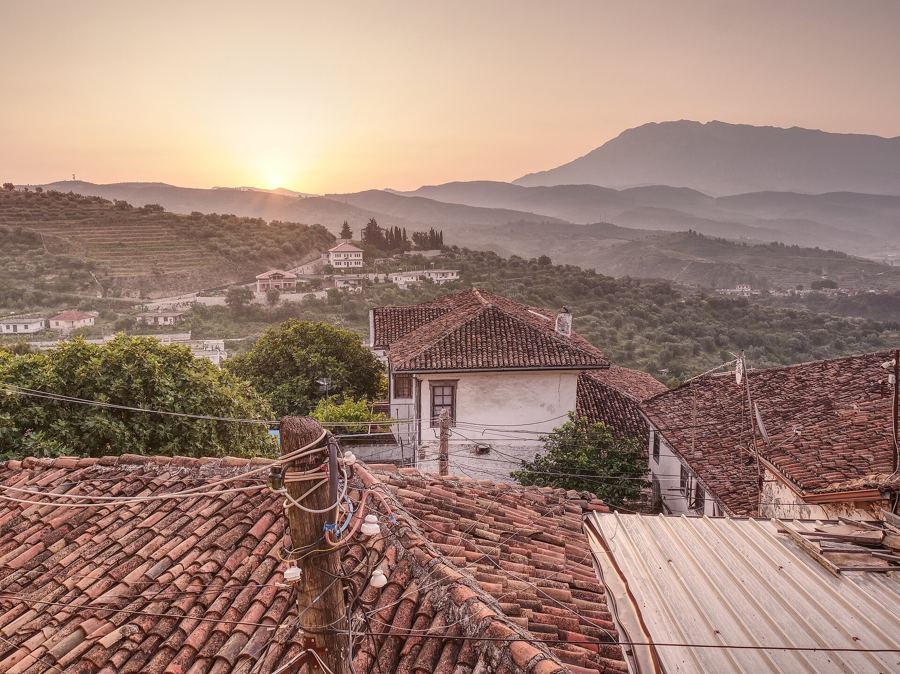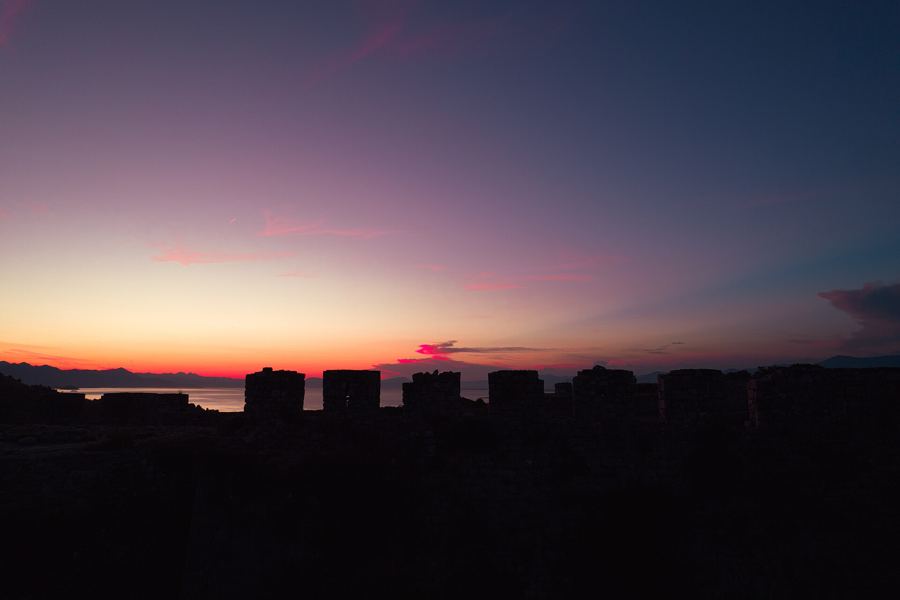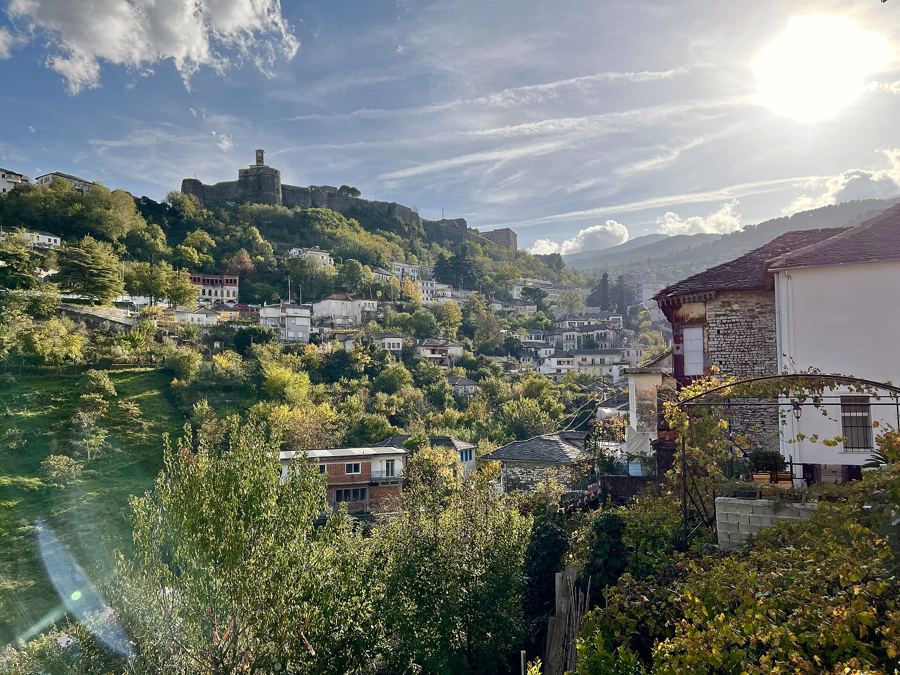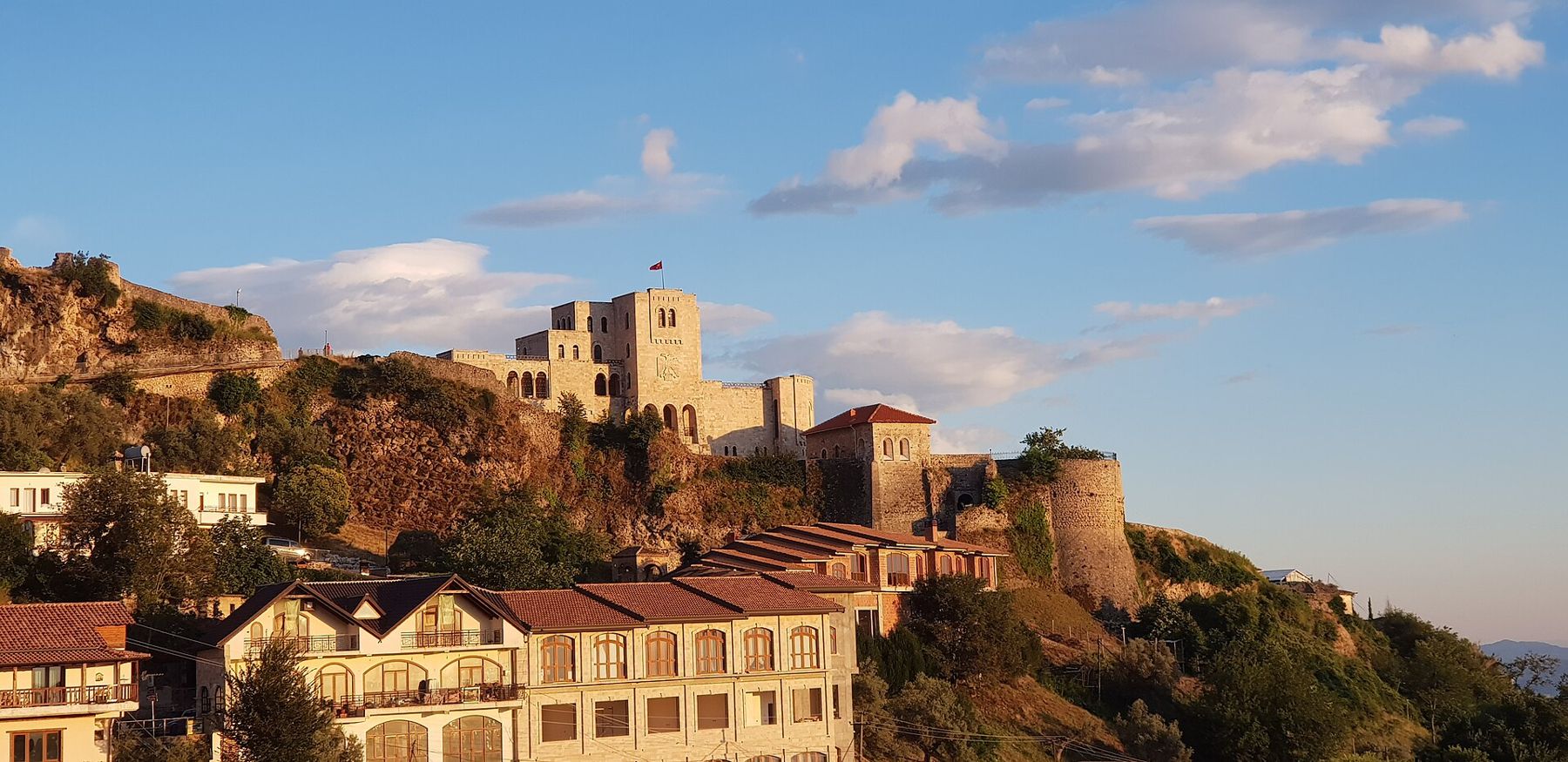
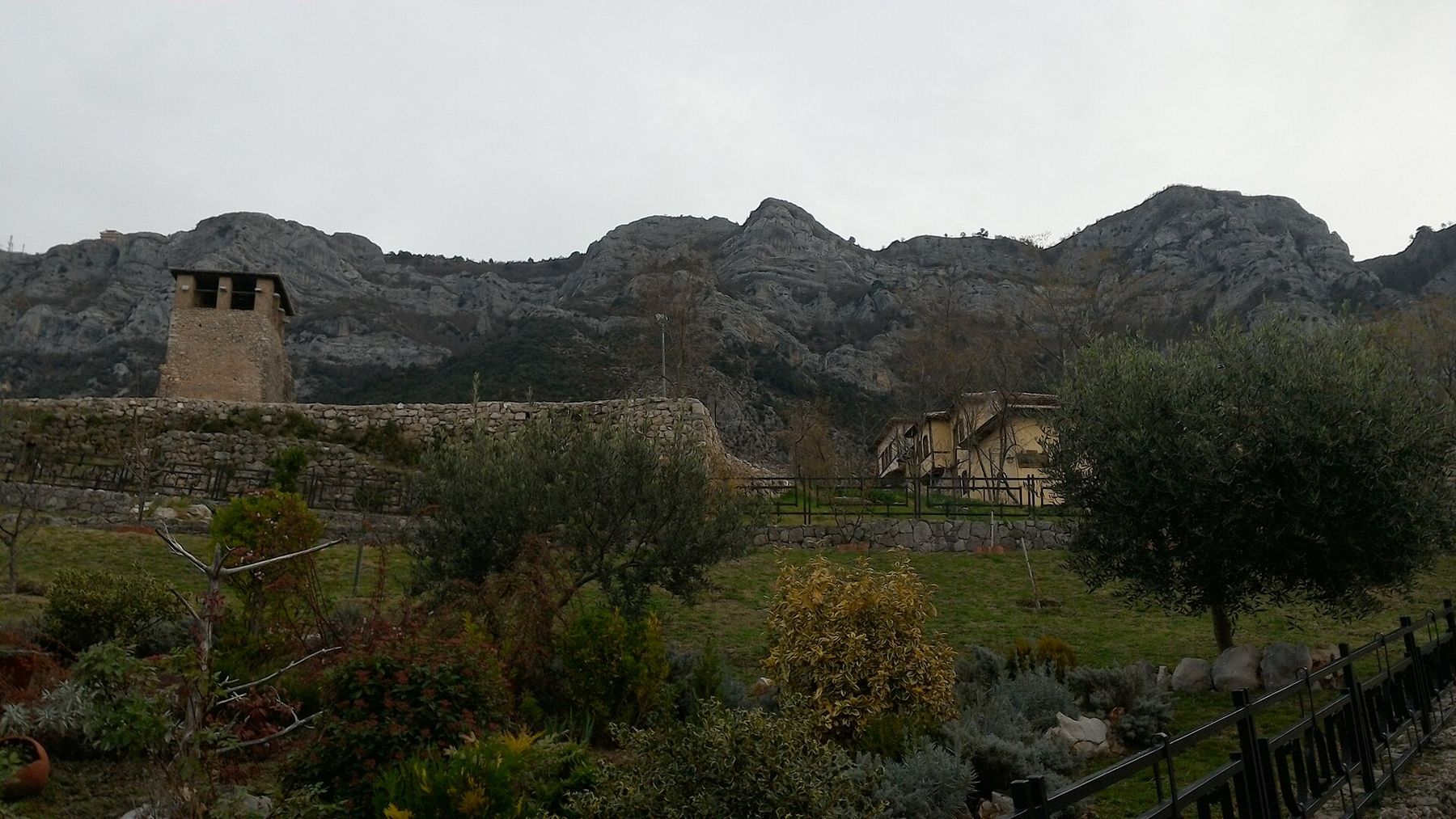
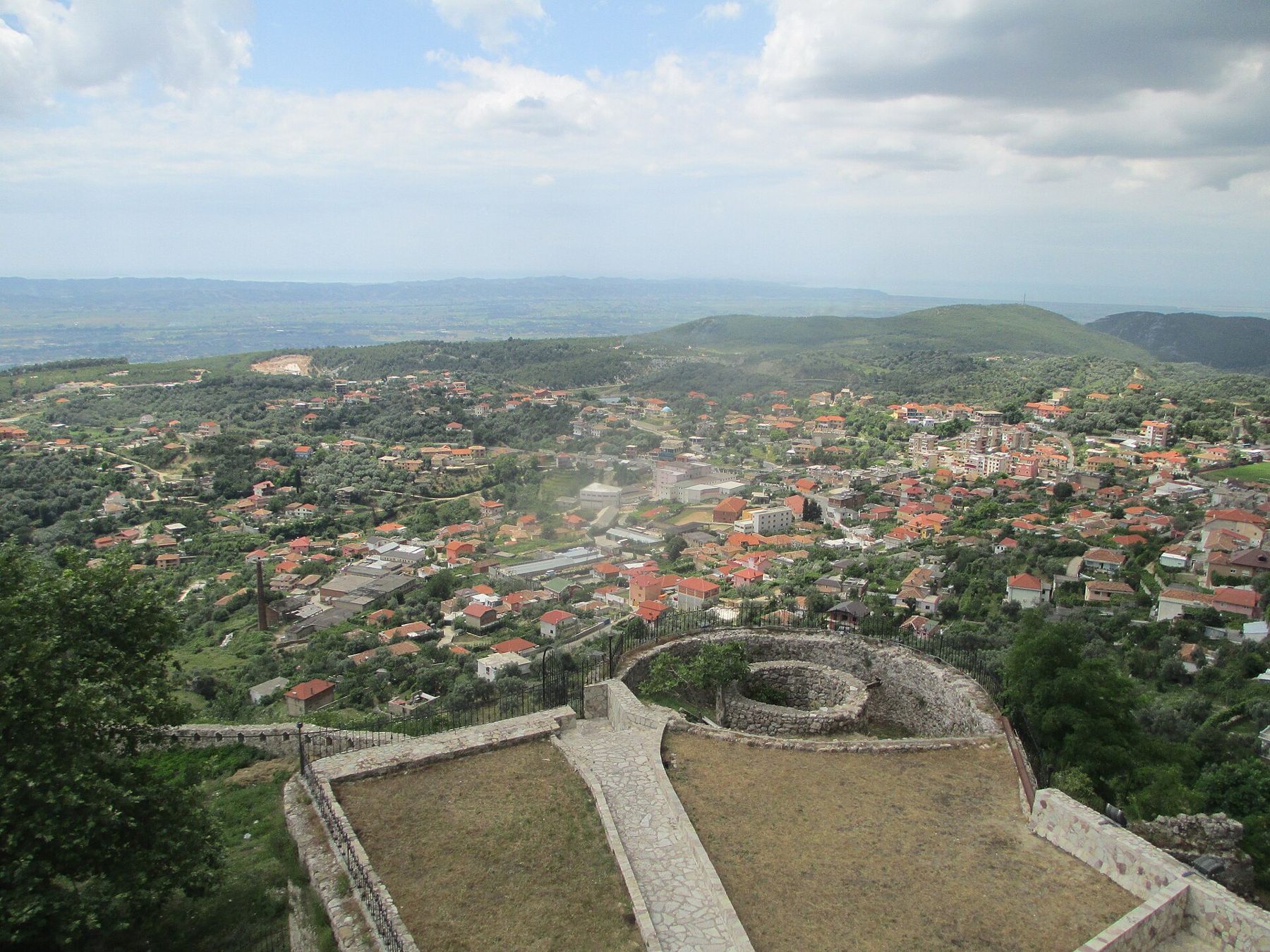
From the lower town, Krujë looks like a stage set: grey stone walls on a shelf of rock, a slim watchtower, and behind them a wall of mountain that turns blue in the afternoon. Below, the coastal plain runs flat all the way to the haze over the Adriatic. It is the view that made this place a fortress, and it is the reason the town still matters to Albanians more than its size would suggest.
Krujë is where Gjergj Kastrioti, known as Skanderbeg, raised his flag in 1443 and where he held out against Ottoman armies for a quarter of a century. Nearly every visitor comes for that story. The good news is that the town is compact enough to see properly in a day, with time for lunch and a second pass through the bazaar. The plan below starts early, because the coaches arrive mid-morning and the bazaar is at its best before they do.
Morning: up the bazaar
The road from Tirana runs north across the plain past Fushë-Krujë, then climbs in tight bends up the flank of the mountain. Furgons, the shared minibuses, cover the route through the day from Tirana, and cars park on the edge of the old centre. Times and stops change often, so check the same morning rather than relying on anything printed.
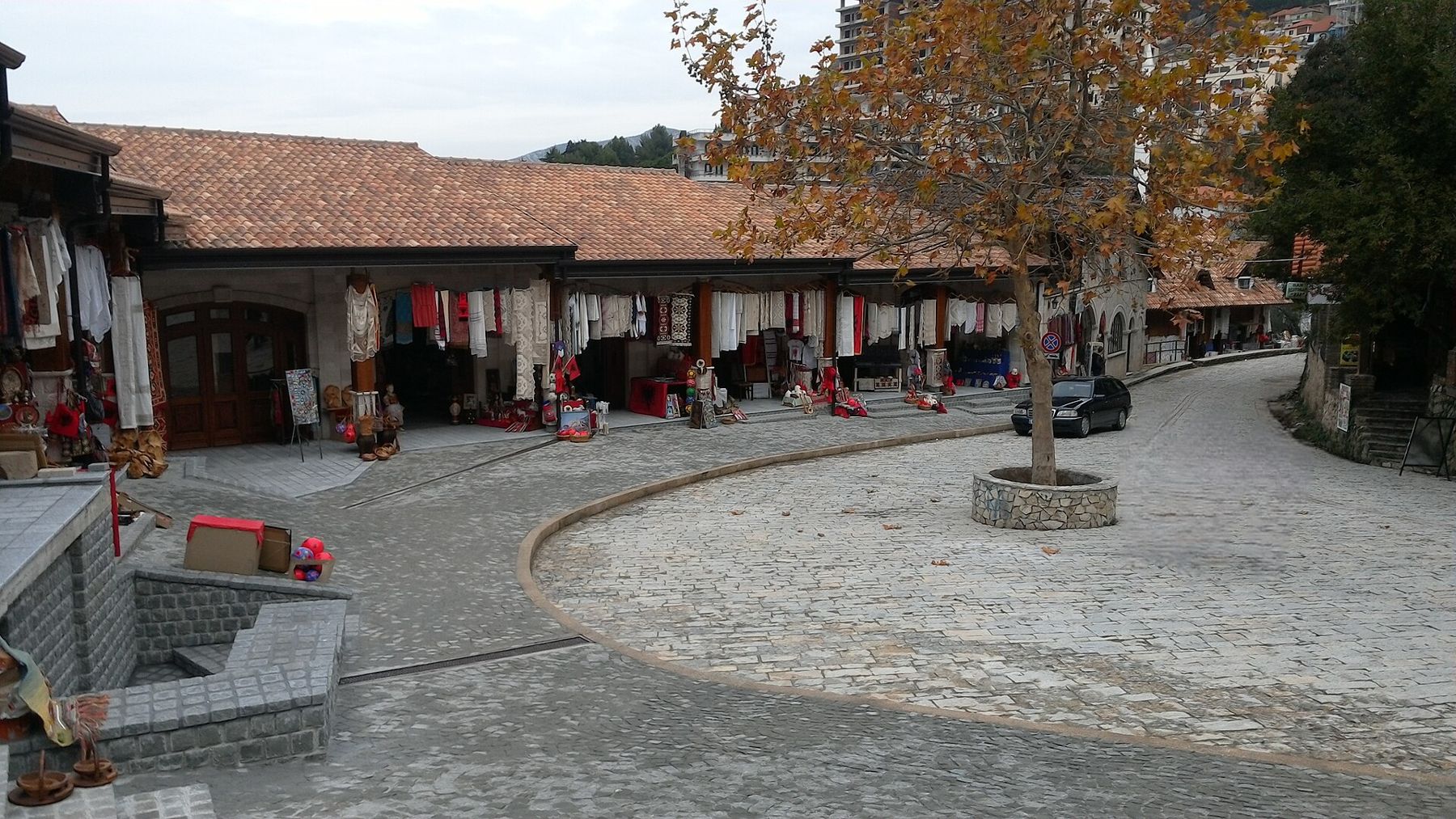
The old bazaar begins where the modern town gives way to stone. It is a single cobbled lane, steep in places, roofed by wooden eaves and lined with low shops whose shutters fold back to make counters. It was rebuilt in the second half of the twentieth century on its old footprint, and it still looks the part: dark timber, white walls, and doorways crowded with goods.
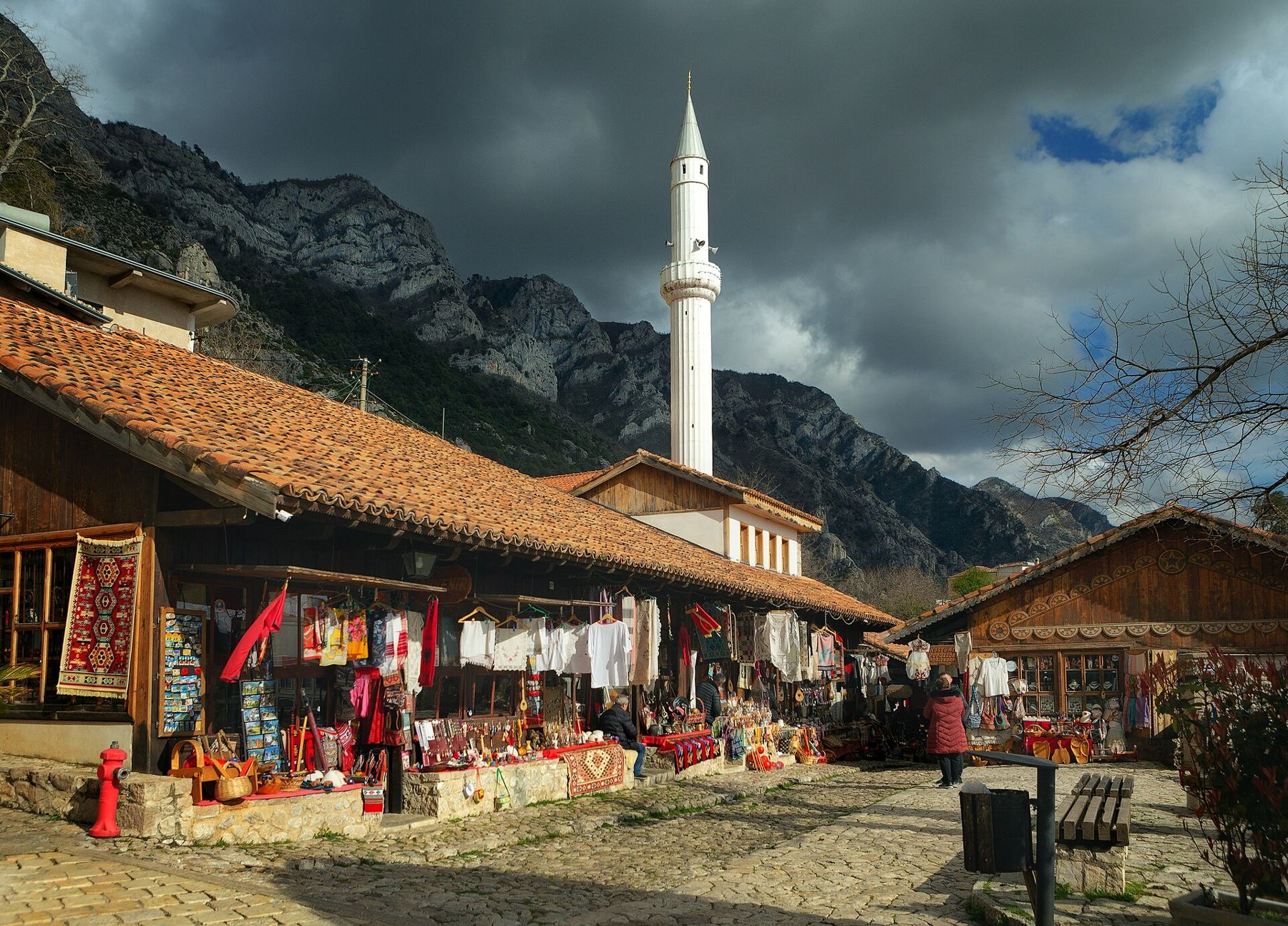
What is for sale has a pattern. There are woven carpets and kilims, felt hats, embroidered waistcoats, copper coffee pots, carved wooden spoons, old coins and military badges of uncertain origin, and a great deal of Skanderbeg in every material. Some stalls sell honestly old things; many sell new things made to look old. The pleasure is in the looking. If you want to buy, the morning walk up is for spotting, and the afternoon walk down is for deciding.
The cobbles are worn smooth and are slippery after rain. Wear shoes with grip, and walk slowly enough to notice the details: carved lintels, a shop that sells only bells, an old man sorting buttons into tins.
The castle and the Skanderbeg Museum
At the top of the bazaar, the lane turns through the castle gate. The fortress is not a single keep but a walled hilltop, with houses, lanes and gardens inside it, some of them still lived in. The walls have been patched and rebuilt many times, which is what happens to a castle that is besieged repeatedly and never abandoned.
The history is the reason to come. Skanderbeg was the son of a local lord, Gjon Kastrioti. As a boy he was sent to the Ottoman court as a hostage, was raised a Muslim, and rose as an officer in the sultan's army. In 1443, during an Ottoman defeat near Niš, he left, rode to Krujë and took the castle. In 1444 he brought Albanian nobles together in the League of Lezhë. For the next twenty-five years he fought off Ottoman campaigns, and Krujë itself withstood three great sieges, in 1450 and again in 1466 and 1467. Skanderbeg died of a fever at Lezhë in January 1468. Krujë fell to the Ottomans ten years later, in 1478.
 Read nextApollonia and Ardenica, ruins and frescoes in the hills
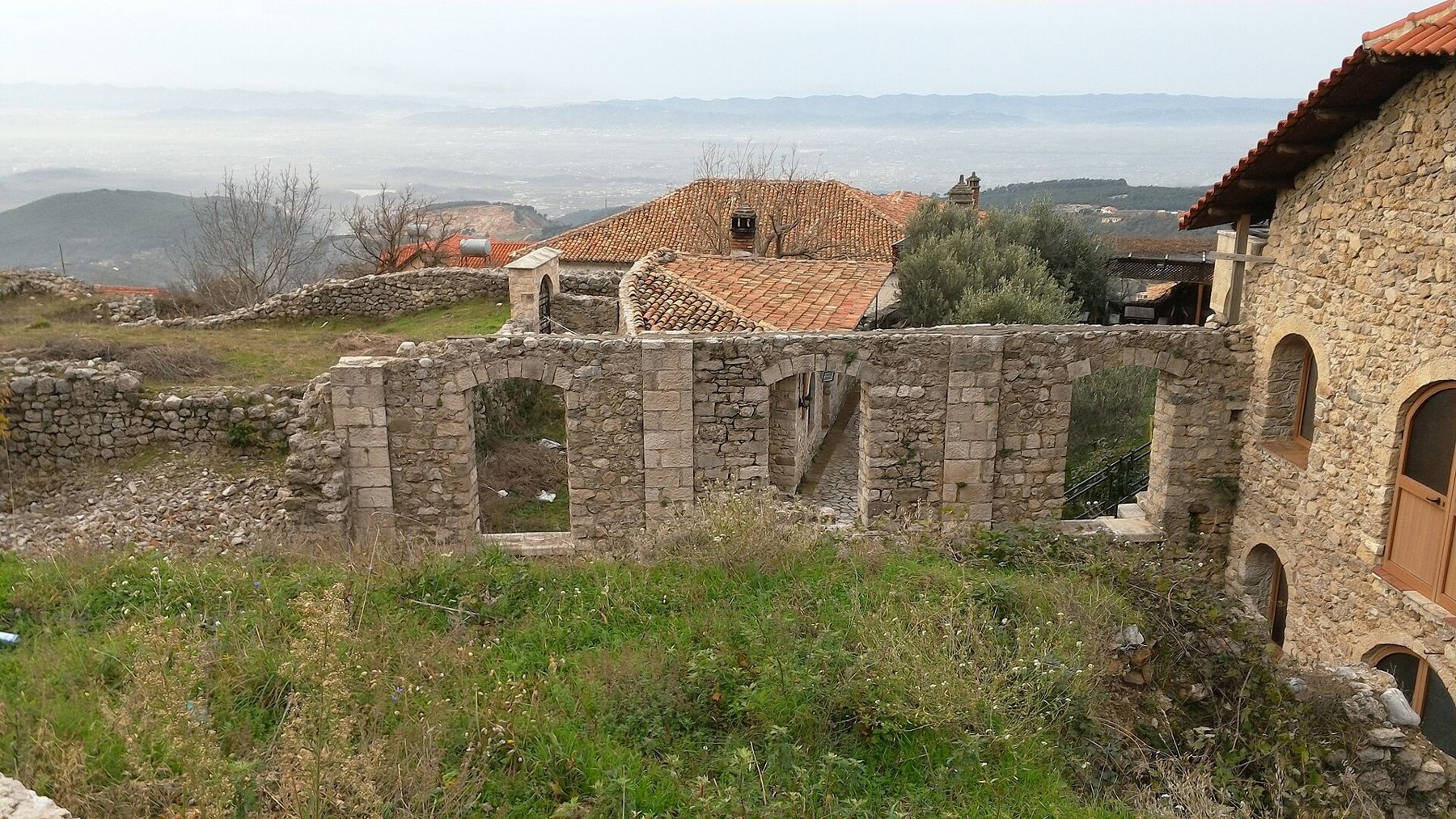
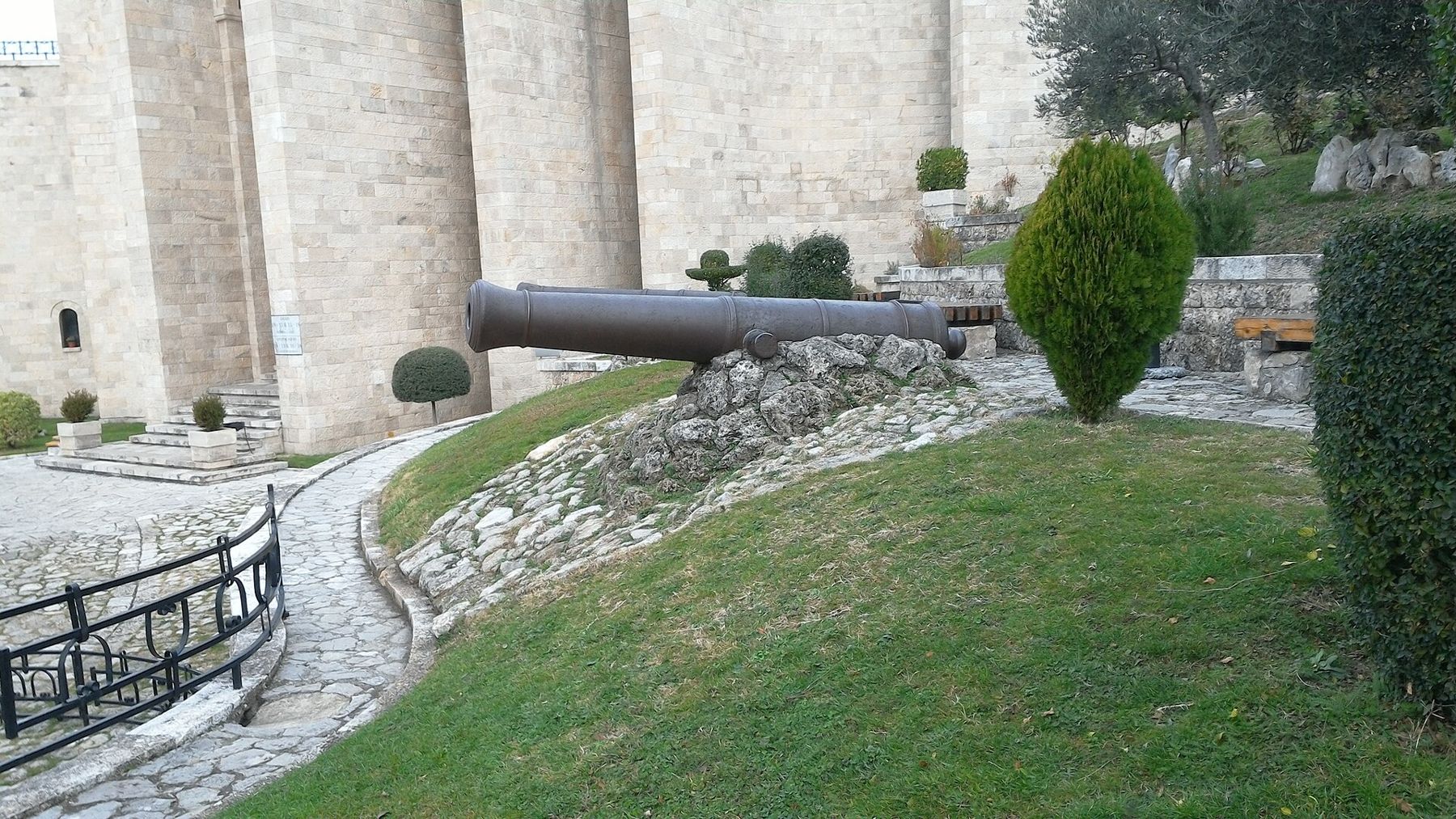
The Skanderbeg Museum, properly the Gjergj Kastrioti Skënderbeu National Museum, stands inside the walls. It opened in 1982 and was built to look like a medieval fortress itself, with crenellations and a tower. Inside, the displays climb through several floors: weapons, maps of the campaigns, paintings and large sculpted figures in the heroic style of the period when it was made. The helmet with its goat's head crest is a copy; the original is in Vienna.
It is worth reading the museum as two things at once. It tells the story of a fifteenth-century commander, and it shows how the communist state of the 1980s wanted that story told: a single national hero, a nation united behind him. Both are part of Albanian history. Allow an hour and a half. Opening hours and ticket prices change, so check before you go.
Midday: the Ethnographic Museum, the tekke and the hammam
A short walk down a lane inside the walls brings you to the Ethnographic Museum, set in a large eighteenth-century house built for a prosperous family. Many visitors find it the better of the two museums. The house itself is the exhibit: a cool ground floor of storerooms and work rooms, a stone stair, and upper rooms lined with carved wood, low divans and painted ceilings. There is a room for guests, a room for the family, and the tools of a household that made almost everything it used, from cloth to oil to leather.
Close by is the Dollma tekke, a small lodge of the Bektashi order, the Sufi tradition that has deep roots in Albania. It is a modest, quiet building, and it is still a place of prayer, so enter quietly and dress with some care. Nearby, the old hammam with its domes sits half sunk in the slope.
Walk on to the edge of the castle for the view. From the walls you look straight down the mountainside to the plain, the road towards Durrës and, on a clear day, the sea. The watchtower stands at the edge of the drop.
Lunch above the plain
Krujë eats well. Several restaurants in and around the castle have terraces facing west, and the cooking is mountain food: lamb roasted slowly, grilled meats, fërgesë of peppers and cottage cheese, fresh bread, salads of tomato and cucumber, local cheese and olives. A glass of raki may arrive whether you ordered it or not. Lunch here is unhurried, and that is the point.
After lunch, walk back down the bazaar. The light is lower, the coach groups have usually moved on, and the shopkeepers have more time to talk. This is the moment to buy the carpet you saw at ten o'clock, or to decide you do not need it after all.
Afternoon options and the way back
If you have a car and the energy, the road continues up the mountain above the town towards the Bektashi shrine of Sari Salltëk, a place of pilgrimage with wide views. Road conditions there vary, so ask in town before you set off.
Otherwise, head back to Tirana in the late afternoon. The return is downhill and then flat, and the drive is short enough that Krujë pairs well with a late visit elsewhere. Some travellers combine it with the coast at Durrës on the same day; we think that rushes both. If you want to set Krujë against the other easy outings, our guide to day trips from Tirana weighs them side by side, and getting around by furgon explains how the minibuses work.
The last thing to see is the first thing you saw: the castle from below, the tower against the mountain, and the evening light turning the walls the colour of bread.
Filed under Day Trips