The hill at Apollonia rises out of a plain of olive groves and fields, a low green rise with a few columns standing on top. From a distance it looks like nothing much. Then you climb, and the city opens around you: a row of columns against the sky, a theatre cut into the slope, the line of a street, and far below, the plain where a river once ran and ships once came in from the sea.
Apollonia is the most important ancient site in central Albania, and one of the most beautiful. A short drive to the north, on another hill, the monastery of Ardenica keeps its frescoes and its quiet. Together they make a full day out of Tirana, and a good one.
A Greek city on a hill
Apollonia was founded around 600 BC by Greek colonists from Corinth and Corcyra, today's Corfu, near the lower course of the river the Greeks called the Aoös, now the Vjosa. It was named for the god Apollo. The colonists settled among the Illyrian peoples of the region, traded with them, and grew rich on the fertile land of the plain and on the traffic of the Adriatic.
By the Roman period it was one of the leading cities on the eastern shore of the sea. It struck its own coins, which travelled far into the Balkans, and it stood near the western end of the routes that crossed the peninsula towards Macedonia and the east. Rome valued it as a loyal ally and a comfortable posting.
The city's buildings show that wealth. There were temples, a theatre, public fountains, and fine houses with mosaic floors. The finds from the site include marble statues, carved tombstones and painted pottery, many of which are now in the museum on the hill and in the national collections in Tirana. Standing on the slope, it takes some imagination to fill the empty grass with streets and crowds, but the scale of the walls helps.
Its reputation was for learning. Apollonia had schools of philosophy and rhetoric, and the sons of Roman families came here to study. The most famous of them was the young Octavian, later the emperor Augustus. He was at Apollonia in 44 BC when news came that Julius Caesar had been murdered in Rome, and he left from here to claim his inheritance.
The decline came slowly. In the third century AD an earthquake shifted the course of the river away from the city, and the harbour and the low ground around it silted up and turned to marsh. Trade moved elsewhere, and the population shrank. By the end of antiquity the city was nearly empty, and for centuries its stones were carried off to build churches, houses and walls across the plain.
What you see today
Excavation began in earnest in the 1920s, led by the French archaeologist Léon Rey, and it has continued since, with Albanian and foreign teams. Only part of the city has been uncovered, and much of it still lies under the fields and olive trees, but what is visible is enough to give a sense of its size.
The best-known monument is the Bouleuterion, sometimes called the Monument of the Agonothetes, a council building of the second century AD. Its front, a row of columns on a raised base, was put back together in the 1970s, and it is the image of Apollonia that appears on postcards and in schoolbooks. Beside it are the remains of a small odeon, a covered hall for music and speeches, and a long stoa, a covered walkway, with a row of niches along its back wall.
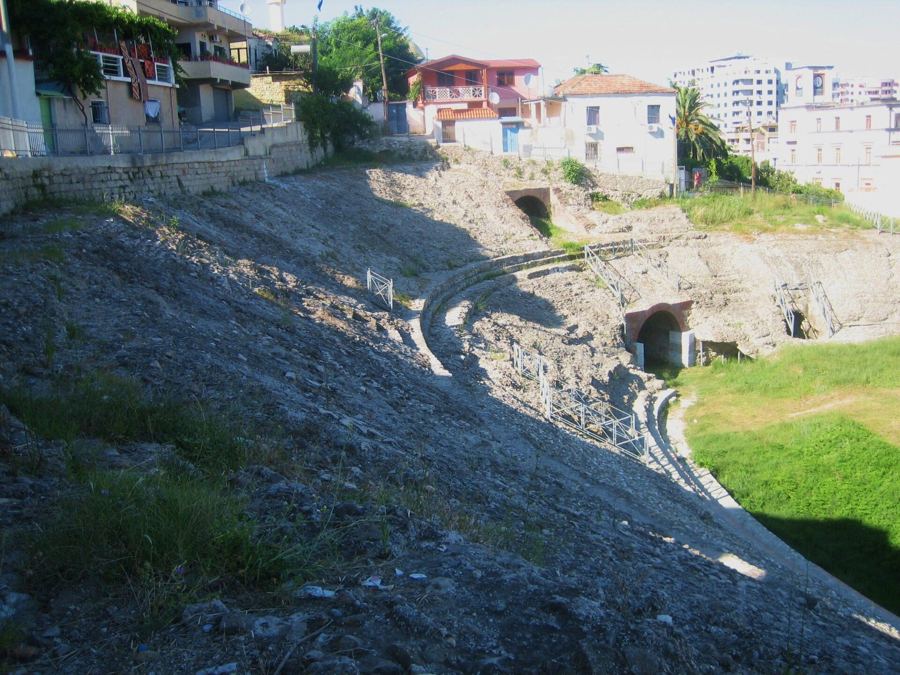
Further up the hill are stretches of the city walls, the remains of temples and houses, and the theatre, cut into the slope. The views from the top are wide, across the plain to the sea in one direction and the mountains in the other.
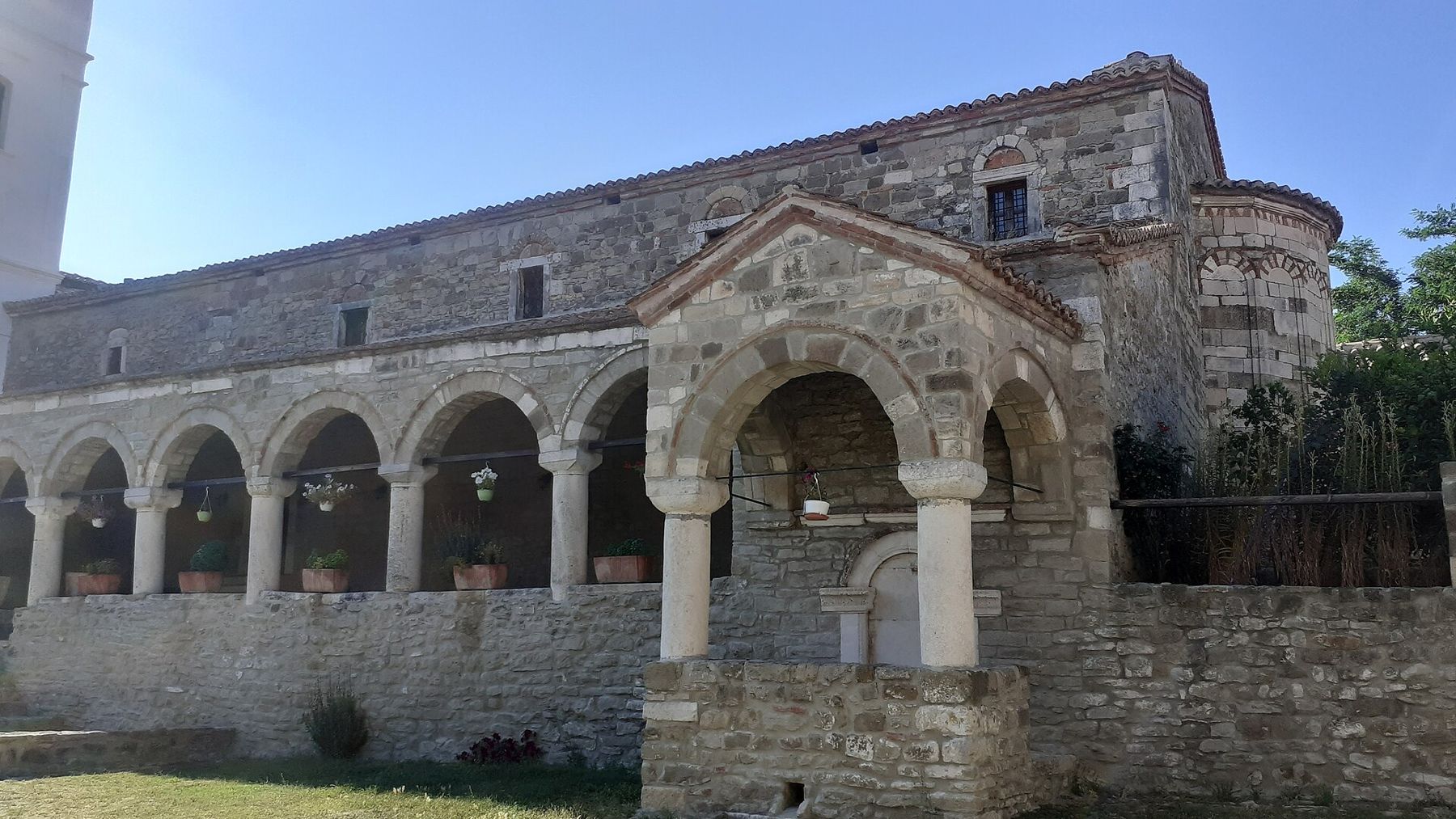
Inside the site stands the Monastery of St Mary, a Byzantine church and monastery built in the thirteenth and fourteenth centuries, partly from the stones of the ancient city. Look closely at its walls and you will see carved Roman blocks reused among the plain ones. Its church has frescoes, and the monastery buildings hold a museum of finds from Apollonia: statues, inscriptions, pottery and tombstones. Opening times and ticket prices change, so check before you go.
 Read nextDurrës, the port that never stopped working
Together they make a full day out of Tirana, and a good one.
Walking the site
Apollonia is a place for walking. The paths are rough and stony, and there is little shade, so it is best visited in spring or autumn, or early in the day in summer. Bring water and a hat. Allow two to three hours to see the main monuments without rushing. Good shoes help on the loose stones of the upper slope.
The site is quiet most of the year. On many days you will share it with a few other visitors and a shepherd moving his flock across the slope. Wild flowers grow between the stones in spring, and the olive groves below turn silver when the wind lifts the leaves. It is a place where you can sit on a column drum and think about how long cities last, and how quickly a river can end one.
Ardenica, the monastery on the hill
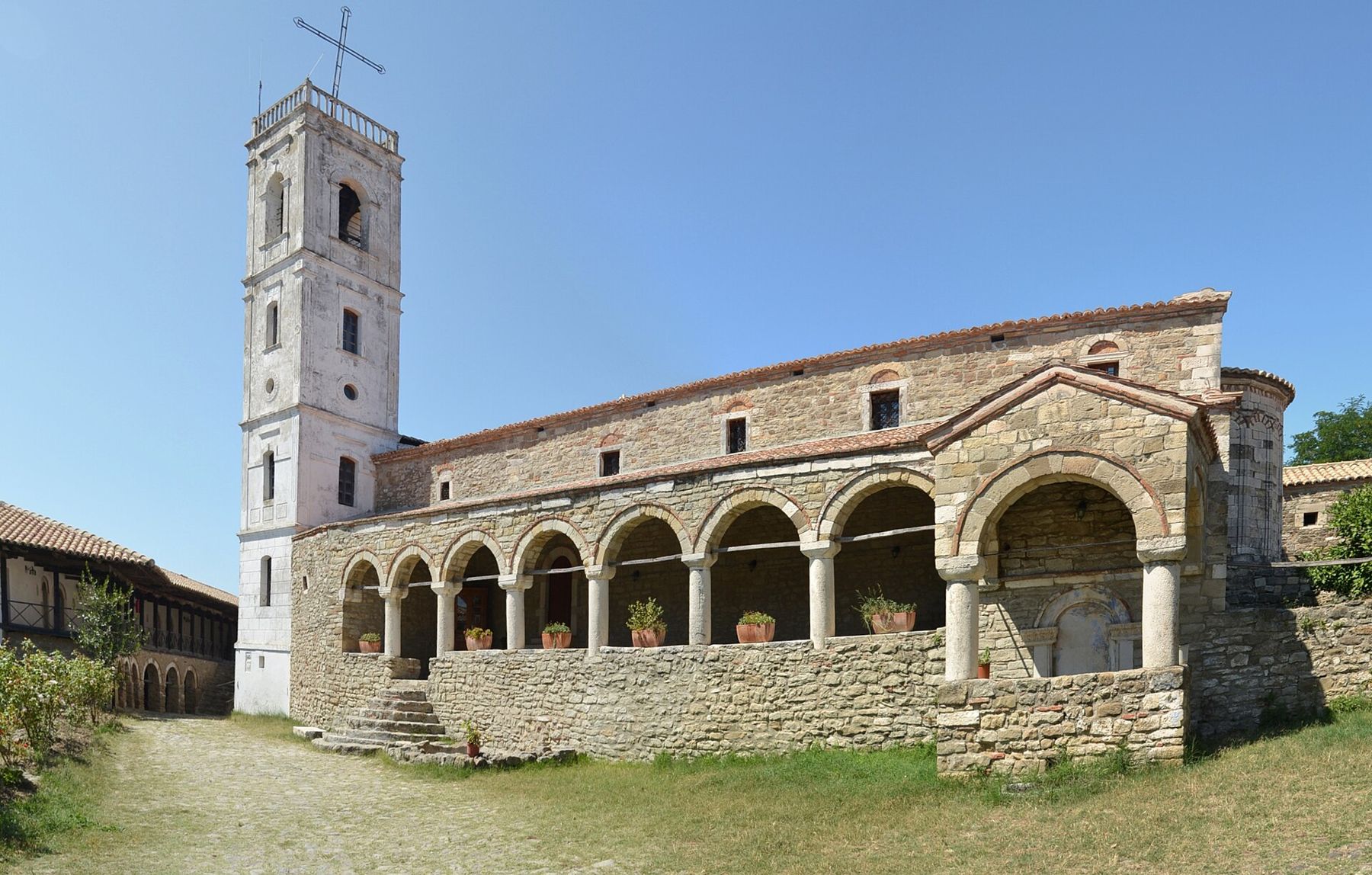
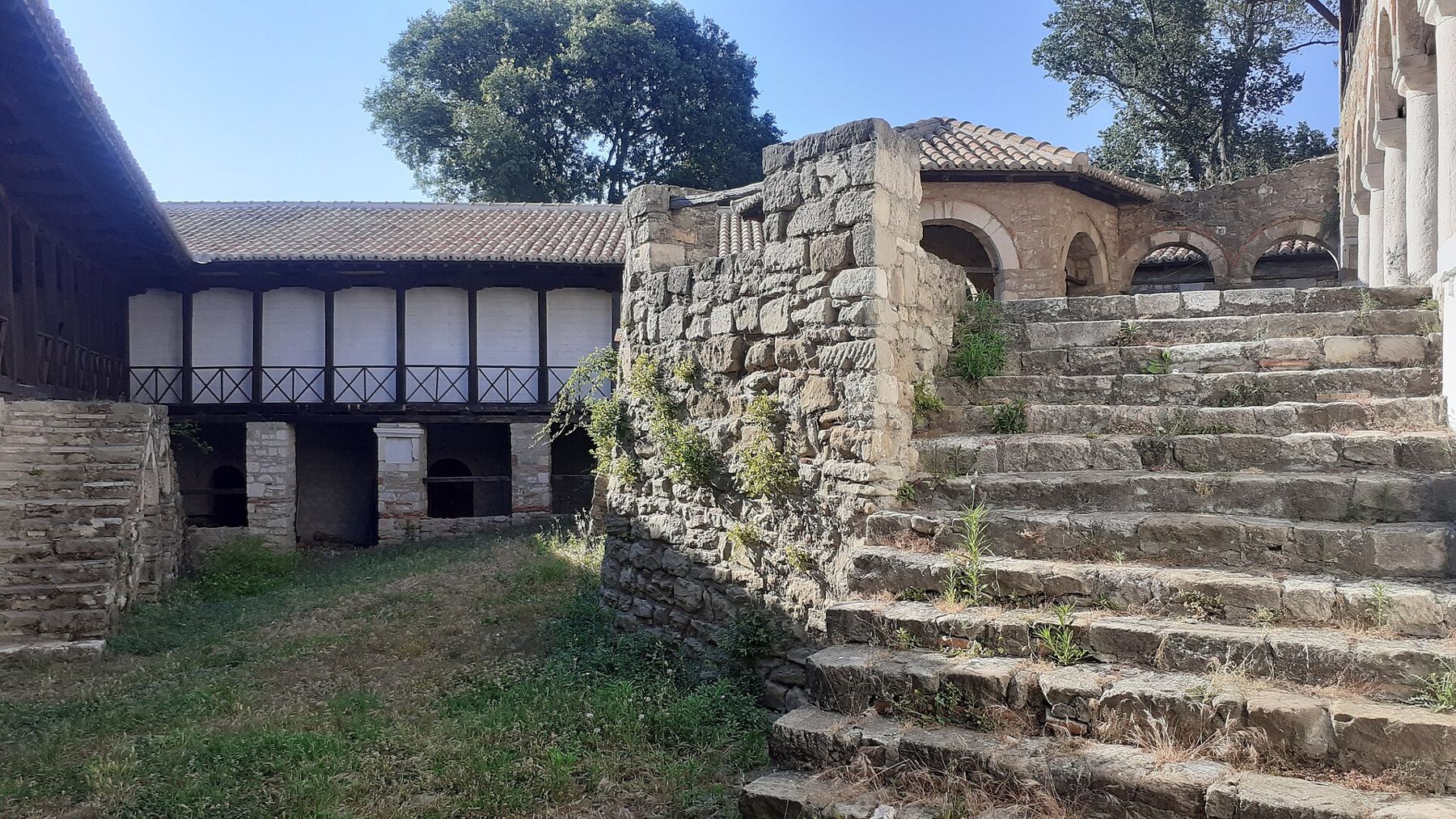
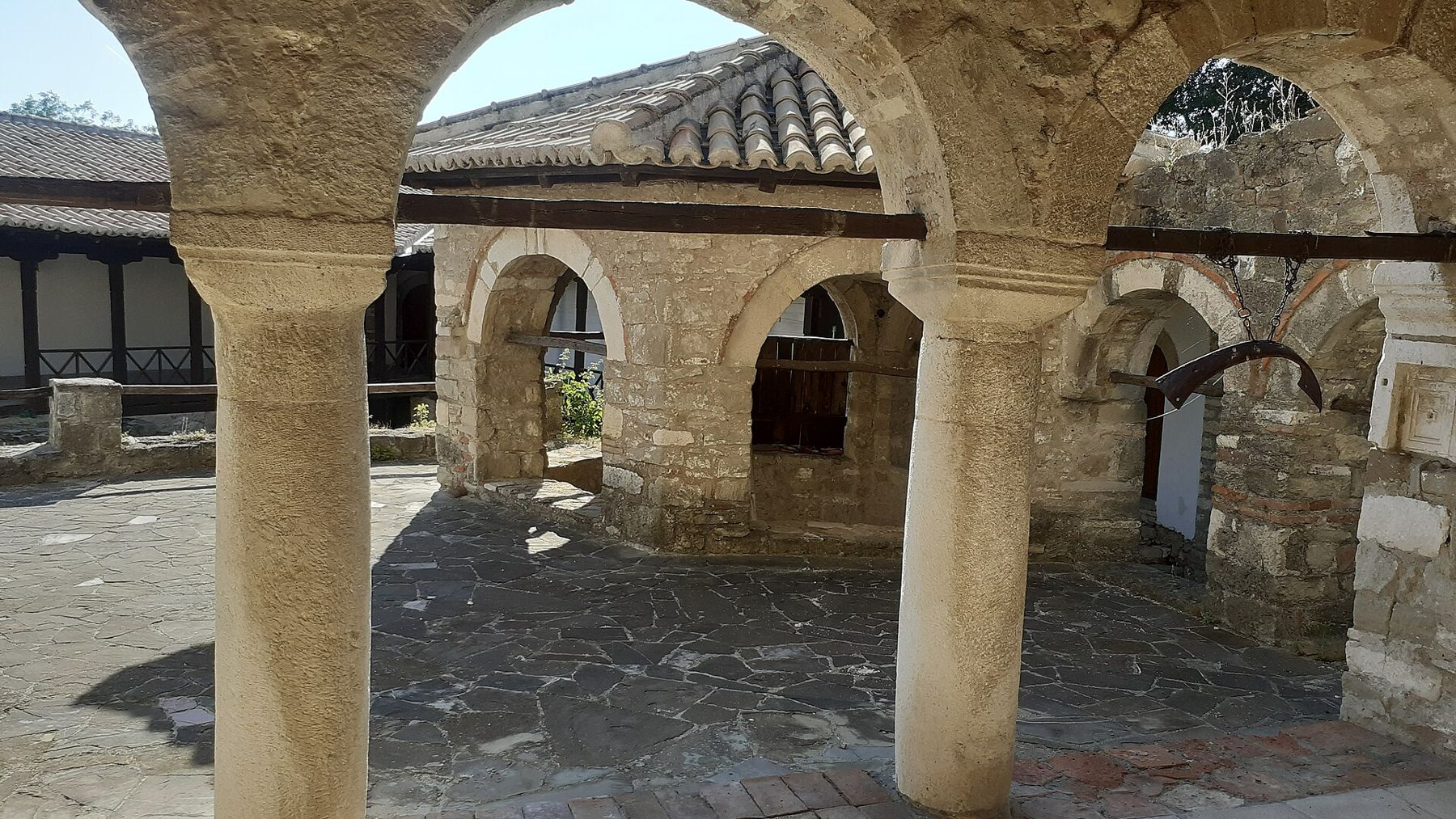
A short drive north of Apollonia, near the town of Lushnjë, the monastery of Ardenica stands on a wooded hill above the main road. It is a cluster of stone buildings around a courtyard, with a church at its heart, a bell tower and thick walls.
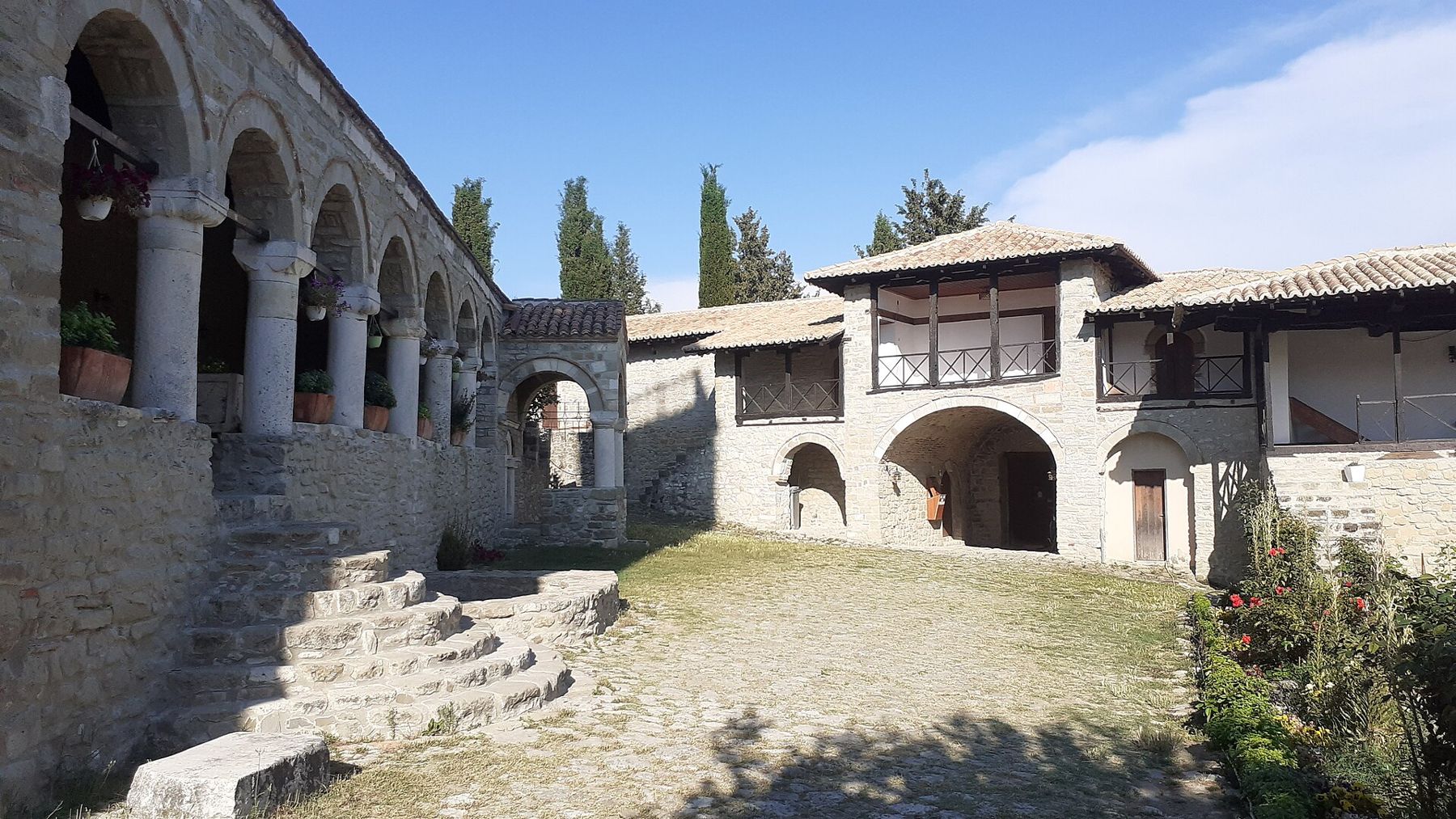
Ardenica was founded in 1282 by the Byzantine emperor Andronikos II Palaiologos, after his forces defeated an Angevin army at Berat. The present church, dedicated to St Mary, was rebuilt in later centuries, and its interior was painted in the eighteenth century by the brothers Kostandin and Athanas Zografi, among the best-known church painters of their time in the region.
Tradition holds that Skanderbeg married Donika Arianiti here in 1451. Whether or not every detail is true, the story gives the monastery a special place in Albanian memory, and visitors often ask about it first. The marriage joined Skanderbeg to the Arianiti, one of the great noble families of the time.
The monastery came through the years when religion was banned in Albania, from 1967 to 1990, and it is again a working church. Visitors are welcome, but dress with care and keep your voice low inside the church.
The frescoes and the iconostasis
Inside, the church is dark and rich. The walls and vaults are covered with scenes from the Bible and from the lives of the saints, painted in deep blues, reds and golds. The figures are tall and solemn, and their eyes seem to follow you as you move.
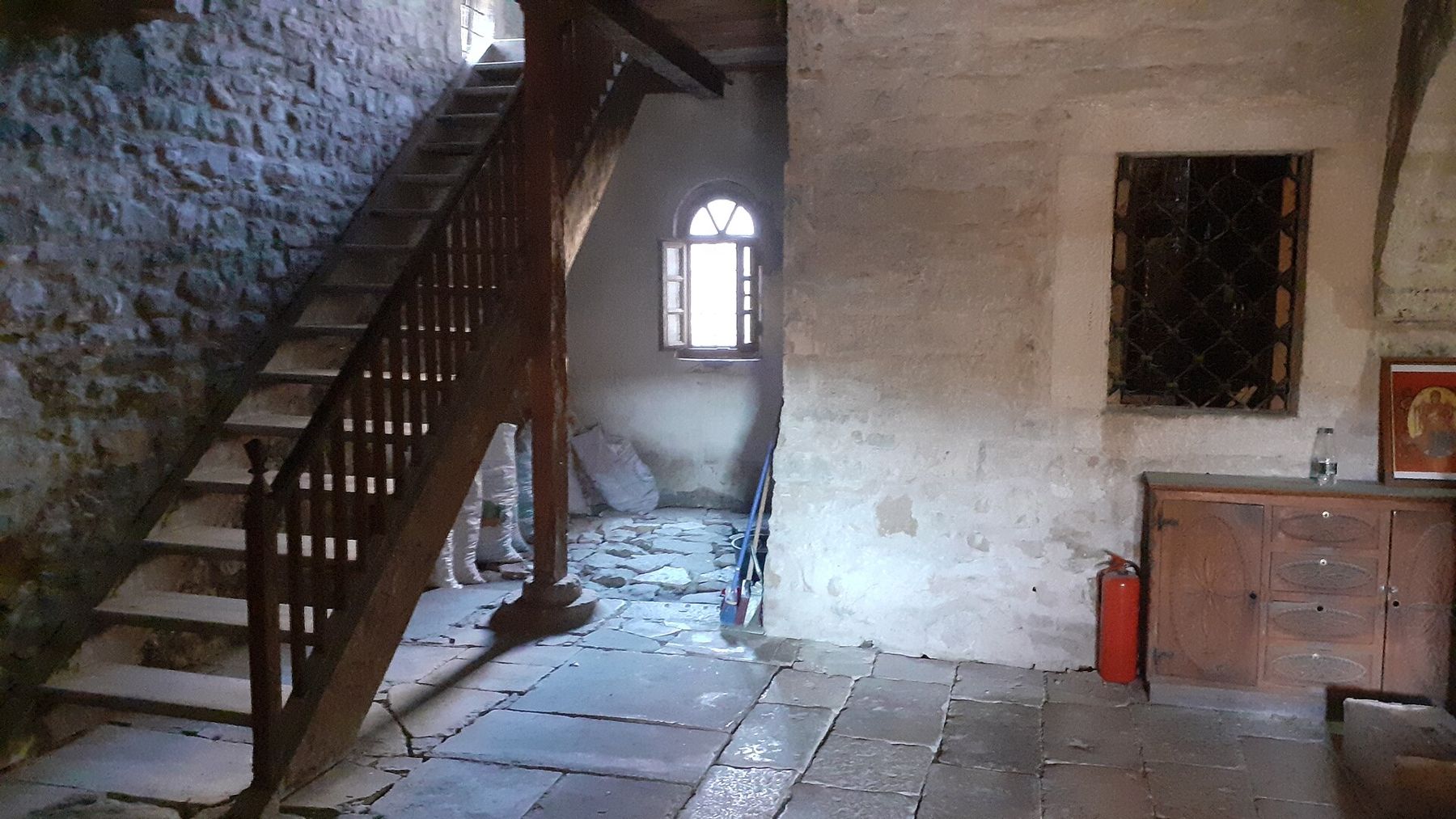
The iconostasis, the screen that separates the altar from the rest of the church, is carved in wood and gilded. It is one of the finest in Albania. When the afternoon light comes through the small windows, the gold catches it and the whole screen glows.
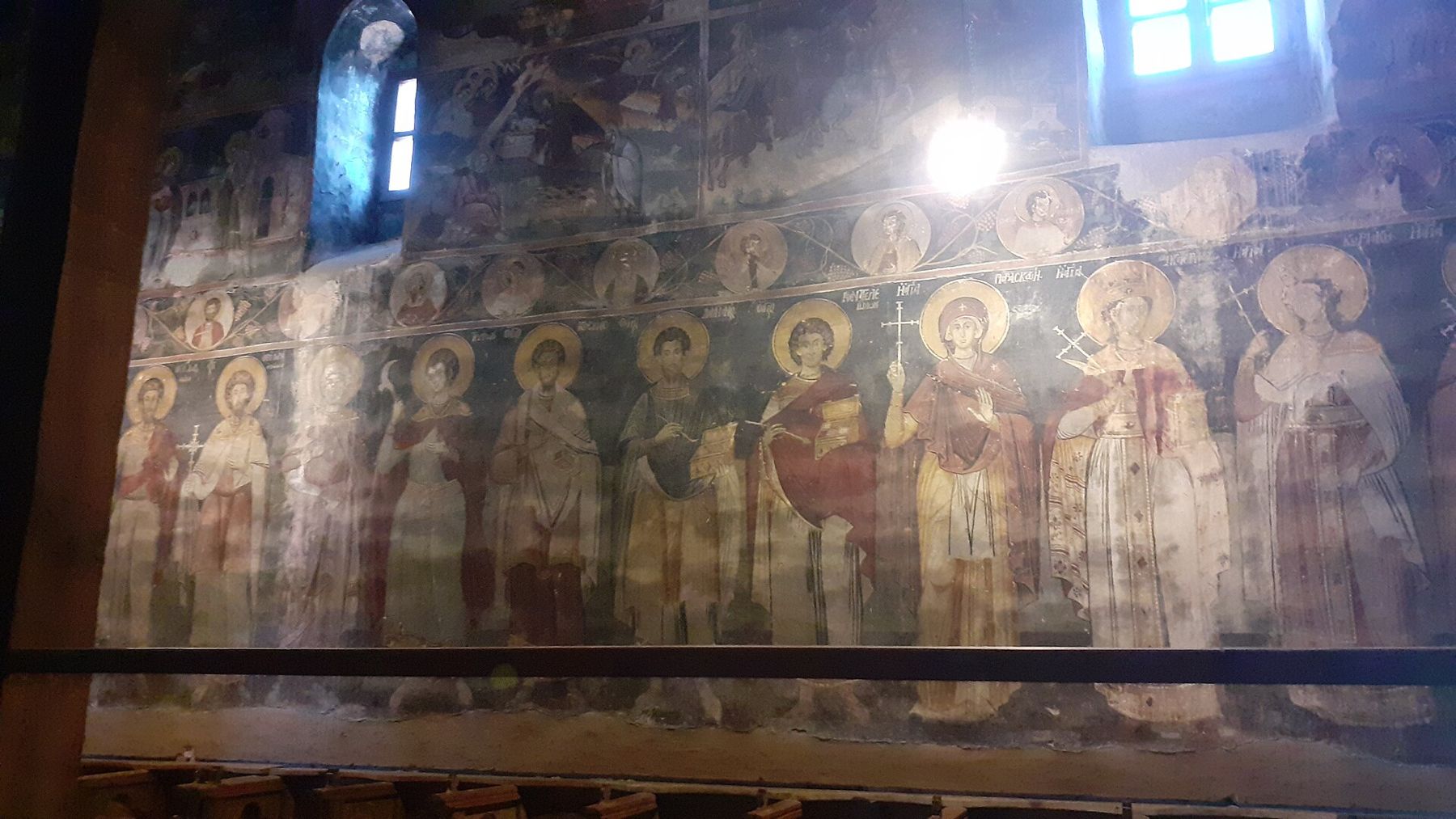
Outside, the courtyard is quiet and shaded. Swallows nest under the eaves in summer, and the view from the edge of the hill looks out over the flat farmland of the plain, the same land that fed Apollonia two thousand years ago.
Getting there
Apollonia and Ardenica lie about two hours south of Tirana by road, near Fier and Lushnjë, depending on traffic and roadworks. The easiest way to visit both is by car. Public transport reaches Fier, and from there a taxi can take you to Apollonia, a short drive west of the city near the village of Pojan. Our page on getting around explains how buses and furgons work.
A good plan is to start early, see Apollonia in the cool of the morning, have lunch in Fier or at a restaurant on the road, and visit Ardenica in the afternoon on the way back north. If you are heading south instead, both fit on the road to Berat or Vlorë. For other options, see day trips compared.
End the day at Ardenica, in the courtyard, as the bell rings and the shadows of the walls lengthen across the hill.
Filed under Day Trips