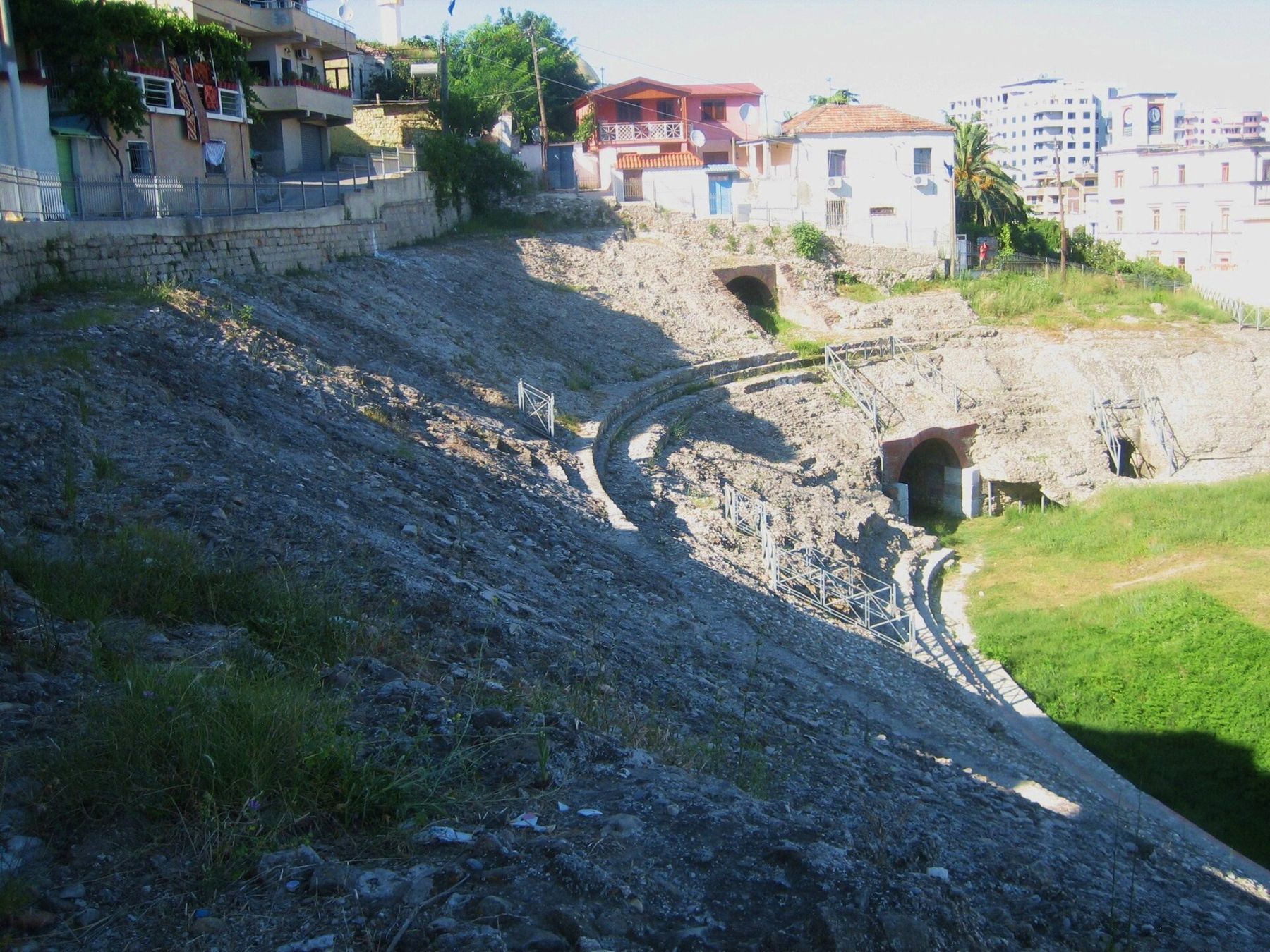
In the middle of Durrës, between apartment blocks and a quiet street of houses, the ground falls away into a great curved bowl of brick and stone. Washing hangs from balconies above the rim. A cat walks along a Roman wall. Down in the arena, a few visitors stand where gladiators once fought, and the sound of traffic drops away. It is one of the strangest sights in Albania, and it is half an hour from Tirana.
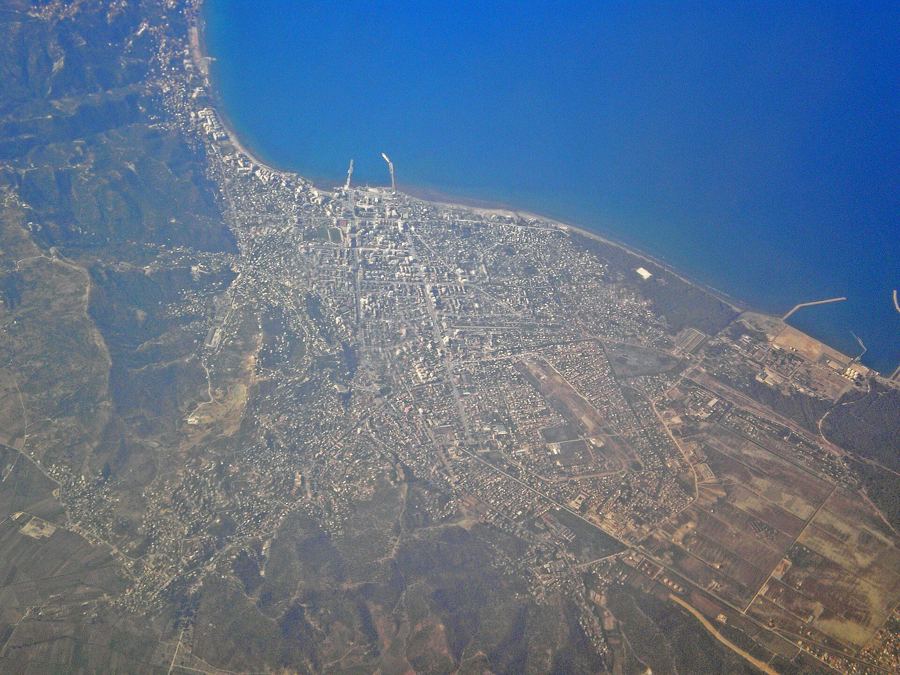
Durrës is the country's main port and one of its oldest cities. It has been a harbour for about twenty-six centuries, and it has never stopped being one. That continuity is the key to the place: the ruins are not in a park on the edge of town but folded into a busy, ordinary city that goes about its business on top of them.
Twenty-six centuries of harbour
Greek colonists from Corcyra, today's Corfu, and Corinth founded the city as Epidamnos in 627 BC. Under Rome it became Dyrrachium, and it grew into one of the great ports of the Adriatic. It was the western start of the Via Egnatia, the Roman road that ran east across the Balkans towards Thessaloniki and Constantinople. Travellers from Italy crossed the sea from Brindisi and landed here.
That position made the city worth fighting over. In 48 BC, during the civil war between Julius Caesar and Pompey, Pompey held Dyrrachium and its supplies, and Caesar tried to besiege him outside the walls. The siege failed, and Caesar marched away into Greece, where he defeated Pompey at Pharsalus later that summer. Few visitors walking the promenade today know that one of the turning points of Roman history was fought in the hills behind it.
The city passed through Byzantine, Norman, Venetian and Serbian hands before the Ottomans took it at the start of the sixteenth century. After independence, Durrës served briefly as Albania's capital, from 1914 until 1920, when the Congress of Lushnjë chose Tirana instead. In the twentieth century it was the gate through which Italian troops arrived in 1939, and later the port that carried much of the country's trade.
Earthquakes are part of the story too. The city has been shaken and rebuilt many times, and in November 2019 a strong earthquake caused deaths and serious damage in Durrës and the surrounding area. Repairs and new building changed parts of the city in the years after.
The amphitheatre among the houses
The amphitheatre was built in the second century AD and is one of the largest in the Balkans. It was forgotten for centuries, buried under soil and later houses, and was only identified in 1966. Excavation has uncovered part of the oval, but much of it still lies beneath the homes that cover its northern side.
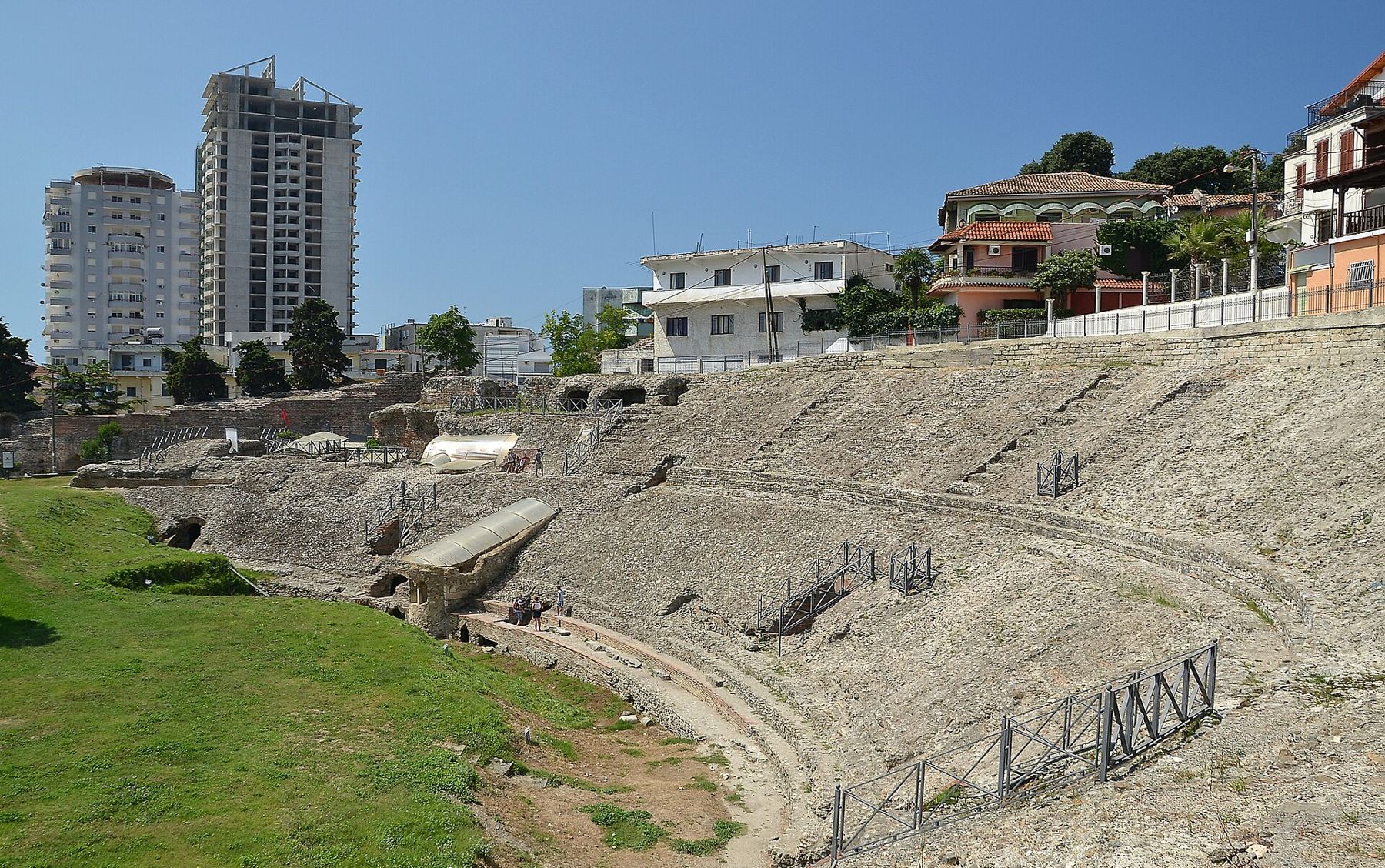
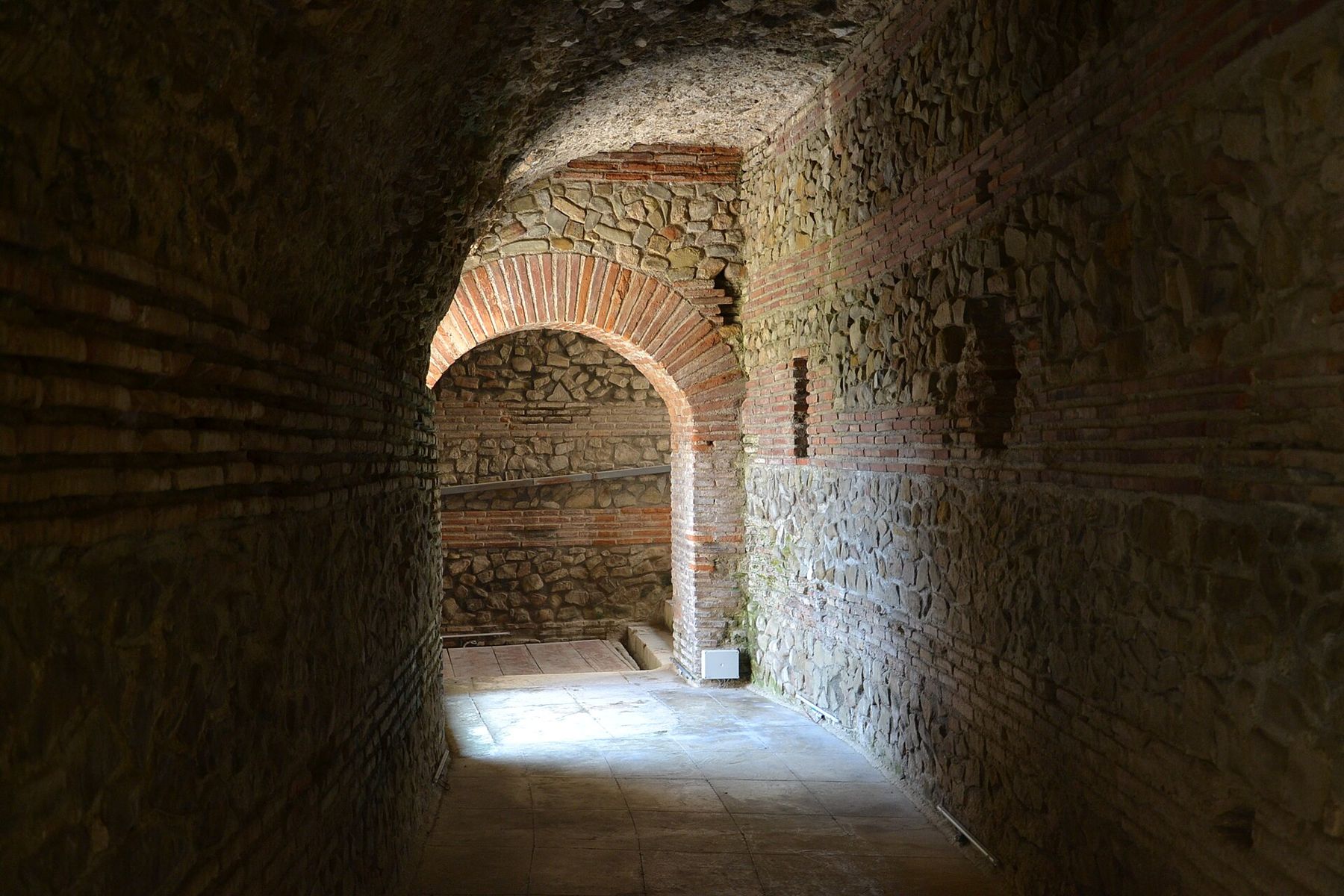
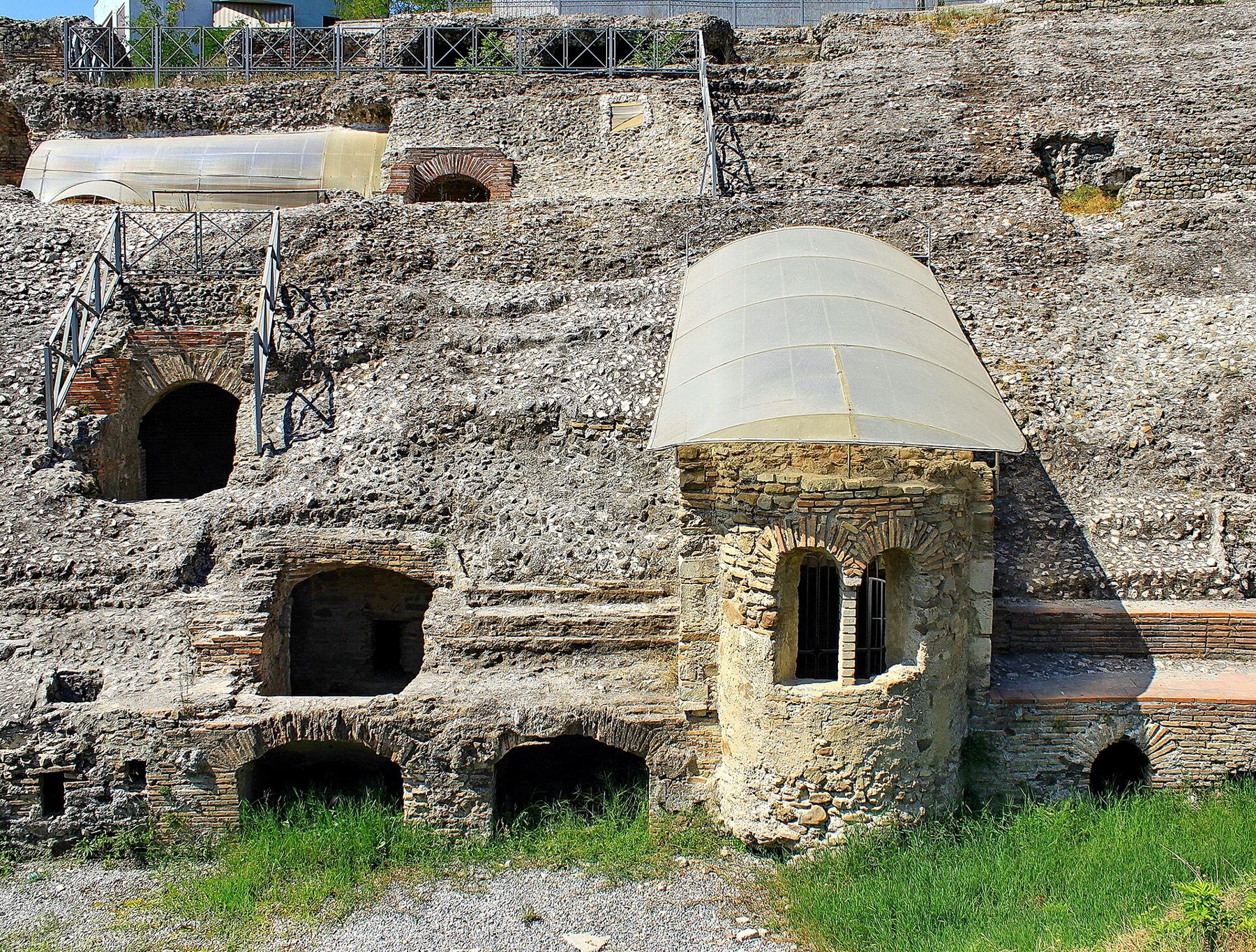
What you can see is enough. The arena floor, the curving tiers of seating, and the vaulted corridors where spectators once moved in and out all survive in part. In one corridor is a small early Christian chapel, added after the games had ended, with fragments of wall mosaic showing saints. It is a quiet room, and easy to miss.
The building's story after the games is as interesting as the games themselves. As the city shrank in the early Middle Ages, the amphitheatre was used as a quarry, a burial ground and a foundation. Houses were built into its upper tiers, and over the centuries the whole thing disappeared from view. Walking round it now, you can still see where later walls sit on Roman brick, and where the two worlds join.
The best way to understand the scale is to walk up to the street above and look down. From there, the arena sits like a hollow in the city, and the houses on its rim look as if they are about to slide in. Opening times and ticket prices change, so check before you go.
Walls, tower and seafront
From the amphitheatre, walk south towards the sea. Stretches of the Byzantine city walls run through the old centre, and at the end of them stands the Venetian Tower, a squat round tower of stone near the waterfront. It was added in the late Middle Ages to a defensive line that was already centuries old. In recent years it has held a bar, and a drink at the top, looking over the old walls, is one of the small pleasures of the city.
 Read nextVlorë, where independence was declared
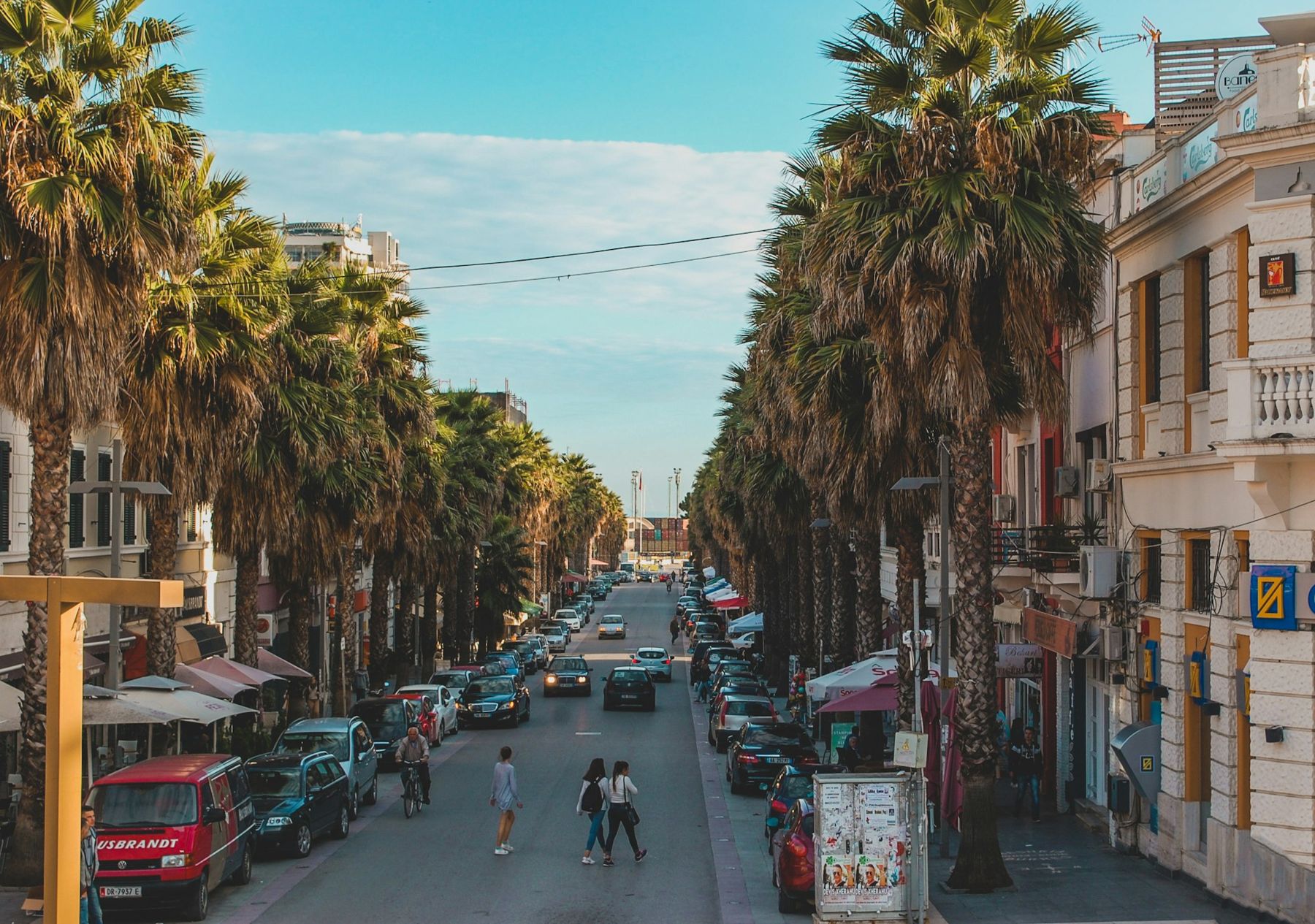
Below the tower runs the seafront promenade, a broad pedestrian walk that curves along the bay. It is lined with palms, benches and cafés, and in the evening it fills. Families walk slowly, teenagers gather in groups, older men talk in clusters, and children ride hired bicycles and toy cars. This is the xhiro, the evening stroll, and in Durrës it has the sea as a backdrop.
Close to the seafront is the Archaeological Museum, which holds finds from the ancient city: sculpture, pottery, funerary stones and objects from daily life. It is a good place to put the ruins in order. On the hill above the town is the villa built for King Zog in the 1930s, which can be seen from the outside.
Between the tower and the amphitheatre, the old centre holds other fragments. Near the main square are the remains of a round Byzantine market, its columns standing in a sunken space below the street, and pieces of Roman baths have been found under later buildings. None of these is large, and most are easy to walk past. Together they make the point that in Durrës almost every street sits on top of an older one.
A port that people left from
Durrës also has a more recent history that visitors rarely hear about. In 1991, after the fall of the communist regime, thousands of Albanians tried to leave the country by sea. In August that year, a cargo ship called the Vlora was taken over at the port and sailed to Bari in southern Italy, crowded with around twenty thousand people. The photographs of that ship, its decks black with people, became one of the defining images of the decade.
It has been a harbour for about twenty-six centuries, and it has never stopped being one.
Emigration shaped the city and the country. Many Albanian families have members in Italy, Greece and further afield, and Durrës, with its ferries to Italy, has always been the obvious door out and back in. In summer you see it at the port: cars with foreign plates, families coming home, crates of goods being loaded.
The ferries from Italy still arrive here, and for many travellers Durrës is the first place they see in Albania. It is a fair introduction: busy, layered, a little chaotic and generous.
The beaches
South of the city, a long sandy beach runs for kilometres past hotels and apartment blocks, towards Golem and beyond. In summer it is crowded with families, many of them from Tirana and Kosovo. The water is shallow and warm, and the beach is lined with rows of umbrellas and loungers for hire.
It is not the coast that brings people to Albania from abroad. For clear water and rocky bays, the Ionian coast in the south is a different world. But as a place for a swim at the end of a day of ruins, or for a summer evening with the locals, the beaches of Durrës do the job.
How to spend the day
Durrës is an easy day from Tirana. Buses and furgons run often between the two cities, and the motorway makes the drive short when traffic is light. Times and stops change, so check on the day. Once there, the old centre is walkable.
A good plan is the amphitheatre first, then the walls and the tower, then lunch near the sea. Fish and seafood are the natural choice here, simply grilled. Many restaurants along the bay serve the catch of the day with salad, bread and a glass of white wine, and the menus change with the season and the boats. Spend the afternoon at the Archaeological Museum or on the beach, and stay for the promenade at dusk, when the light goes soft over the bay and the whole city seems to come out to walk.
If you have a car, Durrës combines well with Krujë, though doing both properly makes a long day. Our advice is to give Durrës the time it asks for and let the evening do the rest: a table near the water, a plate of grilled fish, and the lights of the ships waiting outside the harbour.
Filed under Day Trips