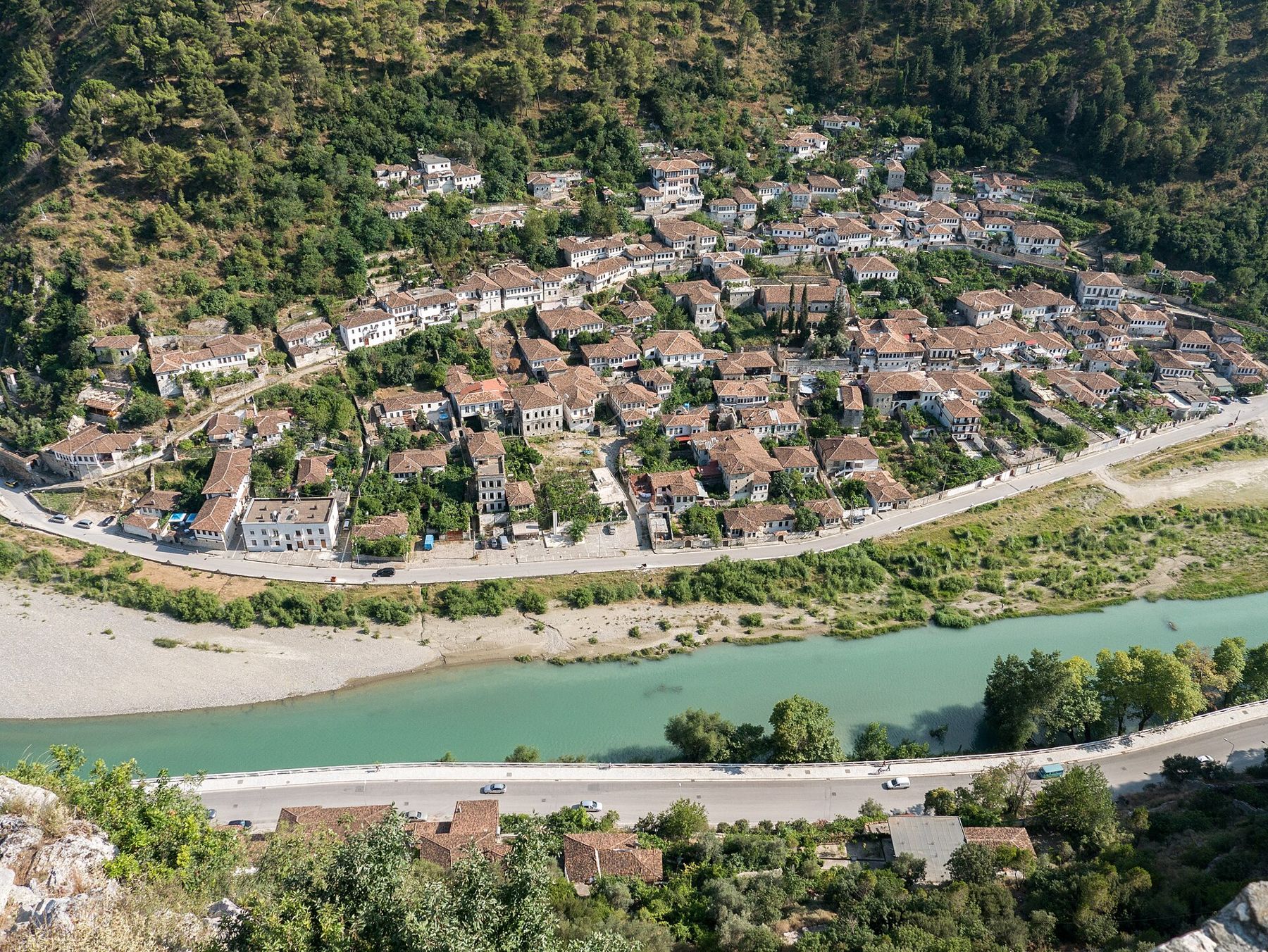
This loop is the most popular week in Albania for good reason. It starts in the capital, runs south through two of the finest Ottoman towns in the Balkans, reaches the Greek border at Butrint and then climbs back north along one of Europe's great coastal roads. It works best by car, though buses connect every stop. Driving times below are approximate and depend on roads, roadworks and season.
Day 1: Tirana
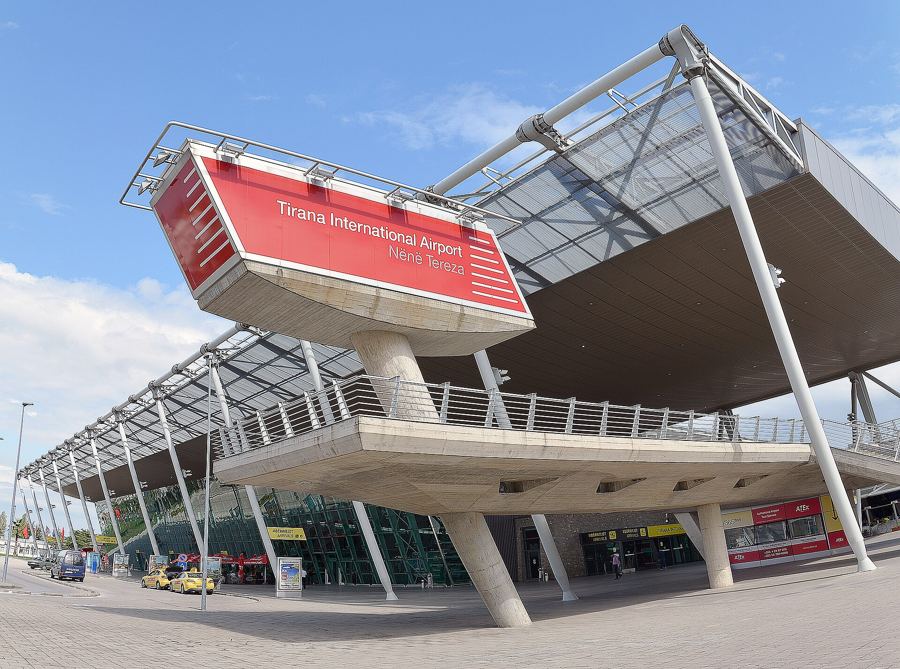
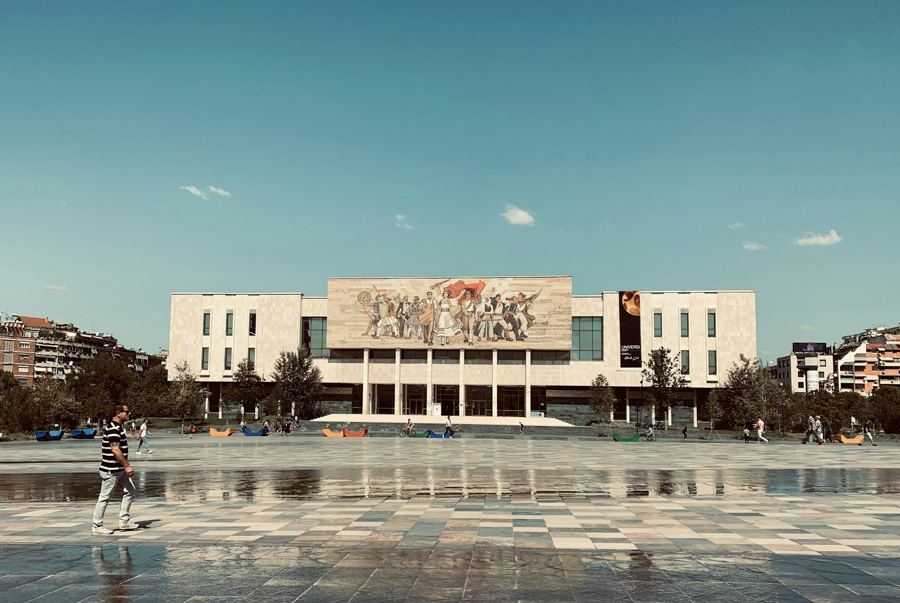
Spend the first day finding your feet in the capital. Start at Skanderbeg Square, with the National History Museum, the Et'hem Bey Mosque and the clock tower. Walk to Bunk'Art 2 or the House of Leaves for the communist past. Lunch in Blloku, the former leaders' quarter, then climb the Pyramid. In the evening, take a coffee at the New Bazaar, or ride the cable car up Mount Dajti for sunset, if the timing works. Pick up a hire car at the airport or in the city for the next morning.
If you arrive early enough, walk through the colourful blocks around the centre, a legacy of the city's painting project in the early 2000s, and end the day with dinner and a glass of raki. Rest well: the next six days involve a good deal of driving.
For a fuller plan, see our Tirana in a day.
Days 2 and 3: Berat and the road south
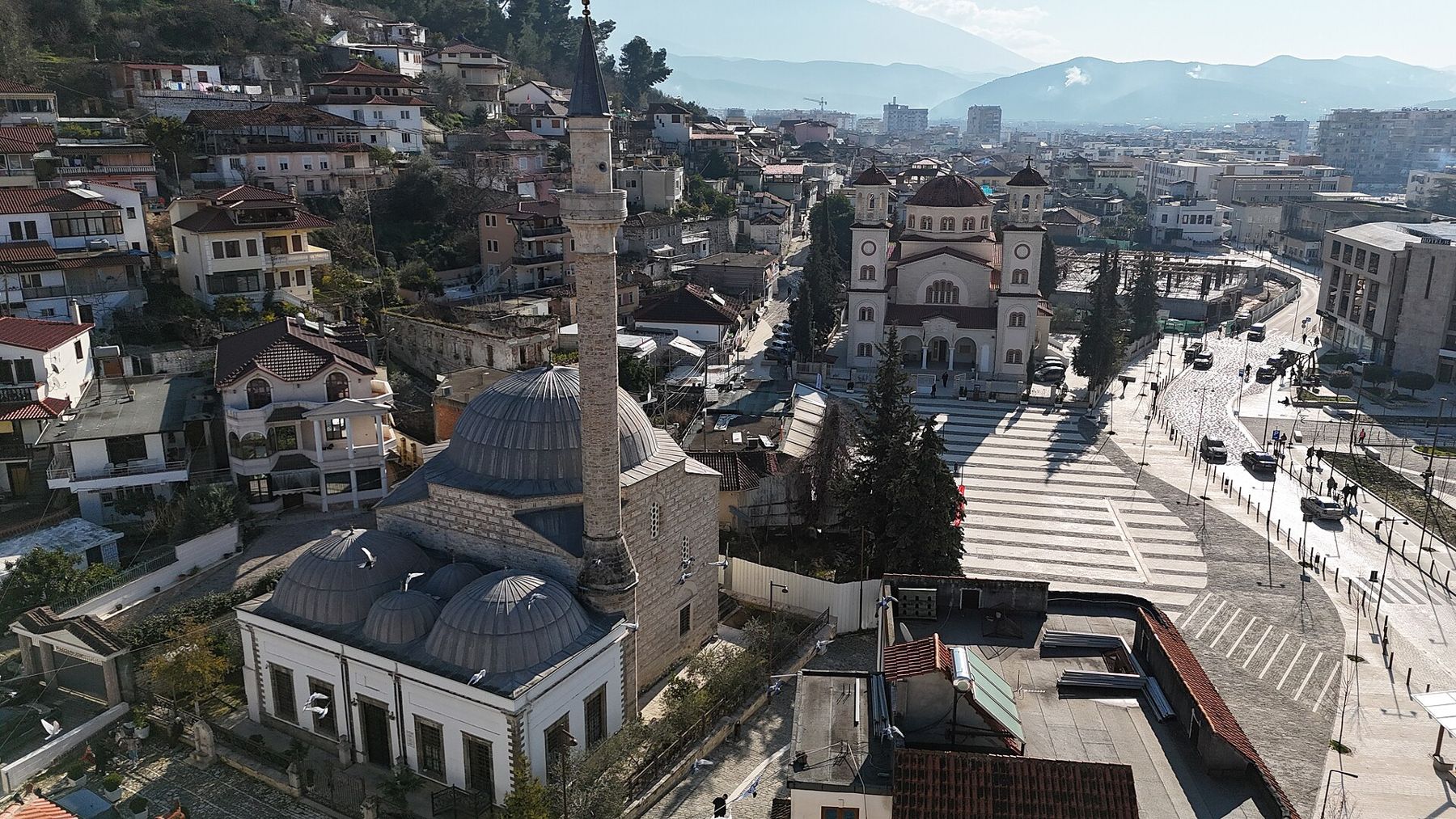
Berat is roughly two to two and a half hours south of Tirana. Arrive by lunchtime and walk the old quarters. Mangalem climbs the hill under the castle with its rows of windows, Gorica faces it across the Osum river, and the castle quarter on top is still inhabited, with churches, a small museum of icons by the painter Onufri and wide views. Watch the evening light on the windows from the bridge.
Stay the night in or near the old quarters, where guesthouses occupy restored Ottoman houses, and eat on the boulevard by the river, where the town takes its evening walk.
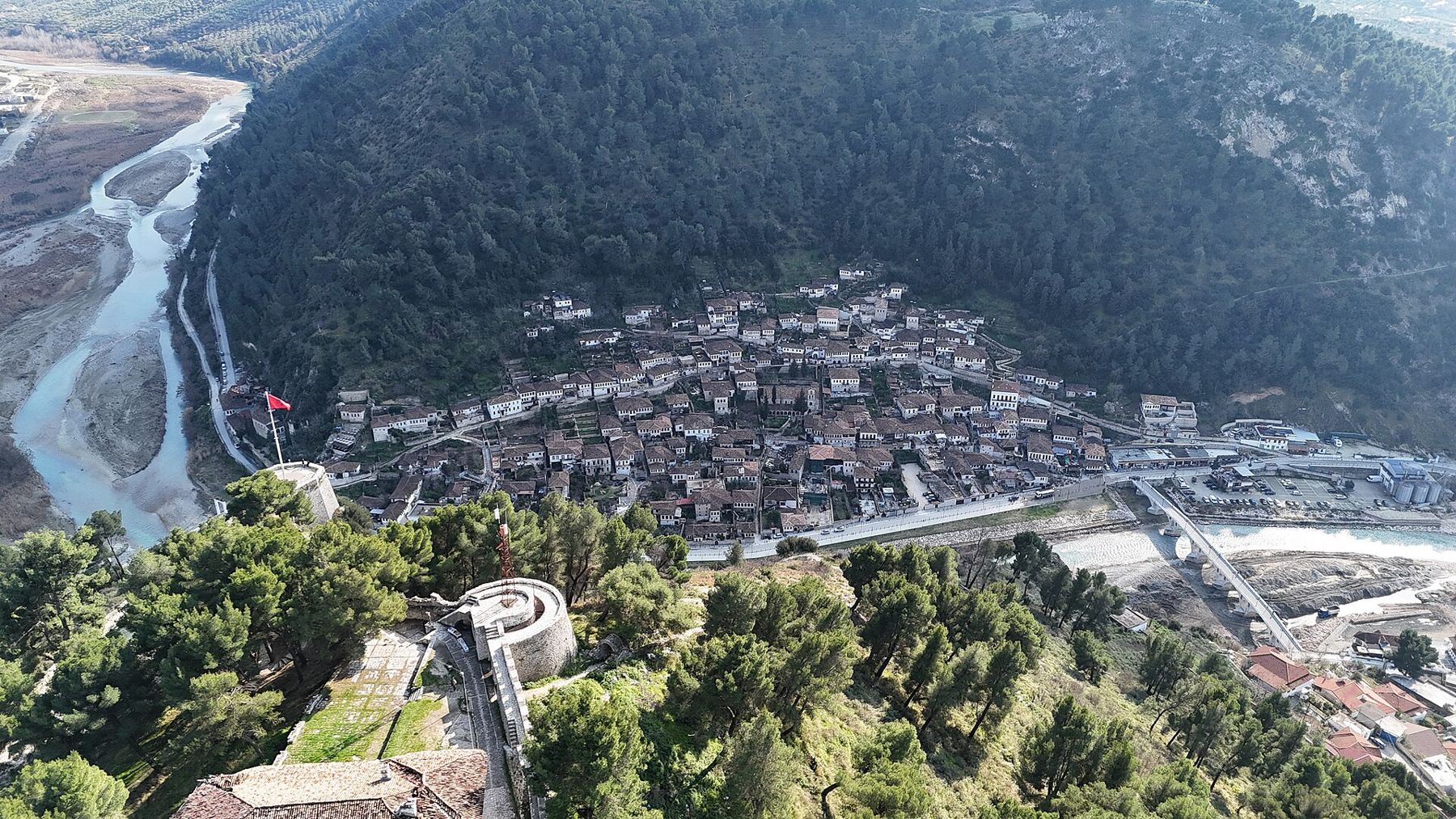
On day three, drive south to Gjirokastër, around three hours. The road follows the Vjosa valley through Tepelenë, with mountains on both sides; Përmet, known for its wine and raki, is a possible detour. Arrive in time to explore the stone town in the late afternoon.
Gjirokastër's old streets are steep and paved with slippery stone, so wear good shoes. Many of the best guesthouses are in old houses up the hill; ask about parking, since cars cannot reach every door.
Day 4: Gjirokastër and the Blue Eye
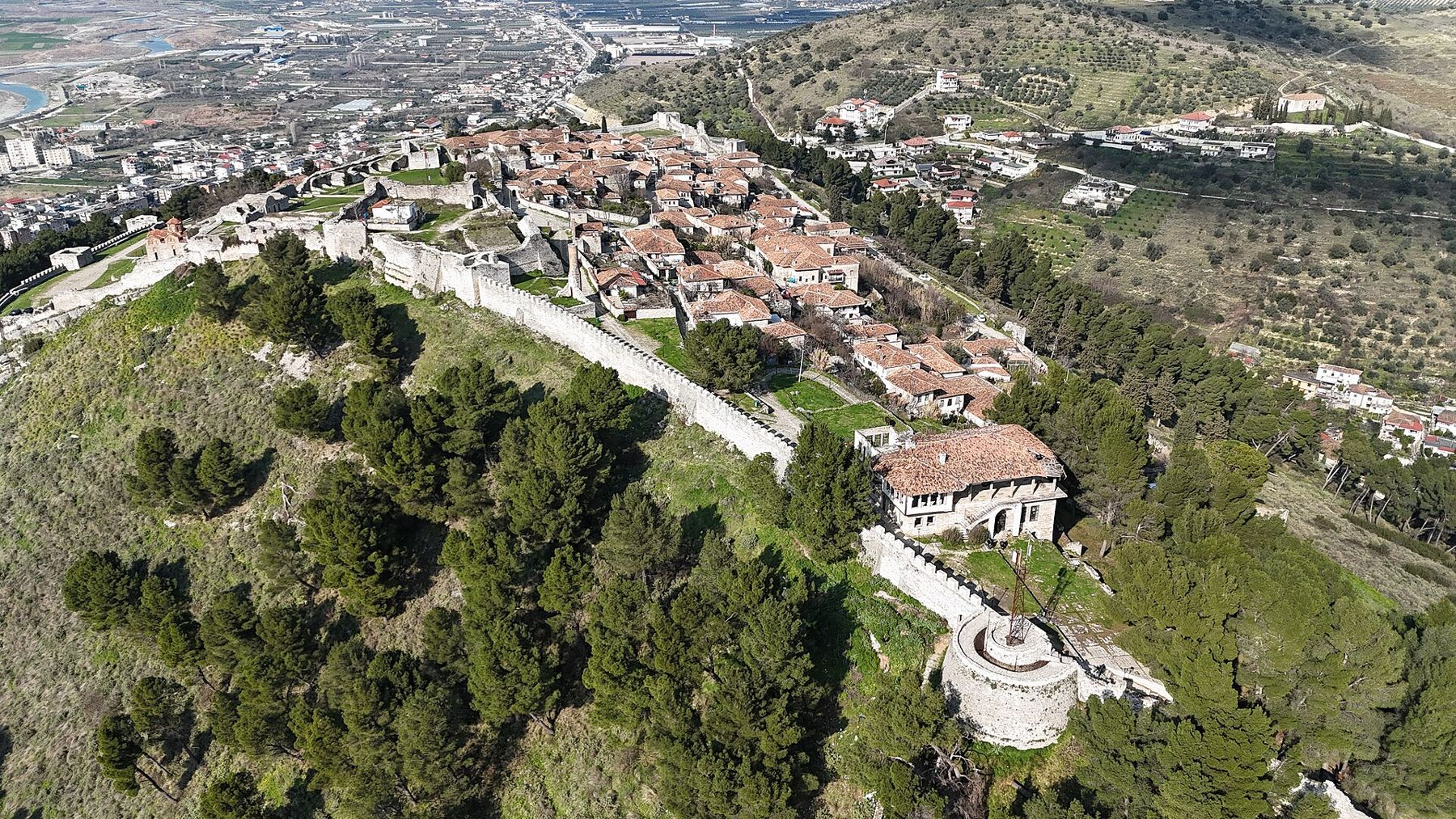
Gjirokastër is a town of grey stone and slate. Climb to the castle, which holds a museum of arms and a long tunnel, and look down over the steep roofs of the old houses. Visit the Skenduli house or another of the tower houses, then walk the bazaar. Gjirokastër is listed by UNESCO with Berat, and it is the birthplace of the writer Ismail Kadare.
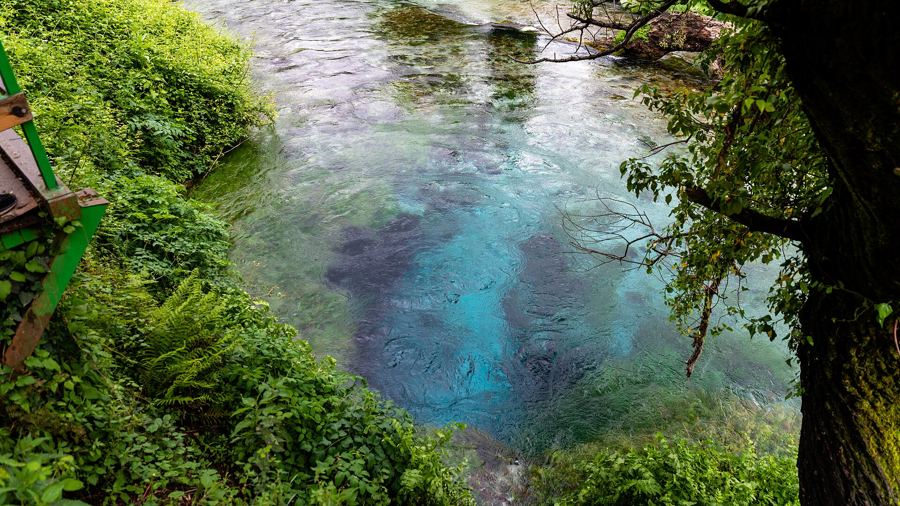
In the afternoon drive toward Sarandë, about an hour or so away, stopping at the Blue Eye, a deep spring of startlingly clear water. Spend the night in Sarandë, on the promenade facing Corfu.
 Read nextKsamil and Butrint, two faces of the far south
Day 5: Butrint and Ksamil
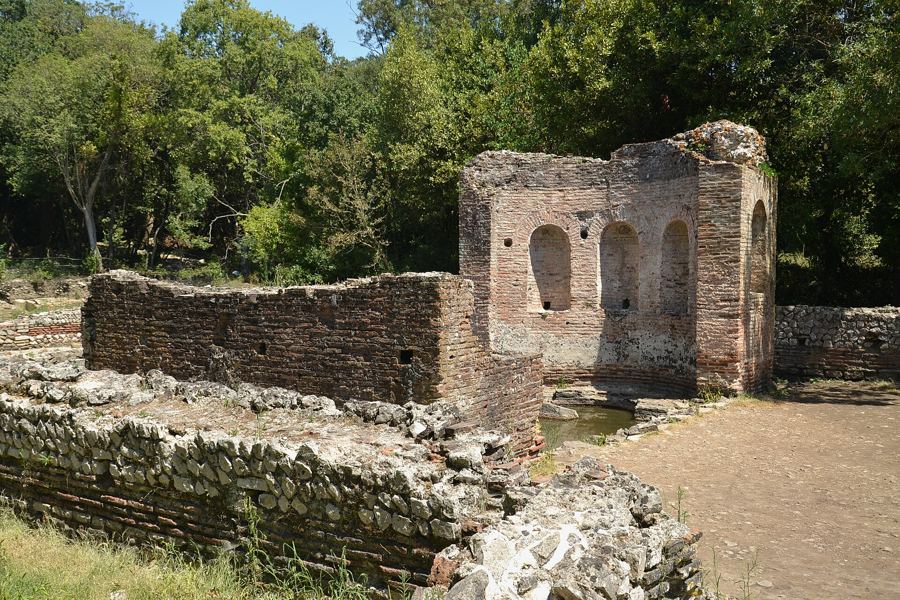
Butrint, south of Sarandë, is one of the great archaeological sites of the Mediterranean. Its layers run from a Greek settlement through Roman, Byzantine and Venetian periods, in a national park of woods and lagoon. Go early, before the heat and the tour buses. Spend the afternoon on the beaches of Ksamil, with its small islands offshore, or take a boat around the coast. In high summer, Ksamil is very crowded; in June and September it is much more relaxed.
Day 6: Up the Riviera
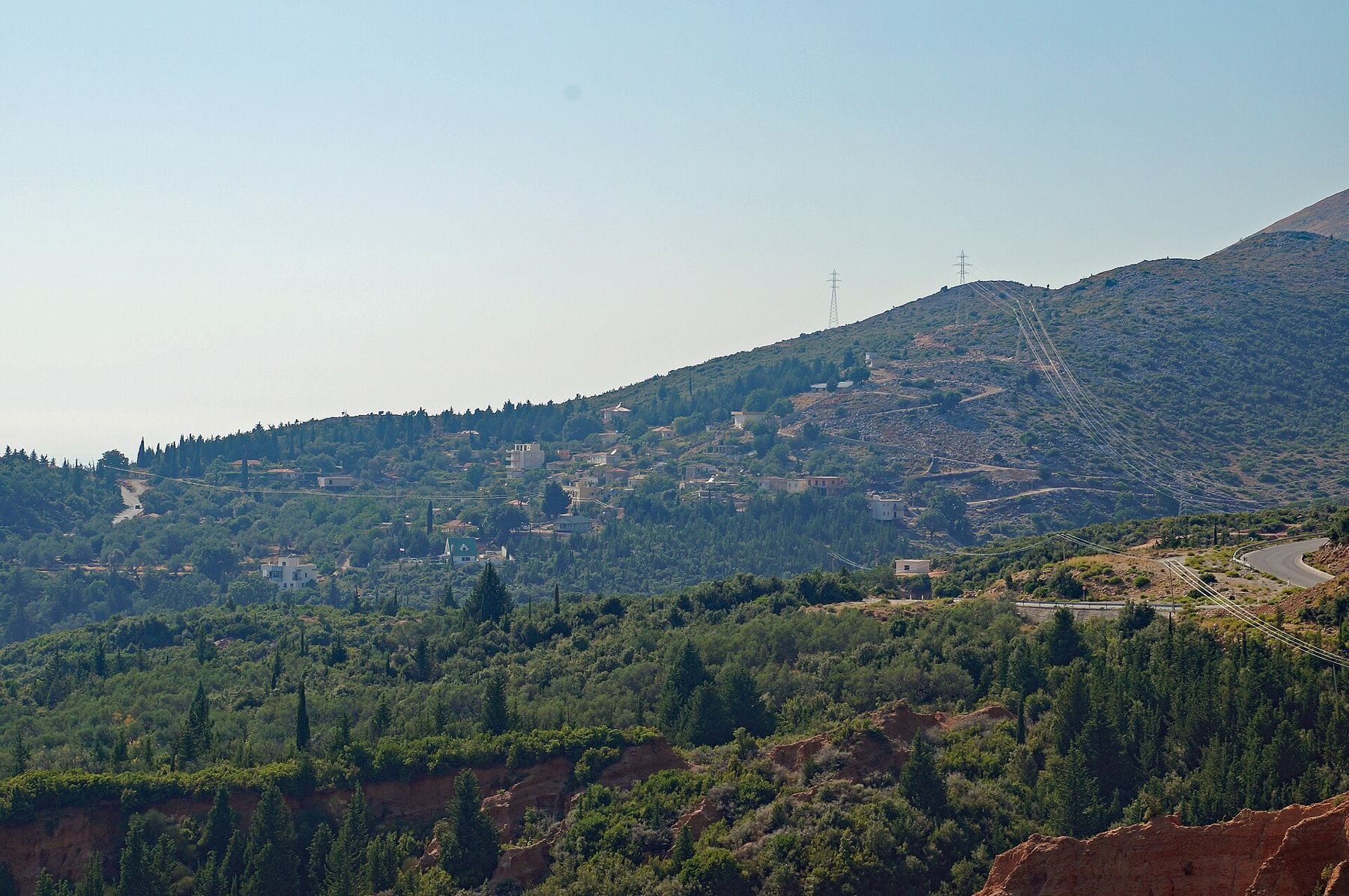
This is the great driving day. Head north along the coast road, past Lukovë and Borsh with its long beach, to Porto Palermo, where a small fortress associated with Ali Pasha of Tepelenë sits on a peninsula. Continue to Himarë and its old upper town, then to Jalë or Dhërmi for a swim. In the late afternoon climb the Llogara Pass, over a thousand metres above the sea, with views back down the coast. Stay in Dhërmi, on the pass or continue to Vlorë.
The road is in good condition but winding, and in summer the traffic is heavy around the beaches. Leave time for stops: every bend shows a new bay, and the villages above the coast, with their stone houses and olive terraces, are worth a short walk. Fill the tank before setting off, and carry water and swimming things in the car.
Day 7: Vlorë and the road home
Vlorë is where Albania declared independence in 1912. See the Independence Monument and the museum in the building where the declaration was made, and, if time allows, the Zvërnec monastery on its island in the lagoon to the north. Then drive back to Tirana, roughly two hours or more on the main highway, perhaps stopping at the ancient city of Apollonia near Fier.
Where to sleep along the way
A simple pattern works: one night in Tirana, two in Berat, one in Gjirokastër, two in Sarandë or Ksamil and one on the northern Riviera or in Vlorë. In Berat and Gjirokastër, the guesthouses in the old quarters are part of the experience. On the coast, Sarandë has the widest choice and works well as a base for both Butrint and the Blue Eye. In July and August, book the coast well in advance; in spring and autumn, there is usually room to decide as you go.
Making it work
A car gives the most freedom. The loop is roughly seven to eight hundred kilometres, and mountain and coastal stretches are slow. Fuel stations are frequent on main roads. Parking in old towns is limited, so ask your accommodation where to leave the car.
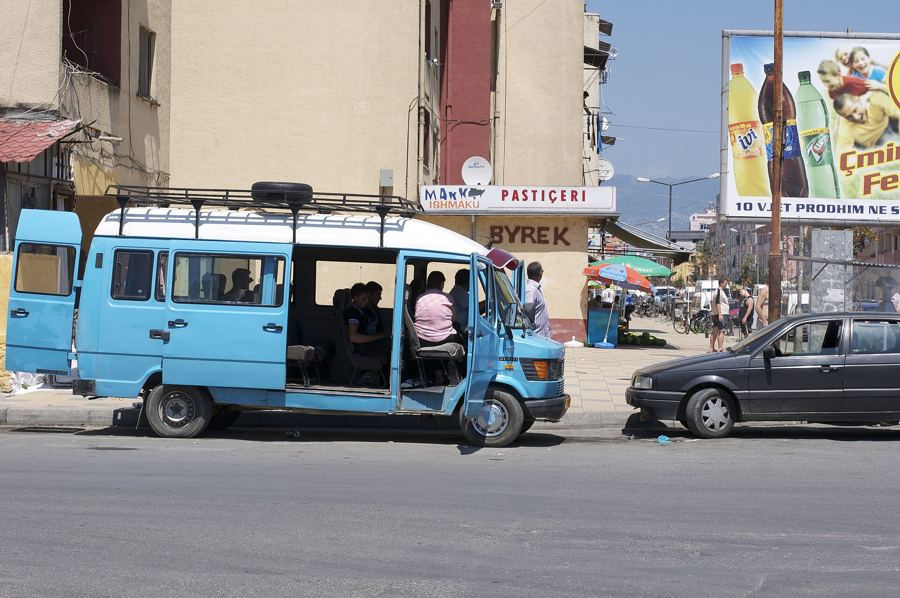
Without a car, buses link Tirana, Berat, Gjirokastër, Sarandë and Vlorë, with minibuses along the coast in summer. Allow an extra day or two, and expect fewer departures in the afternoon and outside the summer season. Our guide to getting around explains the system.
If you have more time, add a day for the Osum Canyon from Berat, or extend north to Shkodër and the mountains. If you have less, cut the coast and return from Gjirokastër. The heart of the loop is the two old towns, and they deserve unhurried evenings.
One last tip: do the loop in this direction. Driving north along the Riviera puts the sea on the driver's side, with the best views opening ahead on every bend, and the climb to Llogara comes at the end of the day, when the light over the sea is at its best.
Filed under Practical