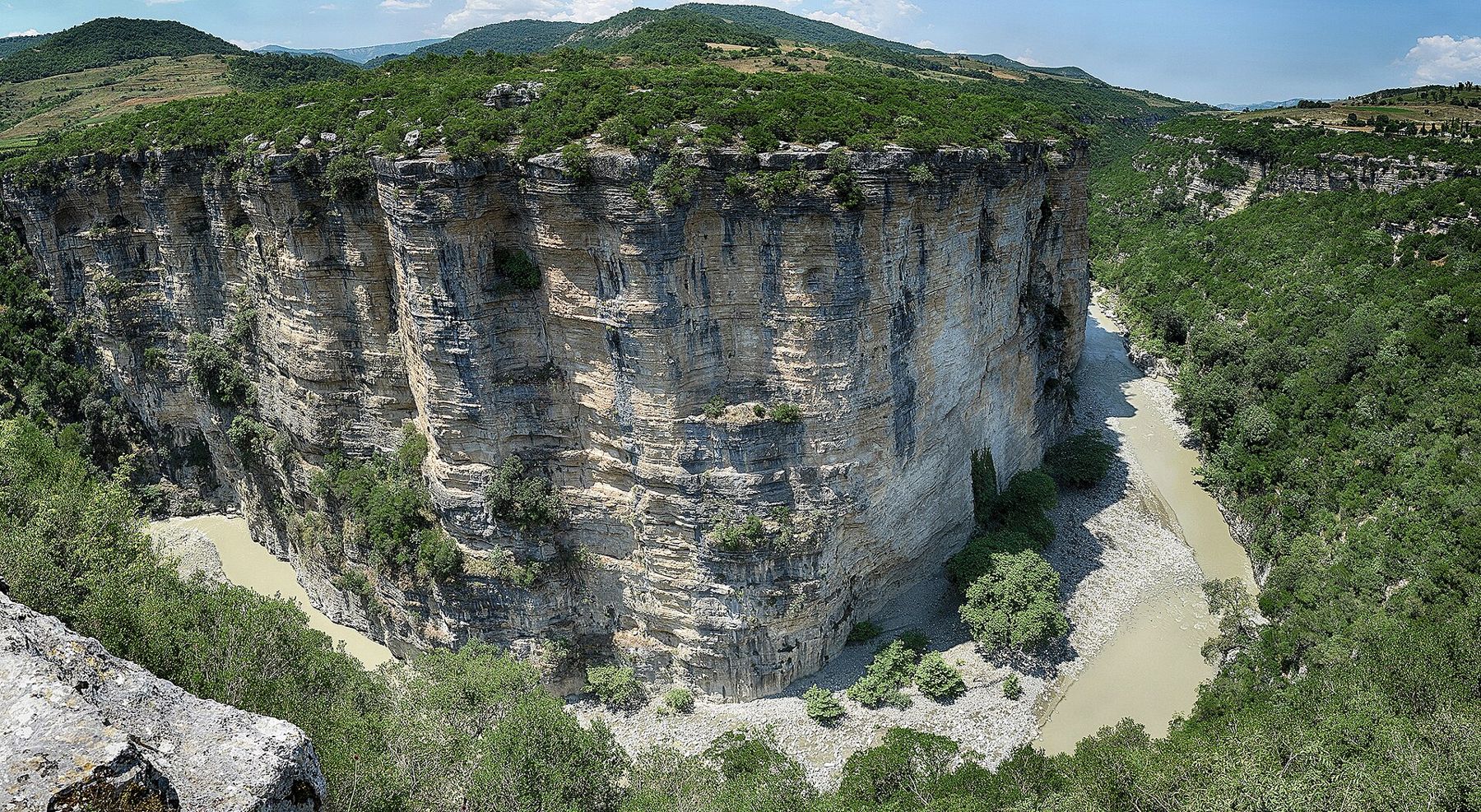
Lean over the railing at the edge of the canyon and the river is a long way down: a green ribbon squeezed between walls of layered rock, the strata stacked like the pages of a closed book. Swifts dive and turn in the air below you. Somewhere downstream a raft full of people in helmets shouts as it drops over a ledge, and the sound comes up thin and late, bouncing between the walls.
The Osum Canyon lies in Skrapar, in the hills south-east of Berat, near the small town of Çorovodë. It is one of the most striking natural sights in Albania, and for a long time one of the least visited, because the road to it was slow and rough. The road has improved, and the canyon now draws rafters in spring and walkers and swimmers in summer, but it still feels far from the crowds of the coast.
A river cutting through stone
The Osum rises in the mountains of the south-east and flows north-west past Çorovodë and down through Berat, where it runs beneath the town's old houses, before joining the Devoll to form the Seman and reach the Adriatic. Near Çorovodë, the river has cut a deep, winding gorge through limestone, leaving walls that drop sheer for tens of metres and in places almost close overhead.
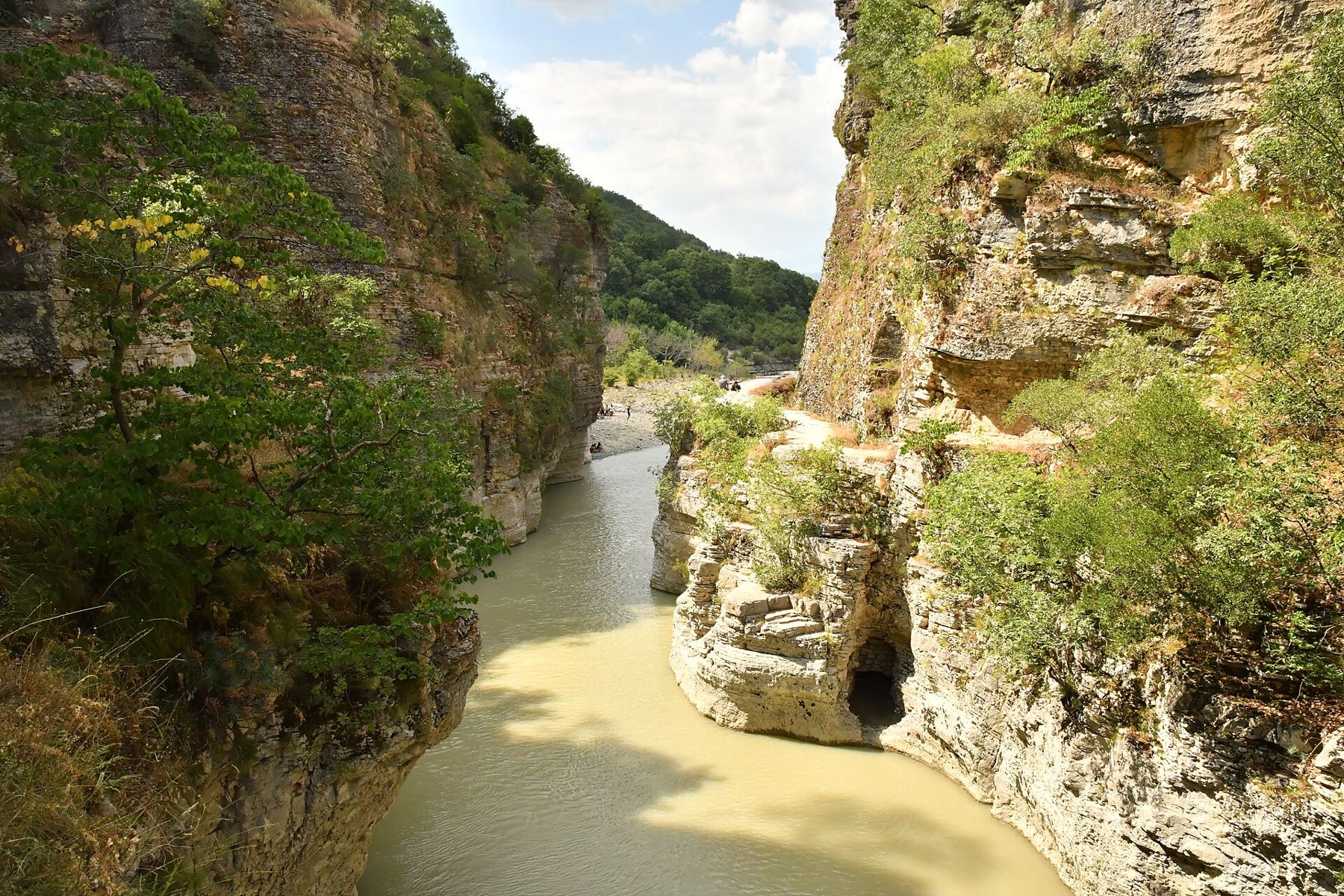
Walking along the rim road, you see how the river has worked. The rock is layered in thin bands, cream, grey and rust, and the water has carved overhangs, hollows and caves into it. Springs seep from the walls and feed ferns and moss in the shade. Trees grow out of ledges at improbable angles. In places waterfalls drop over the edge after rain, falling in a thin veil into the river below.
The canyon is protected as a natural monument, and the area around it is a landscape of small villages, terraced fields, vines and orchards, with the bulk of Mount Tomorr rising to the north-west.
Rafting in the spring
The Osum is a river of two seasons. In late winter and spring, when snowmelt and rain fill it, the water rises and runs fast and cold through the canyon. This is rafting season. Operators based in Berat and Çorovodë run trips through the gorge, usually with a guide in each raft, and the rapids are lively without being extreme in normal conditions. The trip runs between the canyon walls, so you see it from below, which is the most dramatic way to see it at all.
The season depends entirely on the water. In a wet year it may run from March into June; in a dry one it may be short. After heavy rain the river can rise too high for safe trips. Ask an operator before you plan around it, and go with an established company that provides wetsuits, helmets, life jackets and guides.
By midsummer the river drops and the canyon changes character. The water slows and clears, pools form between gravel banks, and in some sections people walk along the riverbed itself, wading and swimming where it deepens. Check conditions locally before doing this; the rock is slippery, and a sudden storm upstream can raise the water quickly.
The Osum is a river of two seasons.
 Read nextBerat, where the windows watch the river
The canyon from above
In summer the best way to see the canyon is from the rim. The road from Çorovodë follows the edge for some distance, with viewpoints and short paths to the brink. Some have railings; many do not. Take care near the edge, especially with children, and keep well back where the rock is crumbling or the ground slopes towards the drop.
Several of the viewpoints look straight down into the deepest and narrowest sections, where the walls close in and the light reaches the water only for a short time each day. The best time is morning, before the heat builds and while the shadows give depth to the gorge.
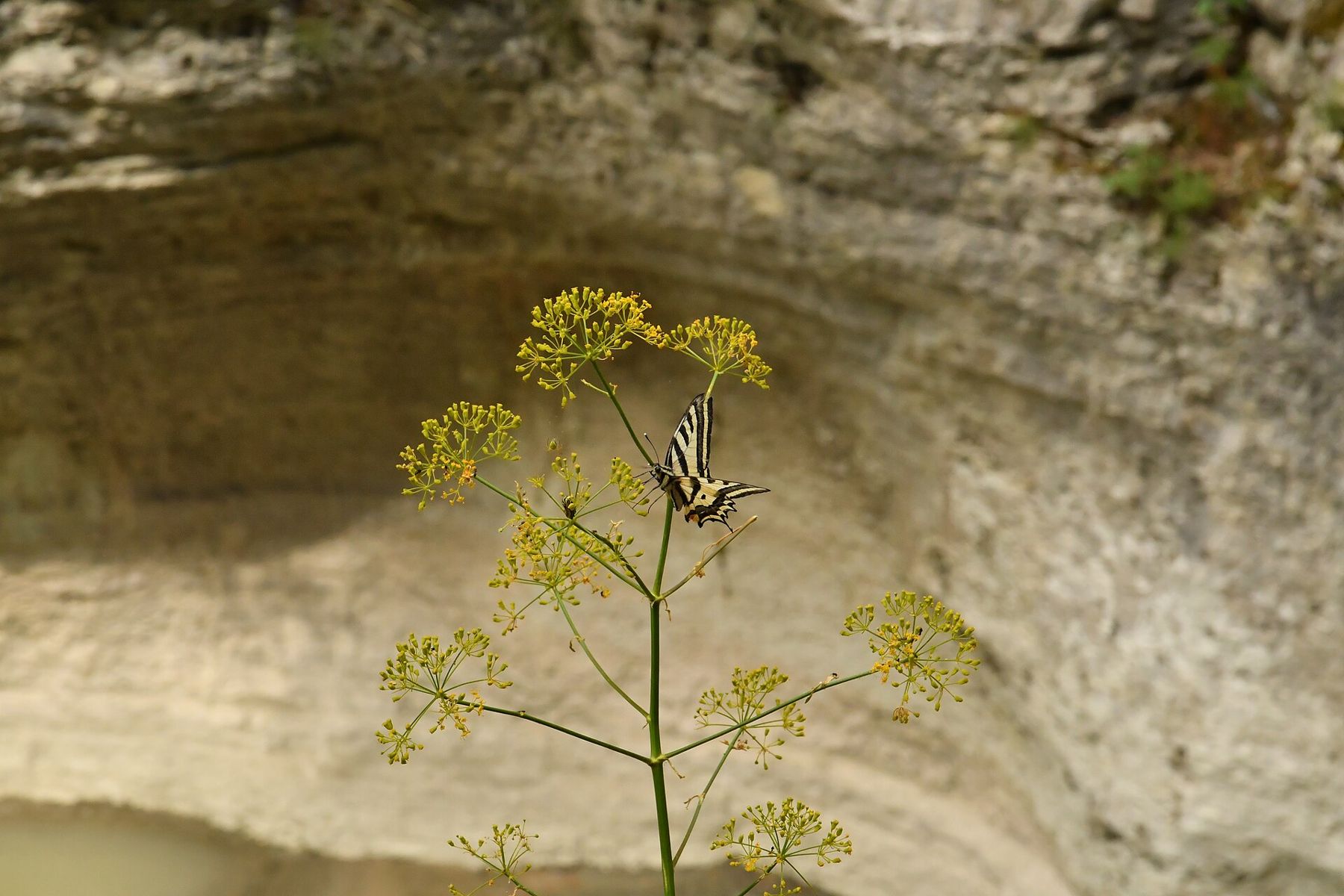
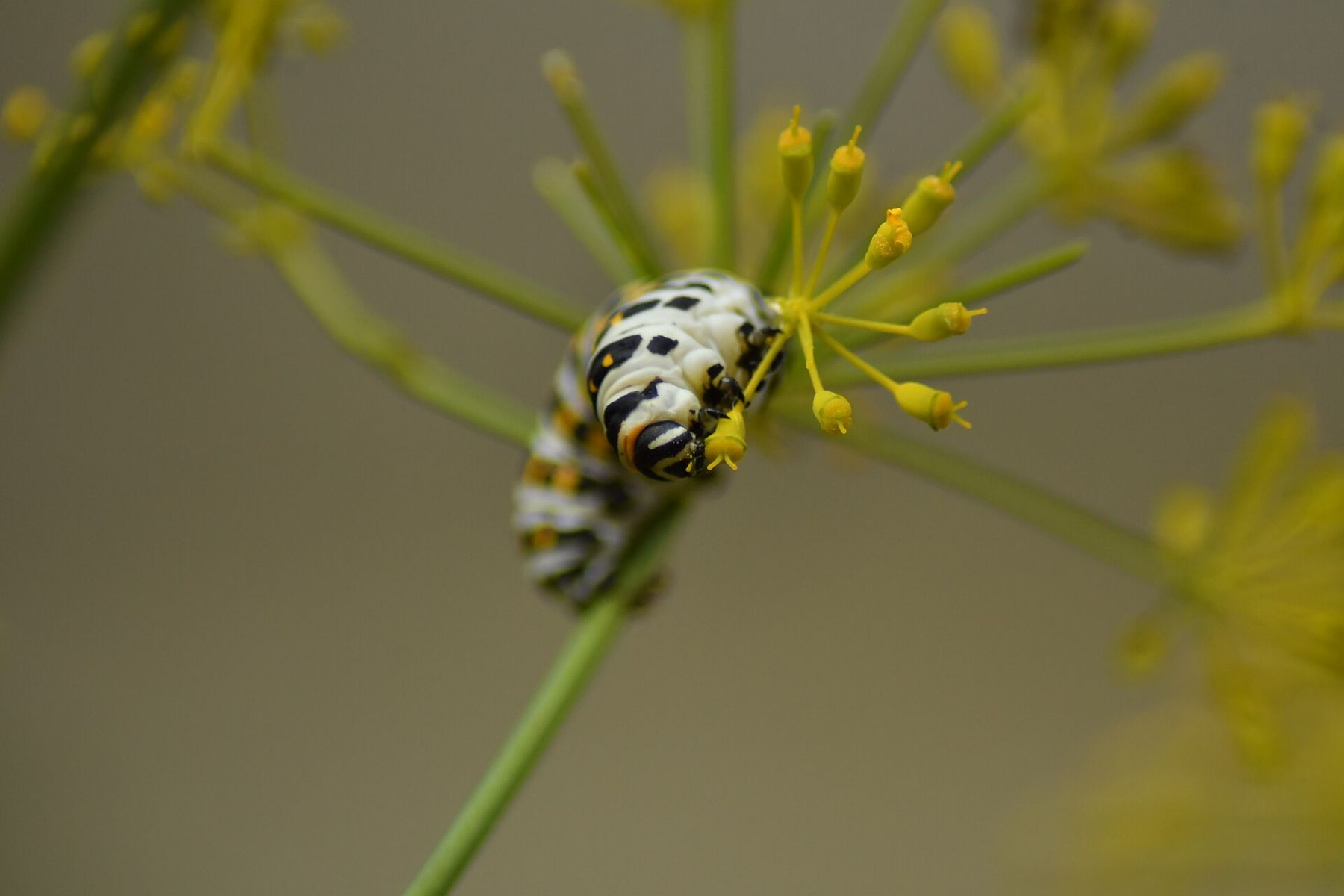
The rim is also a good place to see the wildlife. Swallowtail butterflies drift over the meadows and the shrubs at the edge in summer, and their striped caterpillars feed on the wild fennel and other plants that grow in the dry, rocky ground.
The waterfall at Bogovë
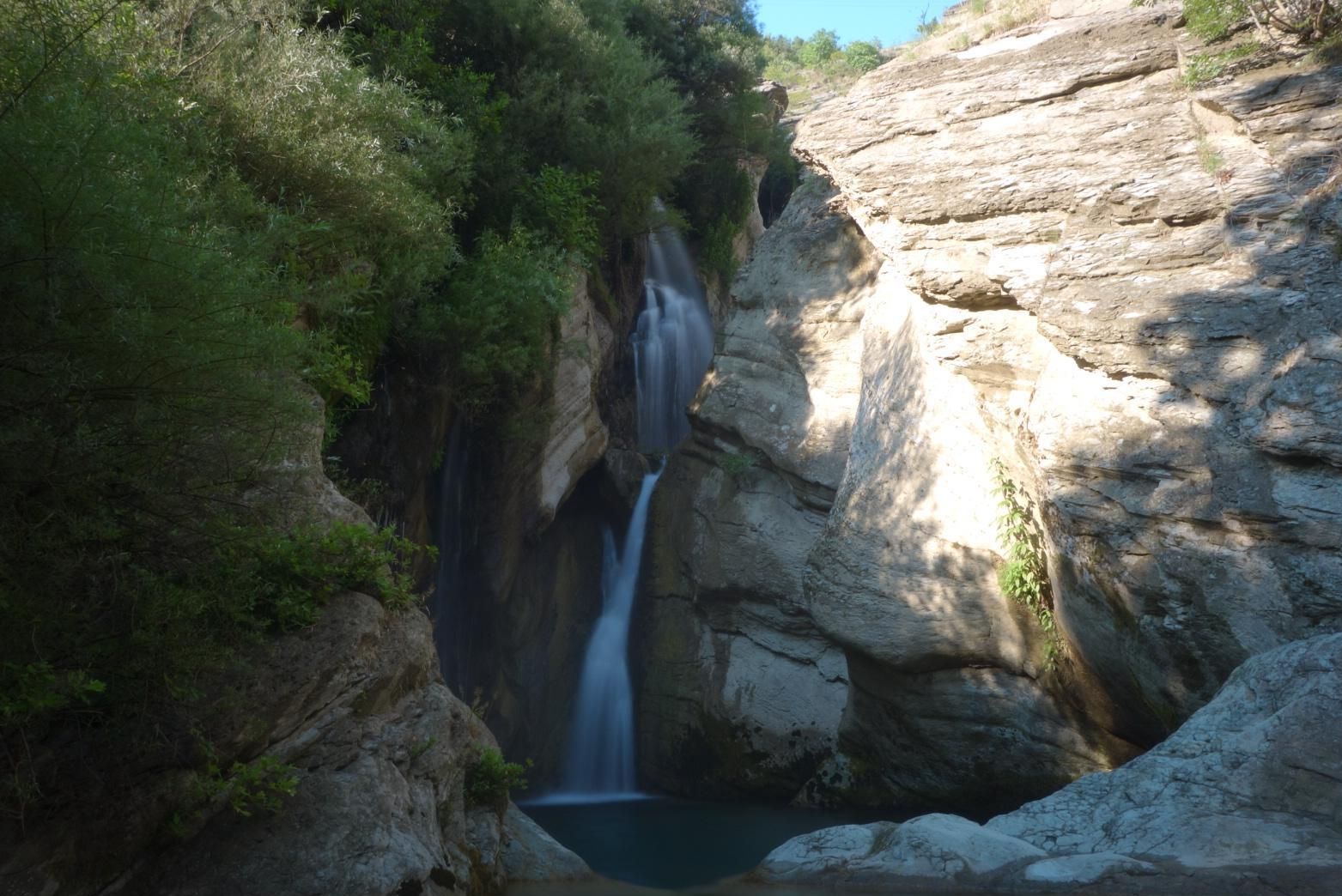
On the road between Berat and Çorovodë lies the village of Bogovë, and from it a path leads up a side valley to a waterfall. The walk is short, following a cold, clear stream through plane trees and boulders, and in summer it is a relief from the heat. At the end the water falls over a lip of rock into a pool, surrounded by moss and greenery.
The water is very cold, even at the height of summer, and a swim here in July is a shock to the body. The path can be slippery and involves some scrambling over rocks, so wear shoes with grip. On summer weekends the falls are popular with families from Berat and further away, and the small cafés near the start of the path fill up at lunchtime.
Bogovë makes a natural stop on the way to or from the canyon, and the combination is a full and satisfying day trip from Berat. Go early in the day and you may have the pool to yourself, with only the sound of the water and the birds in the plane trees.
Getting there and around
The canyon is usually visited from Berat, the old Ottoman town downstream on the same river. The road to Çorovodë has been improved in recent years and is far easier than it was, but it is still a mountain road, with bends and some narrow sections, and conditions can change after storms. Buses and minibuses run between Berat and Çorovodë, but they are not frequent and are not timed for sightseeing. A car, a taxi or an organised trip gives you more freedom.
Çorovodë itself is a small town with cafés, shops and a few places to stay, and a night there lets you see the canyon in the early morning and late evening light. Guesthouses in the surrounding villages serve home-cooked food, much of it grown on the spot.
Bring more than you think you need. Shops and cafés along the rim are few, shade is scarce on the open stretches, and summer temperatures in the canyon country climb high in the afternoon. Carry water, a hat and sun protection, and wear proper shoes rather than sandals if you plan to walk to the viewpoints or down to the river. If you intend to wade the riverbed in summer, take shoes you do not mind soaking and a dry bag for your phone, and turn back if the water is rising or turning muddy. Mobile signal is patchy in the deeper parts of the gorge, so tell someone where you are going.
For the town at the other end of the river, our story on Berat covers the castle, the Mangalem quarter and the old bridge. If you are fitting this into a longer trip, our week in Albania shows how the south hangs together, and our comparison of day trips from Tirana puts the Osum against the other options.
Mount Tomorr and the wider region
To the north-west of the canyon rises Mount Tomorr, the great mountain of central Albania, visible from Berat. It is sacred to the Bektashi, a Sufi order with deep roots in Albania, and every August pilgrims climb to the shrine near its summit for a festival that draws thousands. The mountain and the area around it are a national park, and in the cooler months it offers good walking, with wide views over the whole of the south.
Skrapar itself is known across Albania for its raki, distilled from grapes and plums in the villages, and for its hospitality. In summer the region is hot and dry; in spring and autumn it is green, mild and quiet, and those are the best seasons for a visit that combines the canyon, the waterfall and the villages.
At the end of the day, stand once more at the edge of the gorge as the light fades. The rock turns from cream to gold to grey, the river below darkens, and the swifts give way to bats, flicking in and out of the shadow between the walls.
Filed under Mountains