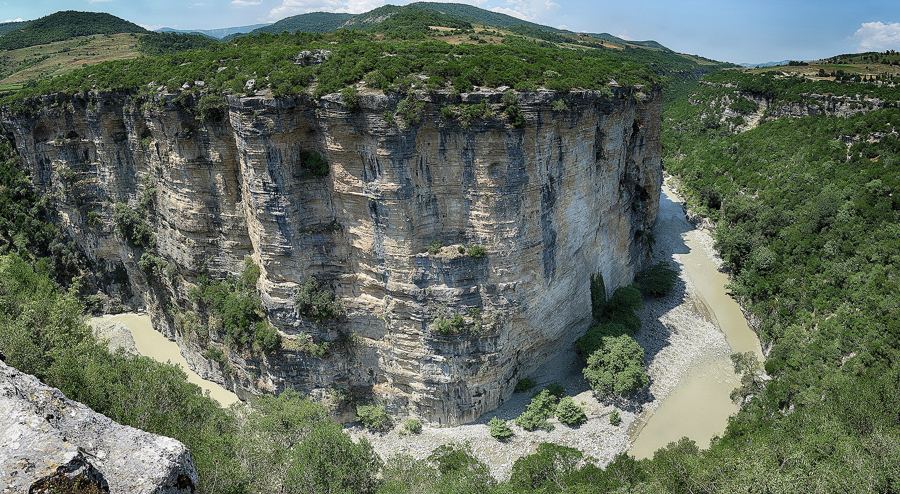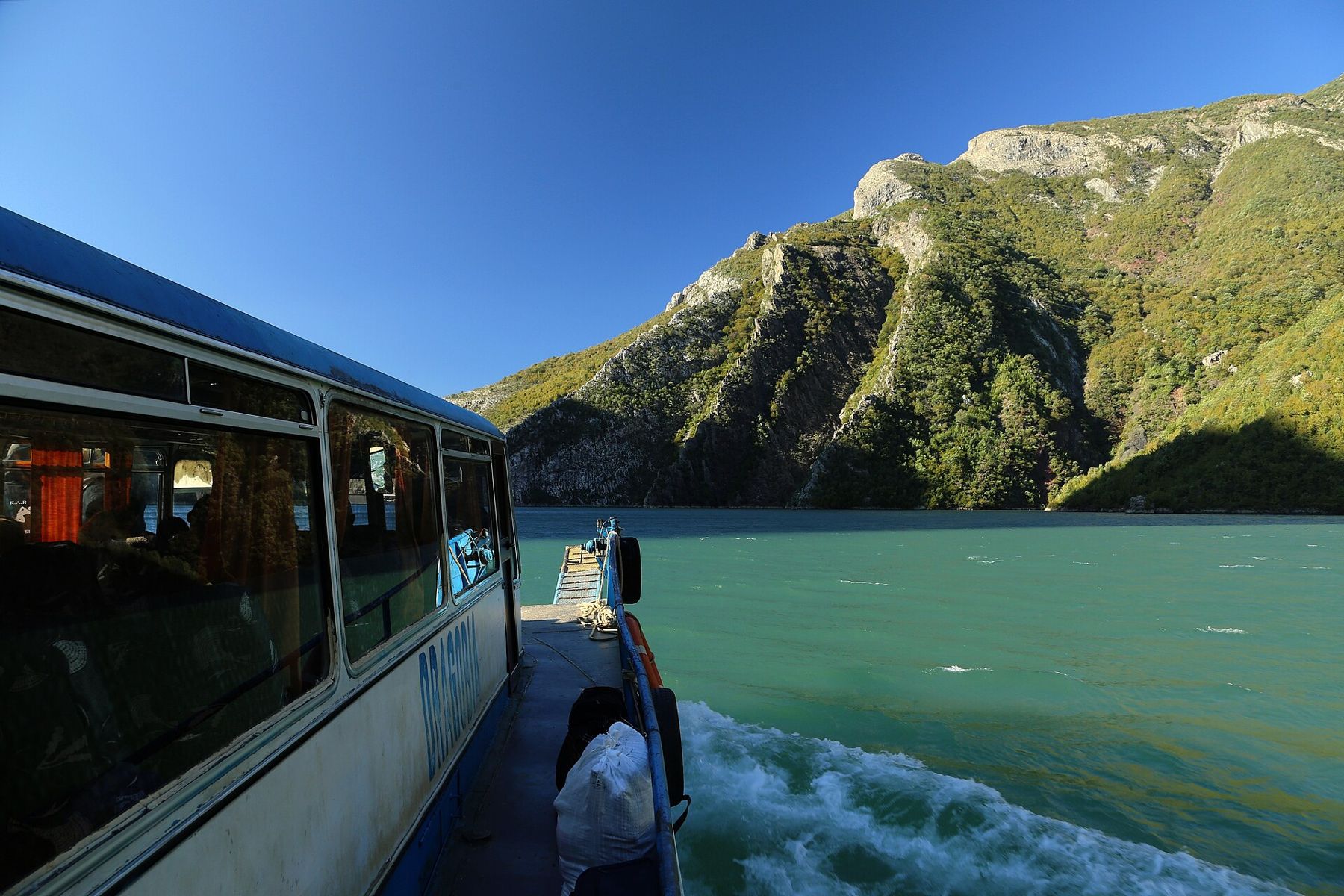
The boat noses out of the dock at Koman into a corridor of rock. On both sides the walls of the gorge rise almost vertically from the water, grey and ochre limestone streaked with green where trees have rooted in the cracks. The water is a deep, opaque green, very still. Engines echo off the cliffs. Within minutes the dam is out of sight behind a bend, and there is nothing but the gorge ahead, twisting away into the mountains.
Lake Komani is not really a lake. It is a reservoir on the Drin, Albania's longest river, created by a hydroelectric dam completed in the 1980s. The water filled a deep river canyon and turned it into a long, narrow waterway winding for more than thirty kilometres into the northern mountains. The result looks like a Norwegian fjord transplanted to the Balkans, and the boat journey along it is one of the great trips in the country.
The Drin is the backbone of Albania's electricity. On its way through the northern mountains towards the sea, the river is held back by a chain of three dams, at Fierzë, at Koman and at Vau i Dejës, each with its own reservoir behind it, and together they supply a large share of the country's power. Building them in the communist decades was a huge undertaking in remote, steep country, and it drowned the old river valley, its paths and some of its farmland. What the engineers left behind, almost by accident, is a waterway through mountains that previously had no easy route through them at all.
That is why the boats matter. For the scattered families along the shore, and for anyone heading from Shkodër to the north-east without a long detour by road, the lake is the road.
Getting to the dock
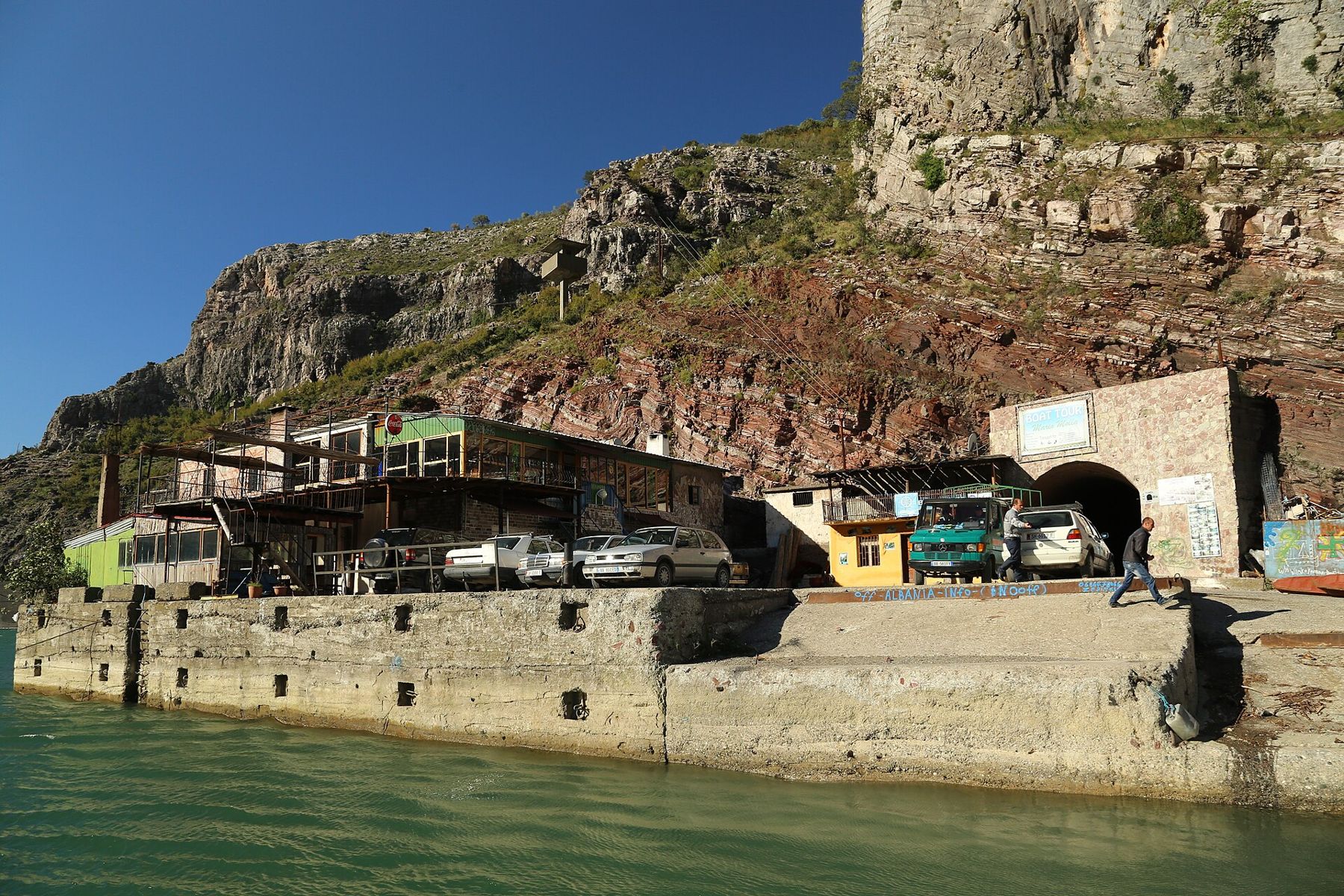
The ferry leaves from a landing just above the Koman dam, reached by a mountain road that climbs from the plain near Vau i Dejës, east of Shkodër. The road is narrow and winding, and the last approach to the dock runs through a short, rough tunnel cut into the rock, which brings you out abruptly onto the water's edge. Allow plenty of time to drive it, and more if you are meeting a morning boat.
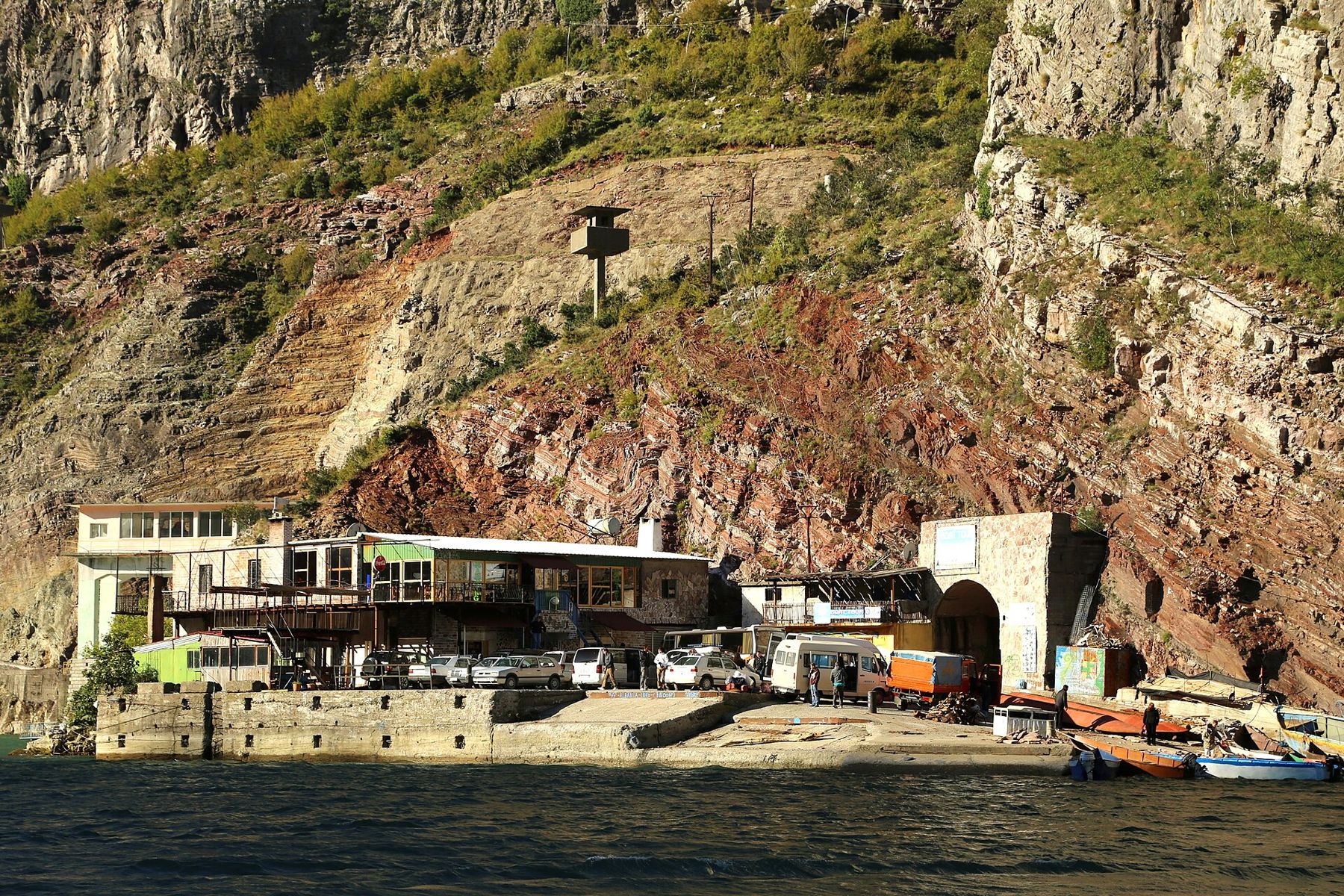
Most travellers come from Shkodër. In the season, minibuses and transfers leave the city early in the morning to meet the boats, and many guesthouses in Shkodër will book the whole package: bus, boat, and onward transfer at the far end. If you are driving, you can take your car on the car ferry, if there is one running, or leave it and have it driven round, an arrangement several operators offer.
The landing is a small, crowded place in summer, with boats jostling at the quay, people shouting names and destinations, and luggage piled on the rocks. It looks chaotic. It generally works.
What the boats are like
Several kinds of boat work the lake, and the mix changes from year to year. There have been larger car ferries, some of them improvised from older vessels, carrying vehicles on an open deck. There are passenger boats with covered seating and an open deck at the front or top. And there are smaller, faster boats that do the trip more quickly and can stop more easily along the way.
Which boats are running, when they leave, and what they charge all change with the season, the water level and the operators, so check close to your date and book ahead in summer. In winter, services are reduced. The journey usually takes between two and three hours.
Wherever you sit, the best place to be is outside. The open deck gives you the full height of the cliffs, and in summer the breeze off the water is welcome. Bring a hat and sun protection, and something warm for the early morning, when the gorge can be cool and shaded.
 Read nextOver the Valbona Pass, from Valbona to Theth
Through the gorge
The first part of the journey is the most dramatic. The gorge is narrow, the walls are sheer, and the boat seems to be heading straight into the rock before a bend opens ahead. Waterfalls trickle down the cliffs after rain. Here and there a cave mouth shows at the waterline.
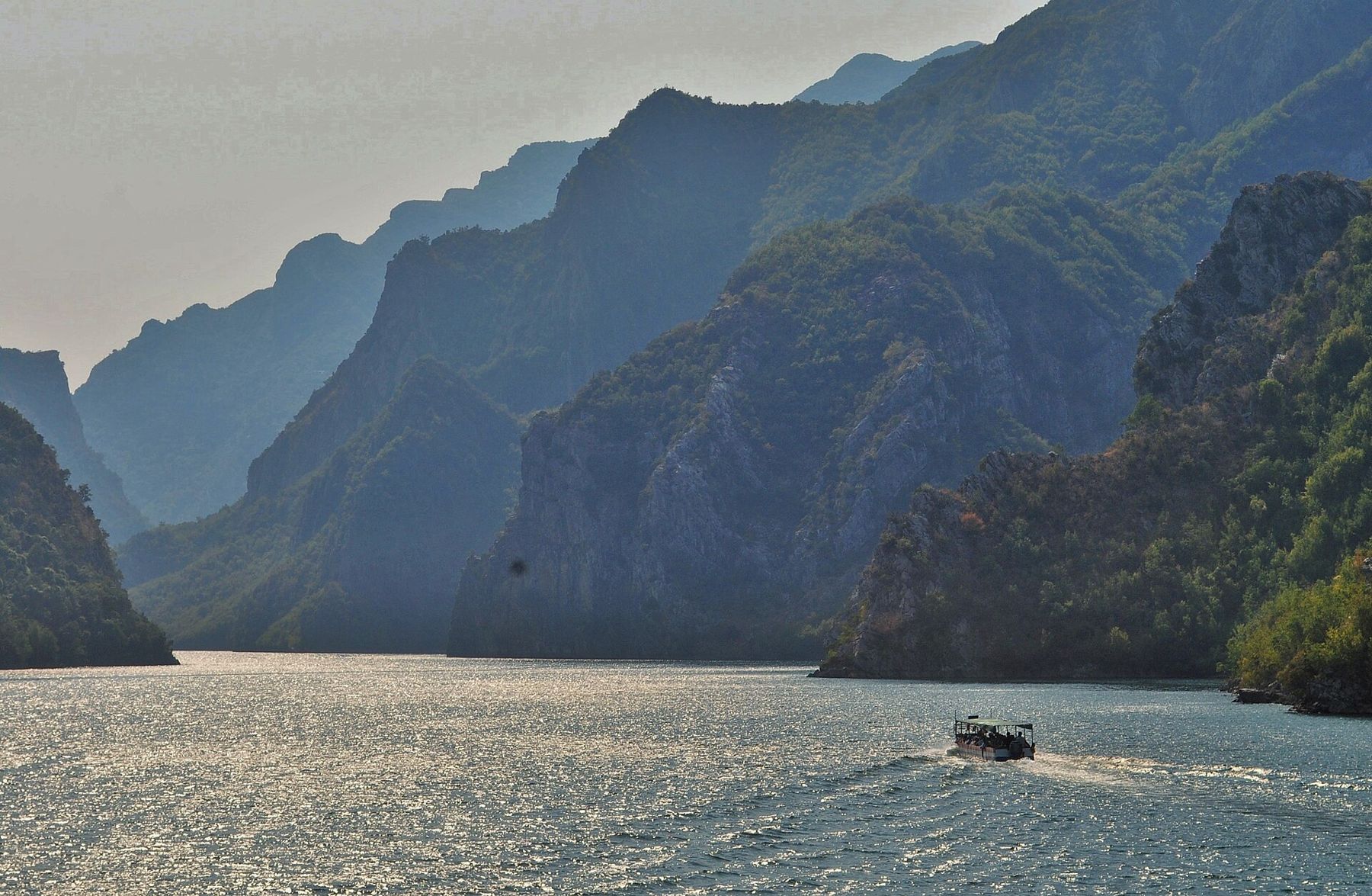
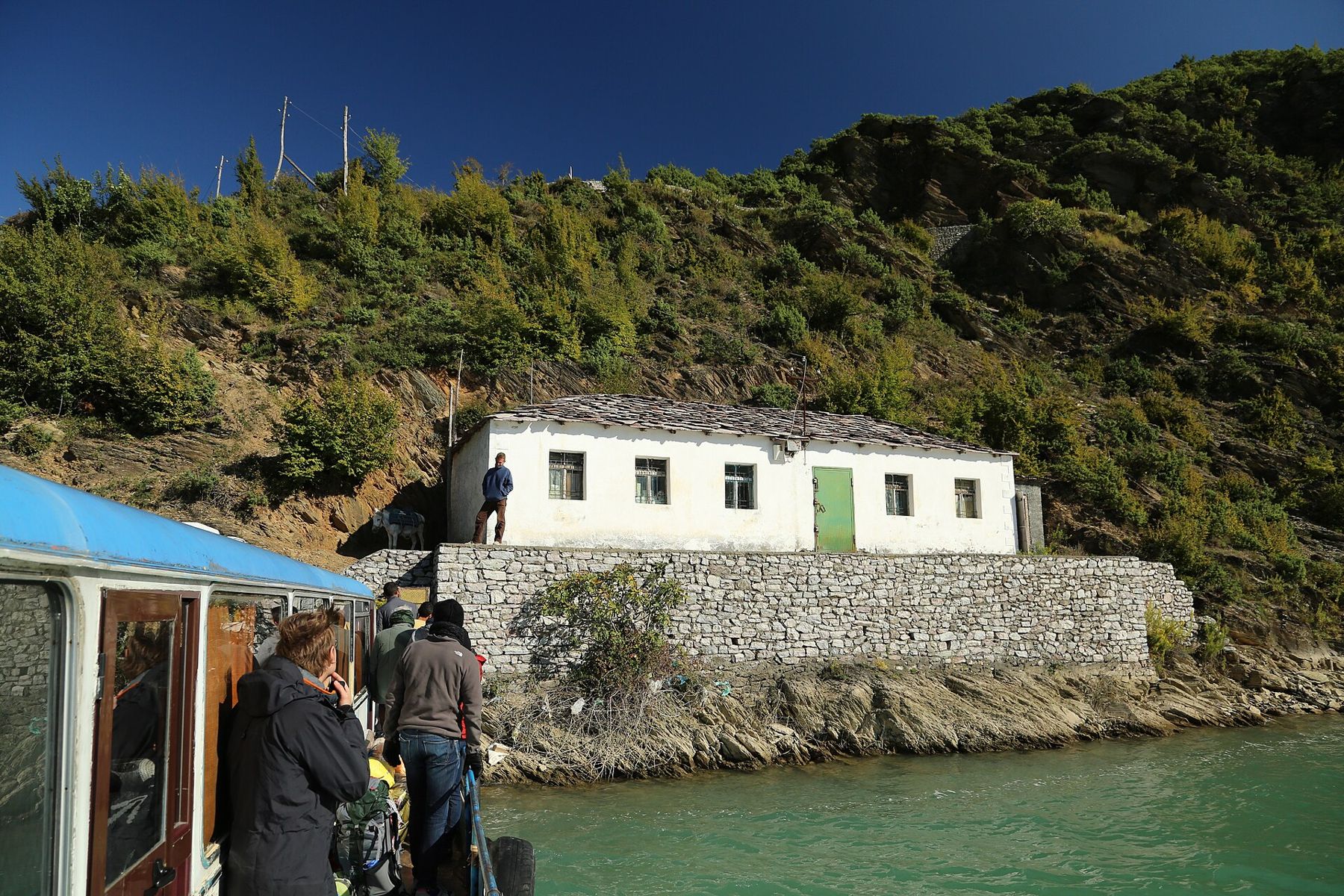
Further up, the valley widens a little. Wooded slopes come down to the water, and small farms appear on the few patches of level ground, linked to the outside world only by the boats and by footpaths over the mountains. The ferry stops for people waiting on a rock or a small jetty: a farmer with sacks of flour, a woman with a gas bottle, a boy with a goat on a rope. For these families the boat is not a tourist trip but the bus, the delivery van and the post.
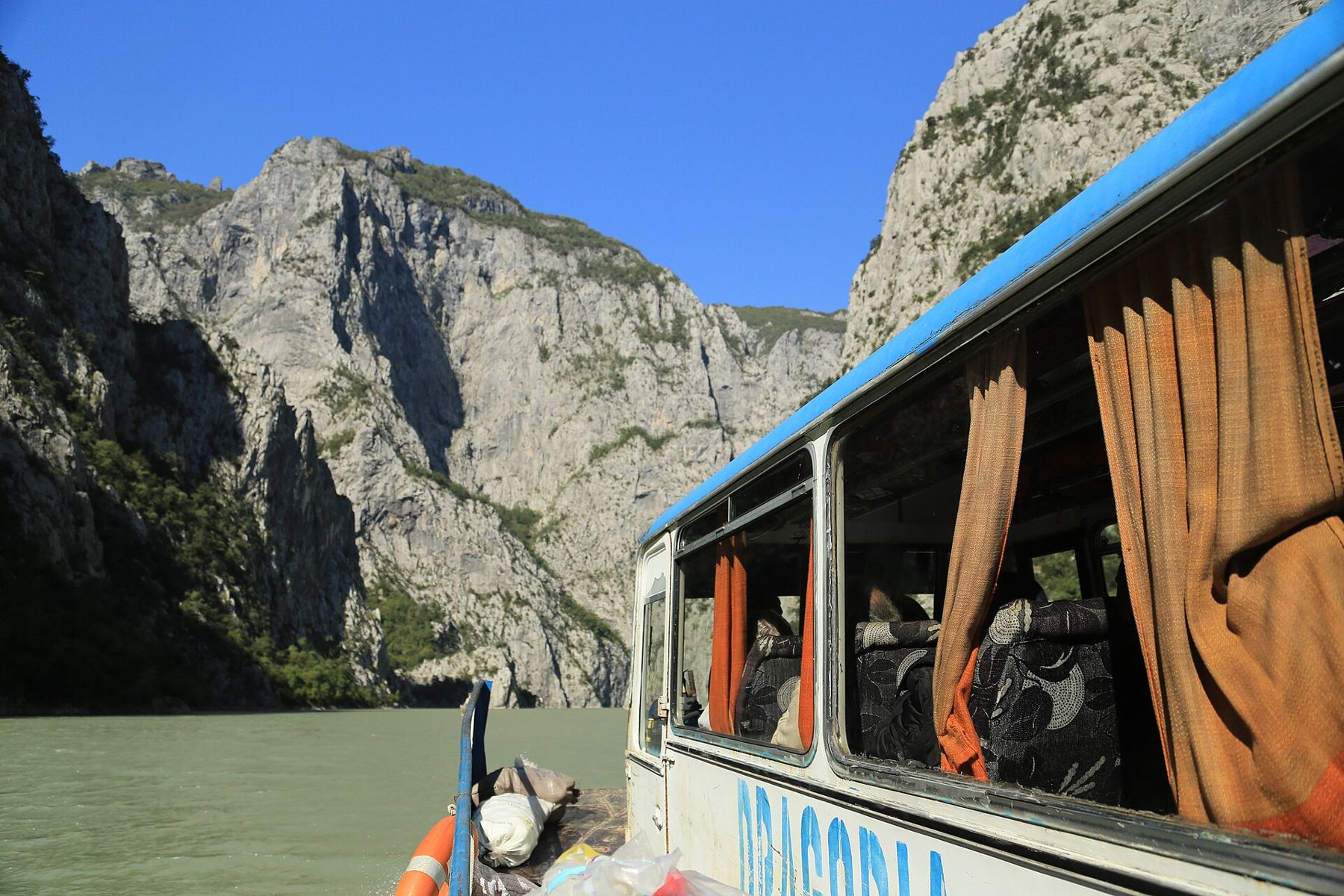
For these families the boat is not a tourist trip but the bus, the delivery van and the post.
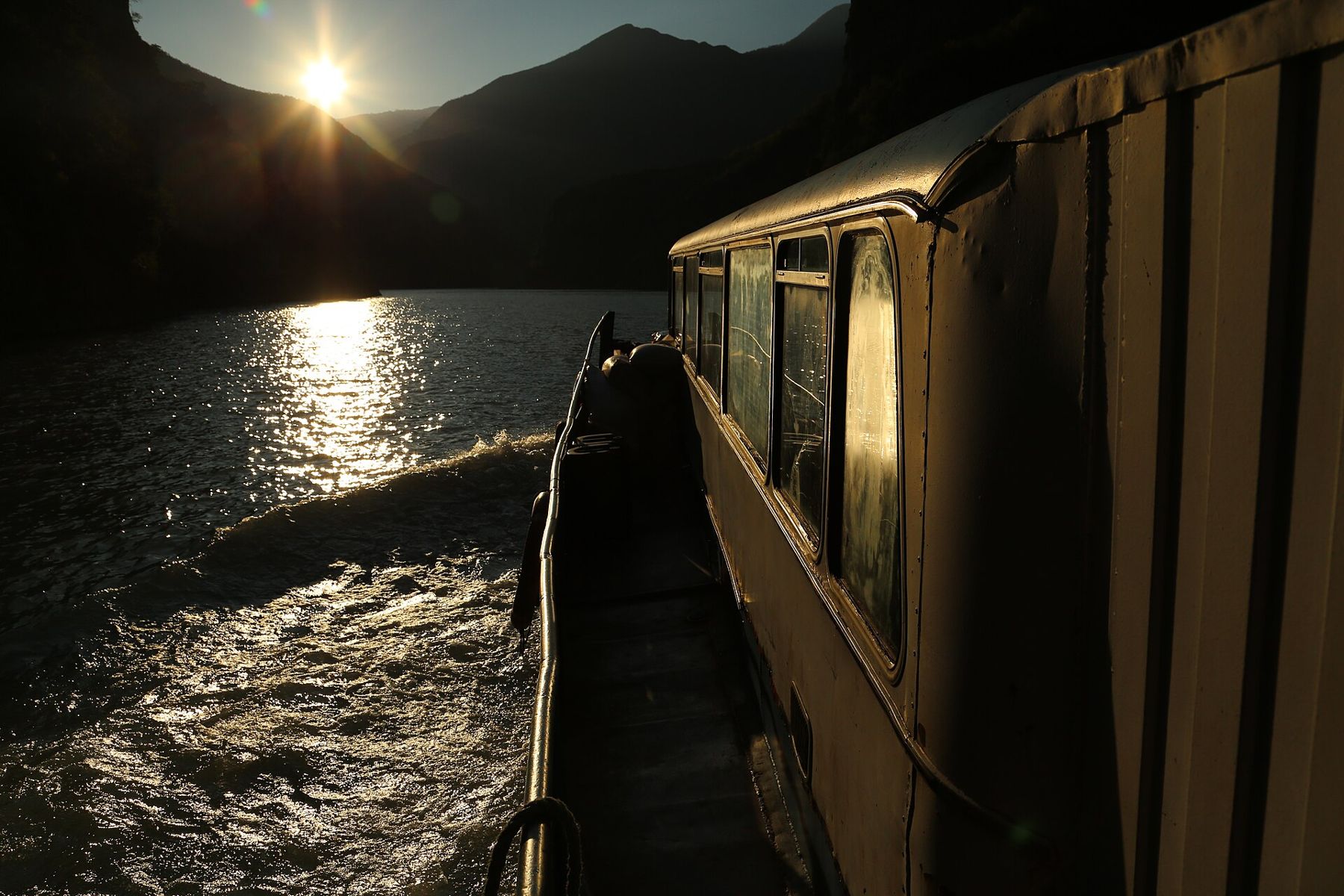
There are no settlements of any size along the lake, and no roads reach most of its shores. In the stretches between stops the only sounds are the engine and the wake slapping against the rock. Herons and other birds work the edges. The light changes as the gorge twists, from bright sun to deep shadow and back.
Fierzë and onward to Valbona
The boat ends at Fierzë, at the foot of another dam, which holds back a second reservoir further upstream. Fierzë is small, little more than a landing and a few houses, but in summer it is busy as minibuses and taxis wait to meet the boats.
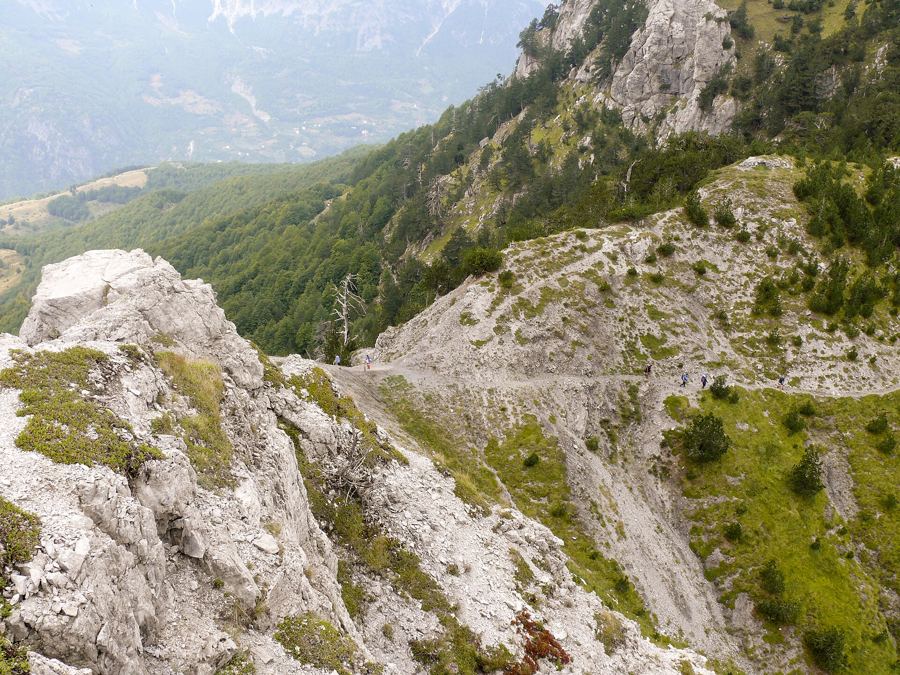
From here a road runs to Bajram Curri, the main town of the district, and on up the Valbona valley to the guesthouses of Valbonë village. The drive takes an hour or more depending on your destination. This is why most people walk the Valbona Pass from Valbona to Theth: the ferry brings them in at the Valbona end. Our Valbona to Theth route covers the hike, and our story on Theth covers the valley on the far side.
The loop is the classic northern trip. Shkodër, the Komani ferry, a night or two in Valbona, the hike over the pass, a night or two in Theth, and back down to Shkodër by road. It takes four or five days at a comfortable pace, and it is the best way to see the Albanian Alps without a car.
Other ways to see the lake
Not everyone needs to reach Fierzë. Boats from the Koman landing also run shorter trips up the lake and into the Shala river, a side valley where a clear green river enters the reservoir over pale gravel beaches. It is a popular summer day out from Shkodër, and in high season it is busy. The water of the Shala is cold and very clear.
Some visitors take the ferry one way and return by road; others do the whole loop in reverse, starting at Fierzë and ending at Koman. The views are equally good in both directions.
Practical notes
The boats are basic. Some have a small bar selling coffee, water and snacks; do not count on it, and bring water and something to eat. Toilets on board, where they exist, are simple. Seats inside fill fast, so arrive early if you want one, but most people spend the trip on deck anyway.
The lake is at its best in late spring and early autumn, when the water is high, the slopes are green, and the boats are not overcrowded. In July and August the boats are full and the heat in the gorge can be intense. Out of season, check carefully that boats are running at all.
Safety on the older boats has been a long-running concern, and standards vary. Look for life jackets, sit where you are steady, and keep children close on open decks. Our story on Shkodër covers the city where most journeys begin.
Near the end, the gorge opens and the dam at Fierzë appears ahead, a grey wall across the valley. People start to gather their bags. Look back once more down the narrowing green corridor behind you, the cliffs closing in, and you will see why so many people come back to make the trip again.
Filed under Mountains