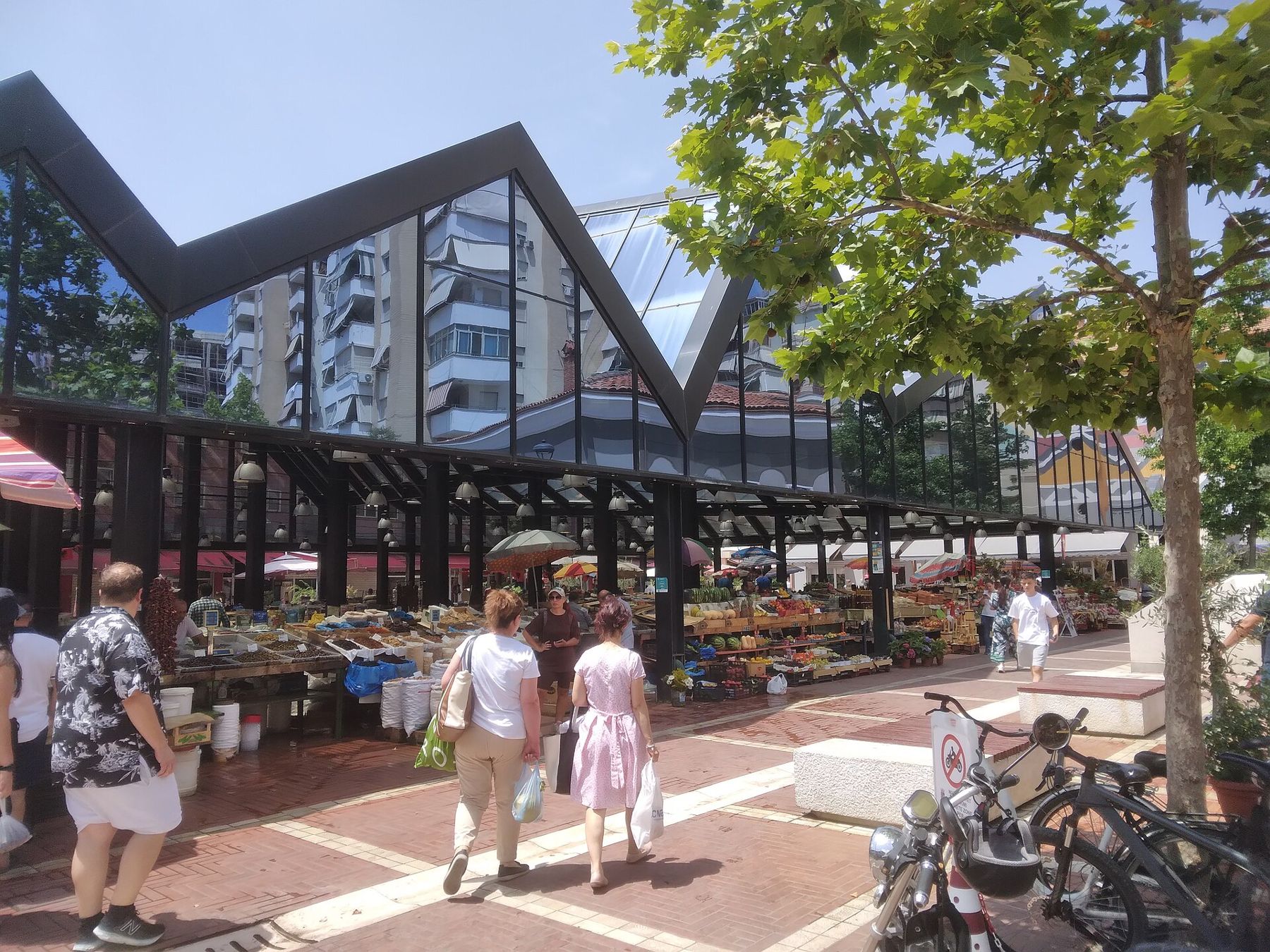
At seven in the morning the New Bazaar smells of wet stone, coffee and peaches. Vans are backing up to the market halls with their hazard lights blinking, men are stacking crates of tomatoes into pyramids, and at the cheese counters the white blocks are being lifted out of their brine and laid in trays. A woman in a headscarf arranges bunches of mountain tea on a cloth. Somewhere a radio is playing. Nobody is in a hurry yet.
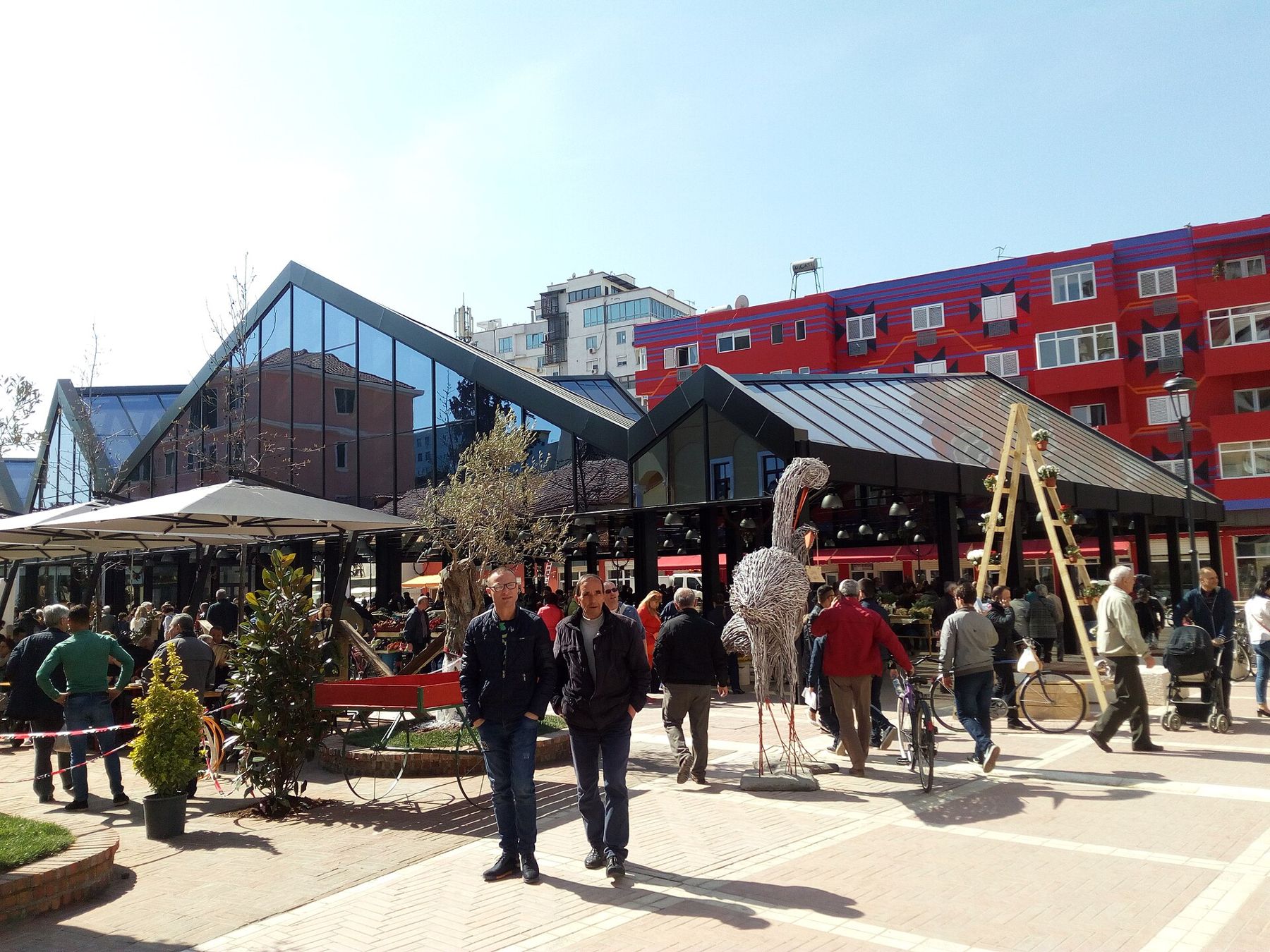
Pazari i Ri, the New Bazaar, is the market quarter of central Tirana, a few minutes' walk from Skanderbeg Square. It is not especially new. The market here goes back to the first half of the twentieth century, and its name set it apart from the old bazaar that once spread around the Et'hem Bey Mosque, cleared in the communist rebuilding of the centre. What is new is its look: a renovation completed in 2017 rebuilt the market halls, repainted the surrounding buildings, and turned the streets around them into a pedestrian quarter of cafés and restaurants. It is now one of the liveliest corners of the city from morning to night.
The market halls
The heart of the bazaar is a pair of covered market structures in steel and glass, open at the sides, laid out in long aisles of stalls. They are light and airy, sheltered from the rain and the summer sun but still part of the street. Around them, the ground floors of the older houses are lined with small shops selling much the same things in a different setting.
The stalls are grouped loosely by what they sell. Fruit and vegetables take up the most space, and they follow the seasons closely: strawberries and cherries in late spring, then peaches, figs, watermelons and tomatoes through the summer, grapes and pomegranates in autumn, and in winter oranges and mandarins from the south, cabbages, leeks and chestnuts. Much of it comes from small farms around Tirana and further afield, and the difference in flavour from supermarket produce is obvious with the first bite.
Cheese, honey and olives
Further in are the counters that most visitors end up lingering over. Albanian white cheese, djathë i bardhë, made from sheep's, goat's or cow's milk and kept in brine, comes in several kinds and strengths. Sellers will often let you taste before you buy, and they are proud of the differences between one region's cheese and another's. There are also yellow cheeses, harder and nuttier, and tubs of creamy cheese and yoghurt.
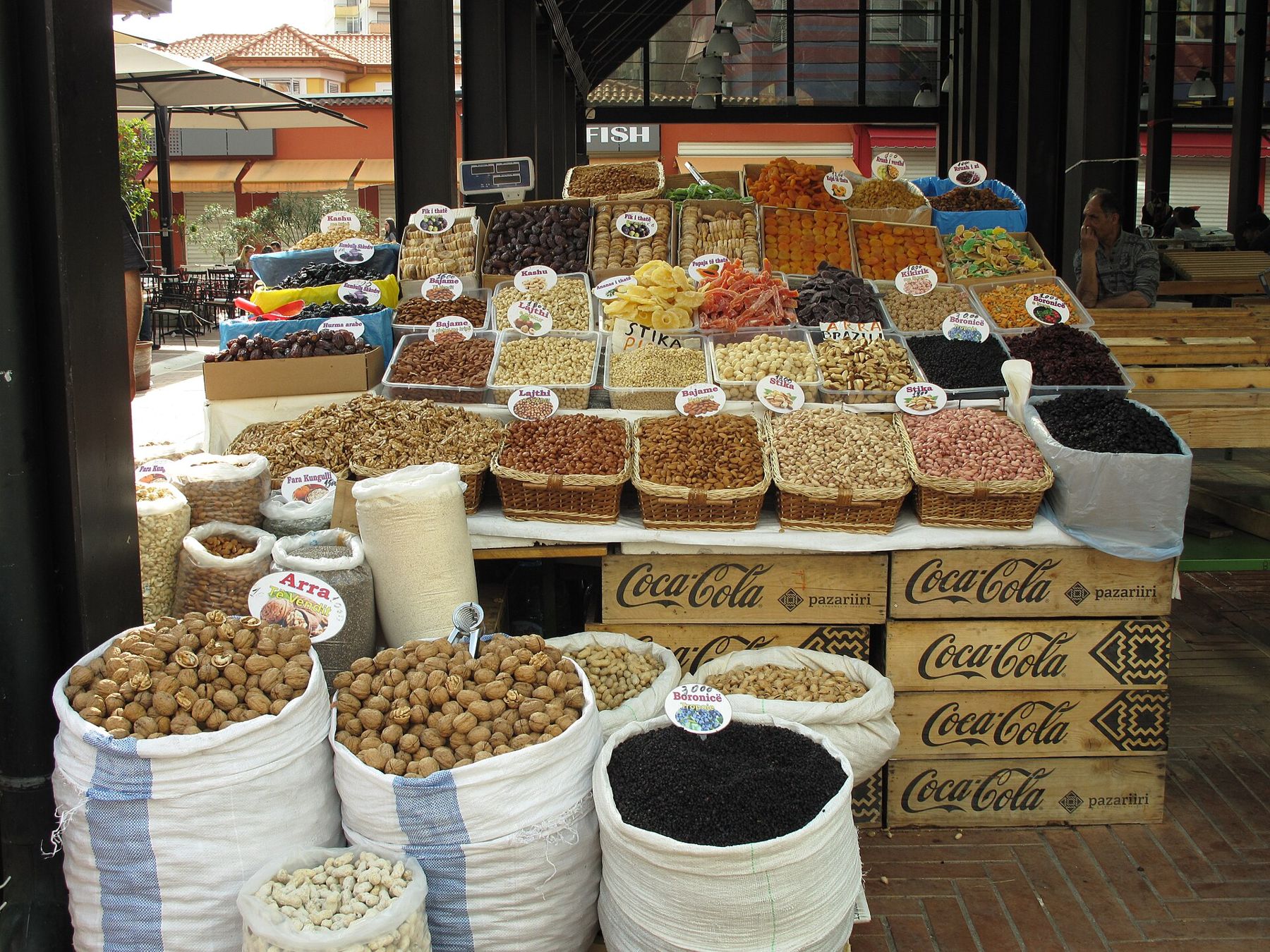
Honey is everywhere, in jars of every size, from pale spring flower honey to dark chestnut and mountain honey. Olives are sold loose from big tubs, green and black, cured in different ways. Next to them, look for dried figs strung together, walnuts, almonds, jars of fruit preserves, and bundles of mountain tea, çaj mali, the dried herb that Albanians drink against colds and simply for pleasure.
And then there is raki. The clear spirit, usually distilled from grapes but sometimes from plums or mulberries, is sold in the bazaar in recycled bottles of all shapes, often homemade and unlabelled. It ranges from smooth to fierce. It is part of the market's character, and for many visitors a bottle is the obvious thing to take home; for more on how it is drunk, see coffee, raki and the long afternoon.
The clear spirit, usually distilled from grapes but sometimes from plums or mulberries, is sold in the bazaar in recycled bottles of all shapes, often homemade and unlabelled.
The rhythm of the day
The bazaar keeps a clear daily rhythm. It is busiest in the early and middle morning, when residents do their shopping and restaurant cooks come to buy. This is when the produce is freshest, the choice widest, and the atmosphere most like a working market rather than a sight. By early afternoon some stalls are packing up, and in the heat of summer the halls can be quiet for a few hours.
 Read nextTirana in a day, on foot and by cable car
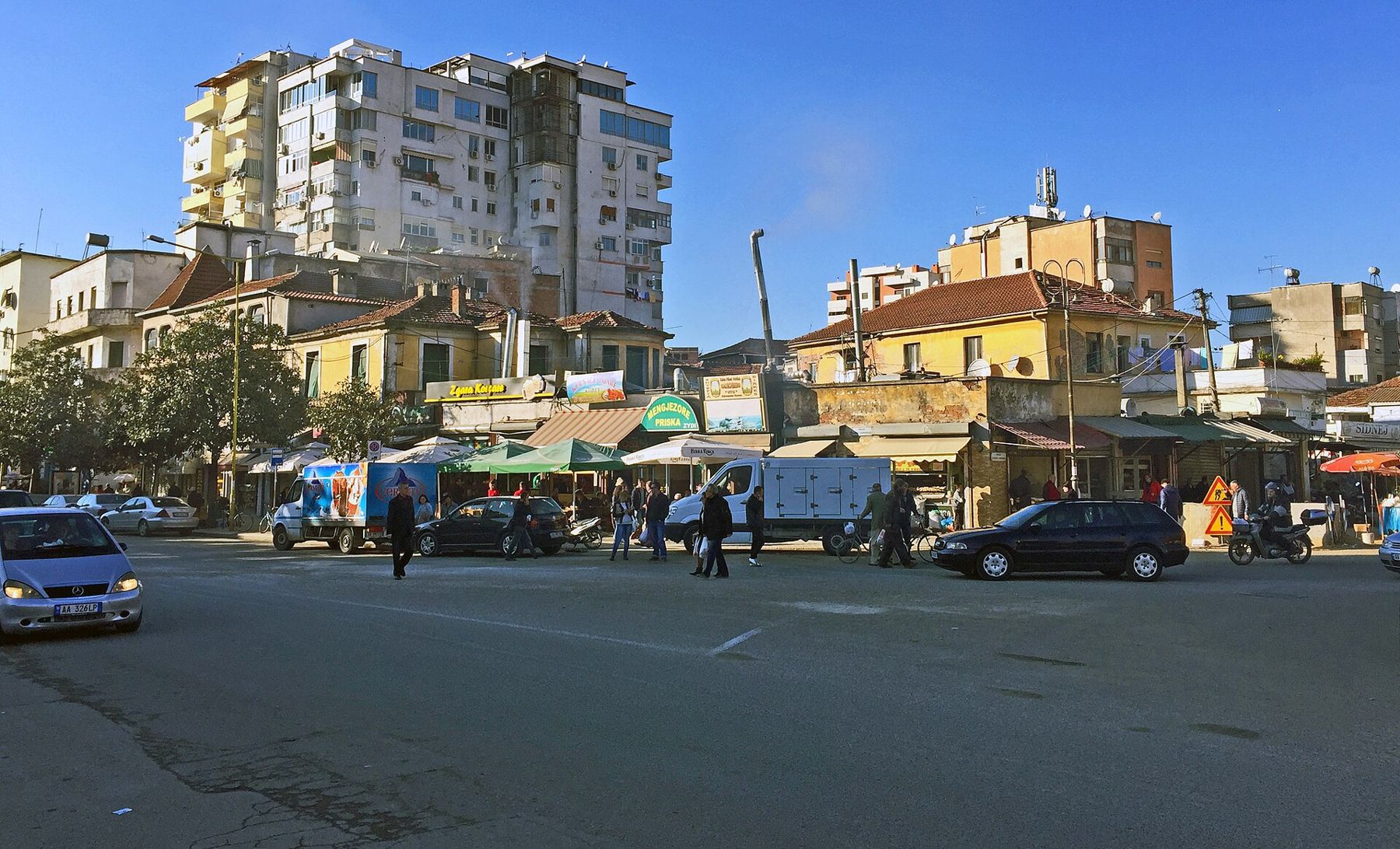
Then, as the heat drops, the quarter changes character. The cafés around the halls fill up, the restaurant terraces spread onto the pedestrian streets, and the square takes on the feel of an evening meeting place. Families come out for the xhiro, the slow social walk of Albanian towns, and groups of friends settle in for long dinners. By late evening the market stalls are shut and covered, but the streets around them are full of conversation and the smell of grilled meat.
On weekends, especially Saturday mornings, the market is at its fullest, and it is also when many people from the city come to stock up for the week. If you want to see it at its most energetic, that is the time.
The year has a rhythm too. Early summer is the season of cherries and apricots piled high on every stall, and by August the aisles are lined with watermelons stacked like cannonballs. Autumn is the richest time: grapes, figs, quinces, pomegranates and the first new-season walnuts, while across the country families are making raki from the grape harvest. In winter the market narrows to citrus, greens and roots, but the cheese, honey and preserves carry on, and the cafés around the halls, warm and steamed up, are full from morning to night.
Eating around the square
The restaurants of the New Bazaar have become one of the best places in the centre to try Albanian cooking. Many specialise in traditional dishes: tavë kosi, lamb baked with yoghurt and egg; fërgesë, a rich mix of peppers, tomatoes and cottage cheese; qofte, small grilled meatballs; stuffed peppers; and plates of grilled lamb, liver or sausages. Byrek, the flaky pie filled with cheese, spinach or meat, is sold from bakeries throughout the quarter and makes a good breakfast. For the dishes in more detail, see what to eat in Albania.
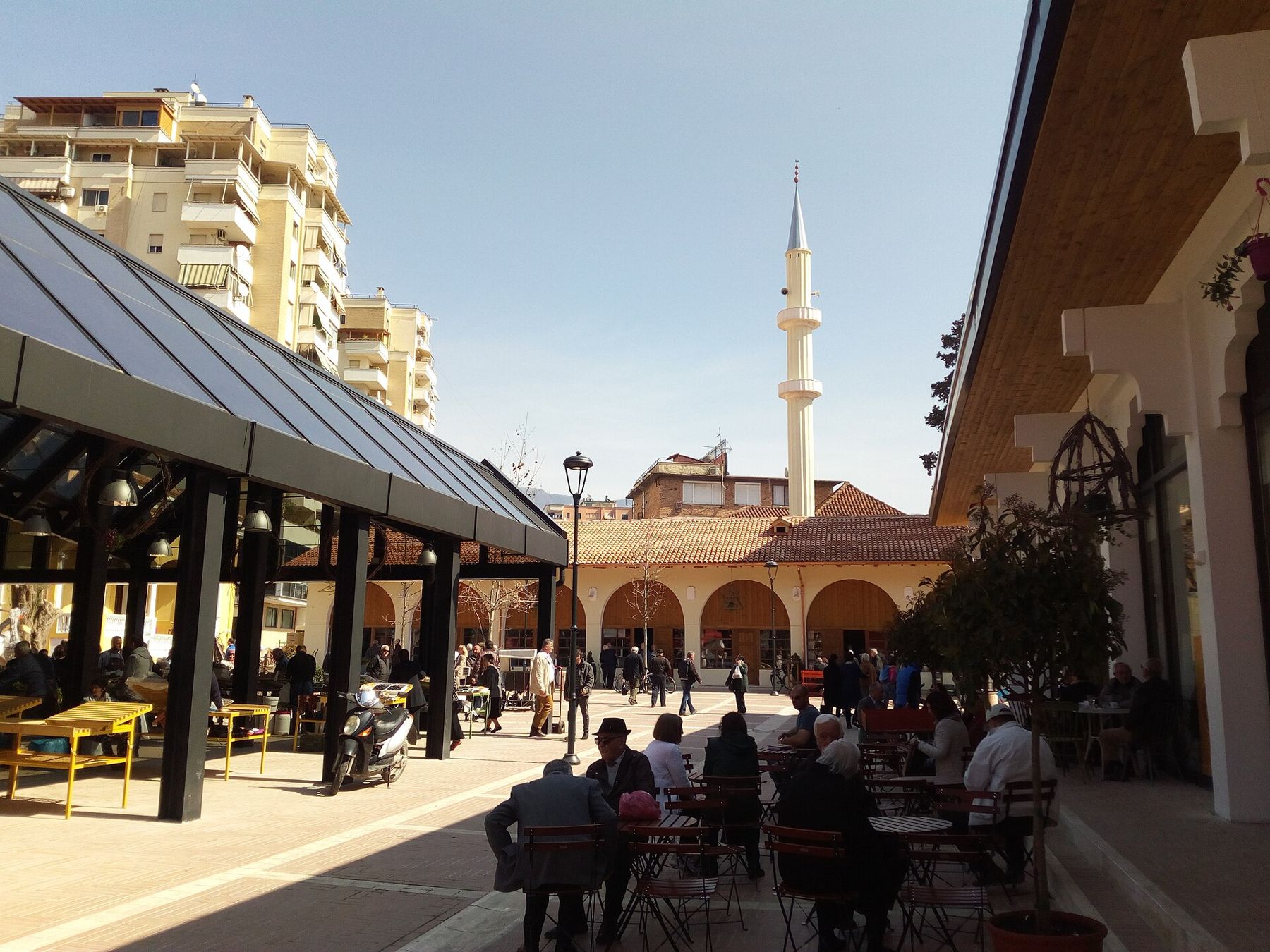
Some of the restaurants occupy older houses with courtyards and upstairs rooms; others are newer places with long terraces. Quality and prices vary, and both change over time, so look at the menu and at how busy the place is with local customers. Many restaurants use produce from the market itself, and in season it shows.
Avni Rustemi and the neighbourhood
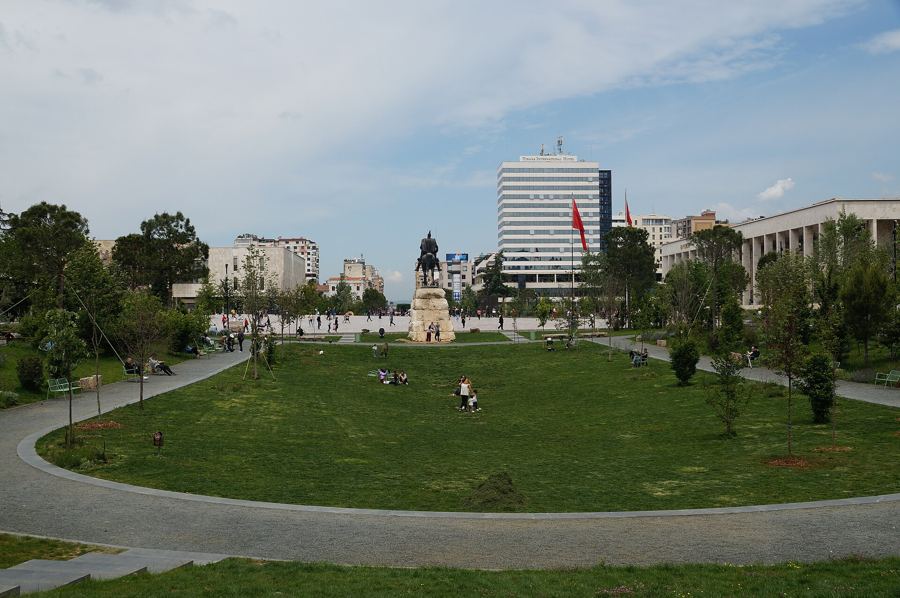
The square at the centre of the quarter is named after Avni Rustemi, a teacher and political activist who in 1920 assassinated Essad Pasha Toptani in Paris and was himself killed in Tirana in 1924. His statue stands in the square, and his name is one of the most familiar in the city's street plan.
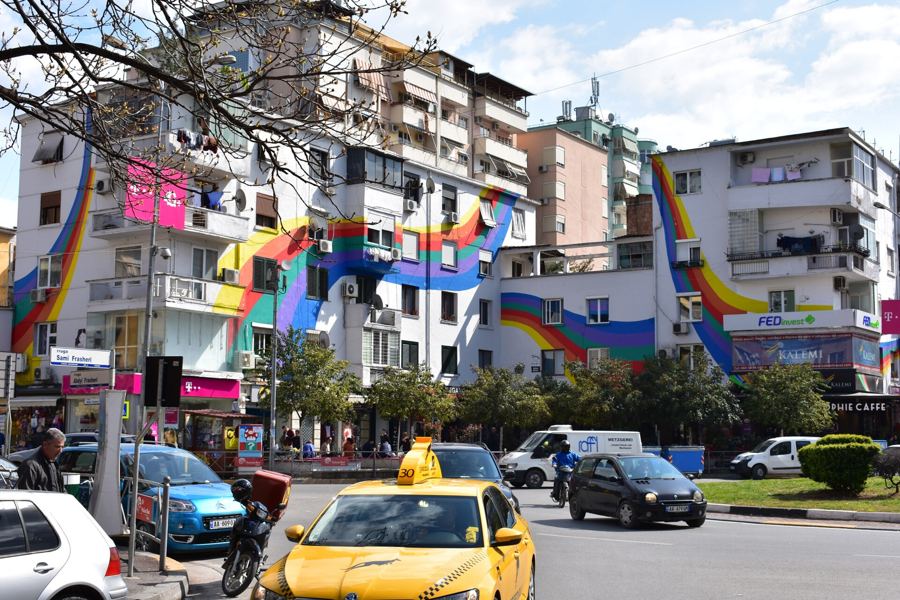
Around the square, the renovation repainted the facades of the older two- and three-storey houses in warm yellows and ochres, with shutters and small balconies, and pedestrianised the streets. The result is one of the most coherent and pleasant corners of the centre, at least while the cafés are open. Walk a block or two away and the city returns to its usual mix of apartment blocks, workshops and building sites, which is a useful reminder that this is a working neighbourhood and not a stage set.
Using the bazaar
The New Bazaar is a short walk from Skanderbeg Square: head past the Palace of Culture and the Et'hem Bey Mosque and keep going for a few minutes. It is easy to combine with sightseeing in the centre, and the cafés are a good place to rest between museums.
Bring cash in small notes and coins. Some stalls take cards, but many do not, and change for a large note can be a problem early in the morning. Prices are usually shown per kilo; if not, ask before the seller starts weighing. Bargaining is not the habit for food, though buying several things from one stall may earn you a little extra in the bag.
If you are taking food home, cheese and honey travel well when packed properly, and most sellers can wrap or seal their goods. Raki in an unlabelled bottle should go in hold luggage, and it is worth checking the rules of your destination before you buy. Whatever you carry home, though, the best of the bazaar is what you eat on the spot: a paper bag of figs at nine in the morning, eaten on the edge of the square while the vans are still unloading.
Filed under Tirana